Reusable Water Bottles Market Size and Growth
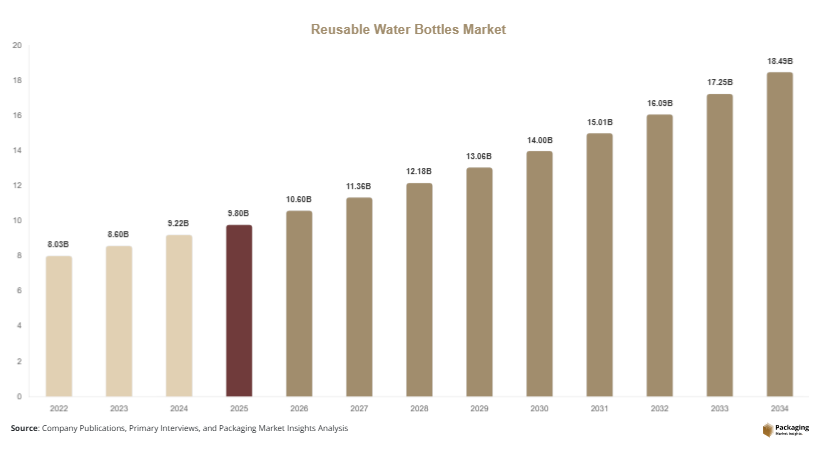
The reusable water bottles market size is witnessing steady expansion, driven by increasing environmental awareness, rising health consciousness, and a shift toward sustainable consumption patterns. The market was valued at approximately USD 9.8 billion in 2025 and is estimated to reach USD 10.6 billion in 2026. Over the forecast period from 2025 to 2034, the market is projected to grow at a compound annual growth rate (CAGR) of 7.2%, reaching nearly USD 18.9 billion by 2034.
A primary growth factor is the growing concern over plastic pollution. Governments and organizations worldwide are promoting reusable alternatives to reduce single-use plastic waste. This has significantly influenced consumer purchasing behavior, especially among younger demographics. Additionally, increasing health awareness has led consumers to prefer reusable bottles made from safe materials such as stainless steel, glass, and BPA-free plastics.
Key Highlights:
- Market expected to grow from USD 9.8 billion in 2025 to USD 18.9 billion by 2034, registering a CAGR of 7.2% during the forecast period.
- Growth driven by increasing sustainability initiatives and strict regulations on single-use plastics.
- Rising adoption across fitness, travel, and corporate sectors is further supporting market expansion.
Explore more data points, trends and opportunities Download Free Sample Report
Market Trends
Integration of Smart and Insulated Bottle Technologies
The reusable water bottles market is experiencing a notable shift toward technologically enhanced products. Smart bottles equipped with hydration tracking, temperature sensors, and mobile app connectivity are gaining traction among tech-savvy consumers. These products provide real-time hydration reminders, helping users maintain healthy drinking habits. Additionally, vacuum-insulated bottles capable of maintaining beverage temperature for extended periods are becoming increasingly popular. This trend is particularly strong among urban professionals and fitness enthusiasts who prioritize convenience and performance. Manufacturers are investing in research and development to incorporate advanced materials and improve battery life in smart bottles. As a result, the market is witnessing a transition from basic containers to multifunctional hydration solutions that combine technology with sustainability.
Growth of Customization and Lifestyle Branding
Another significant trend in the reusable water bottles market is the increasing demand for personalized and lifestyle-oriented products. Consumers are seeking bottles that reflect their identity, preferences, and daily routines. This has led to a surge in customizable designs, including color options, engraved names, and brand collaborations. Lifestyle branding, especially through social media influence, is playing a key role in shaping purchasing decisions. Brands are partnering with influencers and fitness communities to promote reusable bottles as fashion accessories and wellness essentials. Furthermore, limited-edition collections and eco-conscious branding strategies are attracting environmentally aware consumers. This trend is strengthening brand loyalty and encouraging repeat purchases, contributing to sustained market growth.
Market Drivers
Increasing Environmental Awareness and Regulations
The rising global concern regarding environmental sustainability is a major driver of the reusable water bottles market. Governments across regions are implementing strict regulations to reduce plastic waste, including bans on single-use plastics and incentives for eco-friendly alternatives. Consumers are becoming more conscious of their environmental footprint, leading to a growing preference for reusable products. Educational campaigns and corporate sustainability initiatives are further amplifying awareness. As a result, reusable water bottles are increasingly viewed as essential tools for reducing waste and promoting responsible consumption. This shift is particularly evident in urban areas, where environmental consciousness is higher and access to alternatives is more widespread.
Growing Health and Wellness Trends
The increasing focus on health and wellness is significantly influencing the adoption of reusable water bottles. Consumers are prioritizing hydration as part of their daily routines, especially in fitness and wellness communities. Reusable bottles made from safe and durable materials such as stainless steel and BPA-free plastics are gaining popularity due to concerns over chemical exposure from disposable bottles. Additionally, the convenience of carrying personalized hydration solutions supports active lifestyles, including gym workouts, outdoor activities, and travel. The integration of features such as measurement markers and filtration systems is further enhancing usability. This driver is expected to sustain long-term demand across diverse consumer segments.
Market Restraint
High Initial Cost Compared to Disposable Alternatives
Despite growing adoption, the reusable water bottles market faces a key restraint in the form of higher upfront costs. Compared to single-use plastic bottles, reusable options often require a greater initial investment, particularly those made from premium materials or equipped with advanced features. This price difference can discourage price-sensitive consumers, especially in developing regions where affordability plays a crucial role in purchasing decisions. Additionally, the need for regular cleaning and maintenance may be perceived as inconvenient by some users, limiting widespread adoption. For instance, insulated bottles with complex designs may require specialized cleaning tools, adding to overall costs. These factors collectively impact market penetration, particularly among lower-income groups.
Market Opportunities
Expansion in Emerging Markets
Emerging economies present significant growth opportunities for the reusable water bottles market. Rapid urbanization, rising disposable incomes, and increasing awareness of environmental issues are driving demand in regions such as Asia Pacific and Latin America. Governments in these regions are gradually implementing sustainability policies, creating a favorable environment for market expansion. Additionally, the growing middle-class population is more willing to invest in durable and eco-friendly products. Local manufacturers are also entering the market with cost-effective solutions, making reusable bottles more accessible. This expansion is expected to create new revenue streams and diversify the global market landscape.
Innovation in Sustainable Materials
The development of innovative and sustainable materials is creating new opportunities in the reusable water bottles market. Manufacturers are exploring alternatives such as biodegradable plastics, recycled materials, and plant-based composites to reduce environmental impact. These innovations align with consumer preferences for eco-friendly products and support corporate sustainability goals. Furthermore, advancements in material science are improving durability, safety, and aesthetics, enhancing product appeal. Companies investing in sustainable innovation are likely to gain a competitive advantage and strengthen their market position. This opportunity is expected to drive long-term growth and encourage continuous product development.
Report Scope
| Report Metric | Details |
|---|---|
| Market Size in 2025 | USD 9.8 Billion |
| Market Size in 2026 | USD 10.6 Billion |
| Market Size in 2034 | USD 18.9 Billion |
| CAGR | 7.2% (2026-2034) |
| Base Year for Estimation | 2025 |
| Historical Data | 2022-2024 |
| Forecast Period | 2026-2034 |
| Report Coverage | Revenue Forecast, Competitive Landscape, Supply Chain Disruption, Growth Factors, Environment & Regulatory Landscape and Trends |
| Geographies Covered | North America, Europe, APAC, Middle East and Africa, LATAM |
| Countries Covered | U.S., Canada, U.K., Germany, France, Spain, Italy, Russia, Nordic, Benelux, Rest of Europe, China, South Korea, Japan, India, Australia, Singapore, Taiwan, South East Asia, Rest of Asia-Pacific, UAE, Turky, Saudi Arabia, South Africa, Egypt, Nigeria, Rest of MEA, Brazil, Mexico, Argentina, Chile, Colombia, Rest of LATAM |
Explore more data points, trends and opportunities Download Free Sample Report
Segmental Analysis
By Material
The stainless steel segment dominated the reusable water bottles market in 2024, accounting for approximately 42% of the total share. This dominance is attributed to its durability, resistance to corrosion, and ability to maintain beverage temperature. Stainless steel bottles are widely preferred by consumers seeking long-lasting and safe hydration solutions. Additionally, their compatibility with vacuum insulation technology enhances their appeal. The segment also benefits from increasing consumer awareness regarding the harmful effects of plastic materials, further boosting demand.
The glass segment is expected to be the fastest-growing, with a projected CAGR of 8.1% during the forecast period. Growth is driven by increasing preference for chemical-free and environmentally friendly materials. Glass bottles are perceived as safe and non-toxic, making them popular among health-conscious consumers. Innovations in protective silicone sleeves and improved durability are addressing concerns related to fragility, supporting market expansion.
By Distribution Channel
The offline segment held the largest share in 2024, accounting for around 55% of the market. Physical retail stores, including supermarkets and specialty stores, provide consumers with the opportunity to evaluate product quality and design before purchase. This tactile experience plays a crucial role in influencing buying decisions. Additionally, in-store promotions and brand visibility contribute to higher sales through offline channels.
The online segment is the fastest-growing, with a CAGR of 9.2%. The rise of e-commerce platforms and direct-to-consumer strategies is driving growth in this segment. Online channels offer a wide variety of products, competitive pricing, and convenience, attracting a large customer base. The integration of digital marketing and social media campaigns further enhances product visibility and consumer engagement.
By End-Use
The personal use segment dominated the market in 2024, accounting for approximately 60% of the share. Increasing awareness of health and sustainability is driving demand among individual consumers. Reusable water bottles are widely used in daily activities, including commuting, exercising, and traveling. The availability of diverse designs and features further supports adoption in this segment.
The commercial segment is expected to grow at the fastest rate, with a CAGR of 7.9%. Growth is driven by increasing adoption in corporate offices, educational institutions, and hospitality sectors. Organizations are promoting reusable bottles as part of sustainability initiatives, reducing reliance on single-use plastics. This trend is creating new opportunities for bulk sales and customized products.
Reusable Water Bottles Market Segmentations
Material
- Stainless Steel
- Plastic
- Glass
- Others
Distribution Channel
- Offline Retail
- Online Retail
End-Use
- Personal Use
- Commercial Use
Regional Analysis
North America
North America accounted for a significant share of the reusable water bottles market in 2025, contributing approximately 28% of global revenue. The region is expected to maintain steady growth with a CAGR of around 6.5% during the forecast period. High consumer awareness regarding environmental issues and strong adoption of sustainable products are key factors supporting market growth. The presence of established brands and advanced distribution channels further enhances market penetration across the region.
The United States dominates the North American market, driven by widespread adoption of fitness and wellness lifestyles. A unique growth factor is the strong presence of corporate sustainability programs, where companies promote reusable bottles among employees. This has increased demand in both individual and institutional segments, contributing to overall market expansion.
Europe
Europe held a market share of approximately 25% in 2025 and is projected to grow at a CAGR of 6.8% through 2034. Strict environmental regulations and policies aimed at reducing plastic waste are major drivers in the region. Consumers are highly inclined toward eco-friendly products, supporting consistent demand for reusable water bottles.
Germany leads the European market due to its strong environmental policies and high consumer awareness. A unique growth factor is the widespread implementation of recycling and waste management systems, which encourage the use of reusable products. This has significantly influenced purchasing behavior across the region.
Asia Pacific
Asia Pacific is the fastest-growing region, with a market share of around 22% in 2025 and a projected CAGR of 8.5%. Rapid urbanization, increasing disposable incomes, and rising environmental awareness are key factors driving market growth. The region also benefits from a large consumer base and expanding retail infrastructure.
China dominates the Asia Pacific market, supported by large-scale manufacturing capabilities and growing domestic demand. A unique growth factor is the increasing popularity of e-commerce platforms, which provide easy access to a wide range of reusable water bottles, boosting sales across urban and semi-urban areas.
Middle East & Africa
The Middle East & Africa region accounted for approximately 12% of the market share in 2025 and is expected to grow at a CAGR of 6.2%. Increasing awareness of sustainability and gradual adoption of eco-friendly products are contributing to market growth. Government initiatives promoting environmental conservation are also supporting demand.
The United Arab Emirates leads the regional market, driven by a growing focus on sustainability and tourism. A unique growth factor is the increasing adoption of reusable bottles in hospitality and travel sectors, where sustainability practices are becoming more prominent.
Latin America
Latin America held a market share of about 13% in 2025 and is projected to grow at a CAGR of 6.7%. The region is witnessing gradual adoption of reusable water bottles due to rising environmental awareness and improving economic conditions. Retail expansion is also supporting market growth.
Brazil dominates the Latin American market, supported by a large population and increasing consumer awareness. A unique growth factor is the growing influence of social media campaigns promoting sustainable living, which is encouraging consumers to switch to reusable products.
Competitive Landscape
The reusable water bottles market is moderately fragmented, with several global and regional players competing based on product quality, innovation, and pricing strategies. Leading companies are focusing on product differentiation through advanced features such as insulation technology, smart tracking, and sustainable materials. Branding and marketing strategies, including influencer partnerships and lifestyle positioning, are also playing a key role in gaining market share.
A leading player in the market is Hydro Flask, known for its insulated stainless steel bottles and strong brand presence. The company recently introduced a new range of lightweight bottles designed for outdoor activities, enhancing its product portfolio. Other key players are also investing in research and development to introduce innovative and eco-friendly products, strengthening their competitive position.
Key Players List
- Hydro Flask
- S’well Corporation
- CamelBak Products LLC
- Klean Kanteen
- Thermos LLC
- Contigo
- Nalgene
- SIGG Switzerland
- Tupperware Brands Corporation
- Lock & Lock Co., Ltd.
- Brita GmbH
- Takeya USA Corporation
- Simple Modern
- Zojirushi Corporation
- Aquasana Inc.