Consumer Electronic Packaging Market Size and Growth
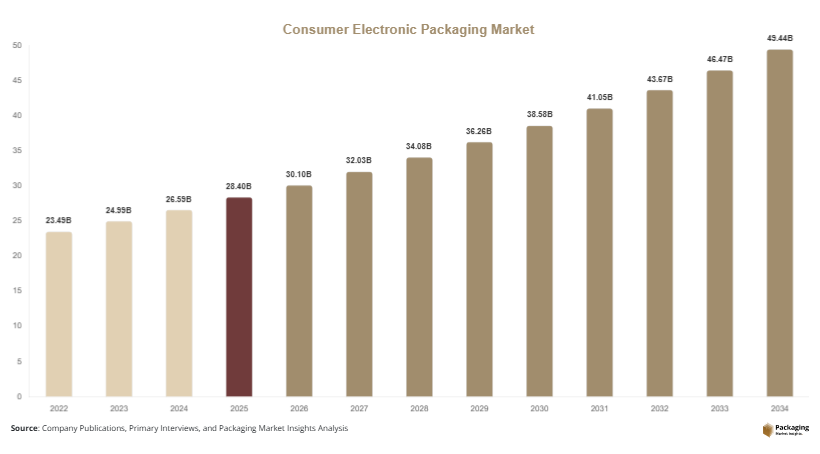
The global consumer electronic packaging market size is estimated at USD 28.4 billion in 2025, rising to approximately USD 30.1 billion in 2026. By 2034, the market is forecast to reach nearly USD 49.6 billion, expanding at a CAGR of 6.4% during 2025–2034. The consumer electronic packaging market is witnessing substantial growth due to rising demand for smartphones, laptops, wearable devices, gaming consoles, and smart home electronics across developed and emerging economies. Consumer electronic packaging plays a critical role in protecting sensitive electronic products from physical damage, moisture, electrostatic discharge, and transportation-related risks. Packaging solutions in this industry include corrugated boxes, molded pulp trays, anti-static materials, flexible protective films, and sustainable paper-based packaging systems.
One of the key growth factors driving the market is the rapid expansion of the global consumer electronics industry. Increasing sales of smartphones, wireless accessories, tablets, and connected home devices are directly supporting demand for advanced protective packaging solutions. Another important factor is the strong growth in e-commerce retail channels, where electronic products require durable and shock-resistant packaging for long-distance transportation. In addition, sustainability initiatives are encouraging electronics manufacturers to replace plastic-intensive packaging with recyclable paperboard, molded fiber, and biodegradable alternatives.
Key Highlights:
- Asia Pacific dominated the market with a 41.3% share in 2025.
- Latin America is projected to grow at the fastest CAGR of 6.9%.
- Corrugated packaging led the type segment with a 34.7% share.
- Plastic materials dominated with a 49.5% share.
- Smartphones and mobile devices led the end-use segment with 39.8% share.
- The US remained the dominant country with a market size of USD 6.8 billion in 2025 and USD 7.2 billion in 2026.
Explore more data points, trends and opportunities Download Free Sample Report
Market Trends
Rising Adoption of Sustainable and Minimalist Packaging Designs
Sustainability has become a major trend in the consumer electronic packaging market as manufacturers increasingly focus on reducing environmental impact and packaging waste. Electronics brands are replacing plastic inserts, foam materials, and multilayer packaging with recyclable paperboard, molded pulp trays, and biodegradable cushioning systems. Companies are also adopting minimalist packaging designs that reduce material consumption while maintaining product protection. For example, several smartphone manufacturers have reduced accessory packaging sizes and eliminated unnecessary plastic components to improve sustainability performance. This trend is expected to strengthen further as consumers increasingly prefer environmentally responsible products and governments continue implementing regulations restricting single-use plastic packaging in the electronics industry.
Growth of Smart Protective Packaging Solutions
The market is witnessing increasing adoption of smart and protective packaging technologies designed to improve product safety during transportation and storage. Electronics manufacturers are integrating anti-static layers, tamper-evident seals, moisture-resistant coatings, and shock-absorbing inserts into packaging systems for sensitive electronic devices. Some premium electronics brands are also introducing QR-enabled packaging for product authentication and customer engagement. For example, gaming console and laptop manufacturers are using advanced molded protective packaging to reduce damage during e-commerce deliveries. In the future, smart packaging technologies integrated with tracking systems and reusable protective structures are expected to improve supply chain efficiency and reduce product return rates globally.
Market Drivers
Rapid Growth of E-Commerce Electronics Sales
The rapid expansion of e-commerce platforms has become a major driver supporting the consumer electronic packaging market. Online retail channels have significantly increased sales of smartphones, laptops, headphones, wearable devices, and gaming accessories. Electronic products sold through digital platforms require durable packaging capable of protecting products during handling, warehousing, and long-distance transportation. For instance, global e-commerce retailers increasingly use corrugated protective packaging with anti-static cushioning inserts for high-value electronics. This growth in online electronics retail directly increases demand for lightweight, shock-resistant, and tamper-proof packaging solutions designed to minimize product damage and improve customer satisfaction.
Increasing Demand for Premium Consumer Electronics
Rising consumer spending on premium electronic products is also driving demand for advanced packaging solutions. Consumers increasingly expect high-quality packaging that reflects product value while ensuring protection and ease of handling. Premium smartphones, smartwatches, gaming devices, and wireless accessories often use customized rigid boxes, magnetic closures, and molded inserts to improve product presentation and unboxing experiences. For example, luxury audio equipment brands are investing in aesthetically designed packaging with sustainable materials and premium finishes. As consumer electronics brands continue differentiating products through packaging innovation and customer experience strategies, demand for high-performance electronic packaging solutions is expected to grow steadily.
Market Restraint
Fluctuating Raw Material Costs and Electronic Waste Concerns
One of the major restraints affecting the consumer electronic packaging market is volatility in raw material costs, including paper pulp, plastic resins, foam materials, and specialty anti-static packaging components. Sudden increases in material prices can reduce profit margins for packaging manufacturers and increase operational costs for electronics companies. In addition, rising concerns regarding electronic waste and excessive packaging are creating regulatory and environmental challenges. Governments and environmental organizations are pressuring electronics manufacturers to minimize packaging waste and improve recyclability. For example, several consumer electronics brands have faced criticism for using excessive plastic packaging for accessories and premium devices. Small packaging suppliers may also struggle to invest in sustainable material technologies due to high development costs. These factors can slow market adoption, particularly in price-sensitive regions where cost-efficient packaging remains a major purchasing consideration.
Market Opportunities
Expansion of Sustainable Molded Fiber Packaging
The growing adoption of molded fiber and recyclable packaging solutions presents significant opportunities for the consumer electronic packaging market. Electronics brands are increasingly investing in eco-friendly packaging materials to reduce environmental impact and comply with sustainability regulations. Molded fiber trays and paper-based cushioning systems are replacing foam inserts and plastic components in smartphone, laptop, and accessory packaging. For example, several global electronics companies are using molded pulp packaging for wireless earbuds and smart devices to strengthen environmental branding. Future advancements in fiber engineering and water-resistant coatings are expected to improve durability and expand applications for sustainable electronic packaging solutions worldwide.
Increasing Demand for Wearable and Smart Device Packaging
The rapid growth of wearable electronics and smart connected devices is creating new growth opportunities for specialized packaging manufacturers. Smartwatches, fitness trackers, augmented reality devices, and wireless audio products require compact and protective packaging with premium visual appeal. Packaging companies are developing lightweight anti-static boxes, reusable protective inserts, and customized retail packaging solutions specifically for wearable devices. For instance, premium smartwatch brands are adopting magnetic rigid packaging with recyclable molded trays for improved consumer experience. As wearable technology adoption continues rising across healthcare, fitness, and lifestyle applications, demand for innovative electronic packaging solutions is expected to expand significantly.
Report Scope
| Report Metric | Details |
|---|---|
| Market Size in 2025 | USD 28.4 Billion |
| Market Size in 2026 | USD 30.1 Billion |
| Market Size in 2034 | USD 49.6 Billion |
| CAGR | 6.4% (2026-2034) |
| Base Year for Estimation | 2025 |
| Historical Data | 2022-2024 |
| Forecast Period | 2026-2034 |
| Report Coverage | Revenue Forecast, Competitive Landscape, Supply Chain Disruption, Growth Factors, Environment & Regulatory Landscape and Trends |
| Geographies Covered | North America, Europe, APAC, Middle East and Africa, LATAM |
| Countries Covered | U.S., Canada, U.K., Germany, France, Spain, Italy, Russia, Nordic, Benelux, Rest of Europe, China, South Korea, Japan, India, Australia, Singapore, Taiwan, South East Asia, Rest of Asia-Pacific, UAE, Turky, Saudi Arabia, South Africa, Egypt, Nigeria, Rest of MEA, Brazil, Mexico, Argentina, Chile, Colombia, Rest of LATAM |
Explore more data points, trends and opportunities Download Free Sample Report
Segmental Analysis
By Type
Corrugated packaging dominated the global consumer electronic packaging market in 2024, accounting for approximately 34.7% of the total market share. Corrugated packaging solutions are widely used for smartphones, laptops, televisions, gaming consoles, and home appliances because they provide excellent shock absorption, lightweight handling, and cost efficiency. Electronics manufacturers prefer corrugated boxes due to their high durability during transportation and compatibility with customized branding designs. The growth of global e-commerce shipments has further strengthened demand for corrugated packaging as electronic devices require secure transportation over long distances. For example, smartphone manufacturers increasingly use multi-layer corrugated boxes with molded inserts to reduce product damage during online deliveries. In addition, corrugated packaging materials support sustainability goals since they are recyclable and widely accepted in paper recovery systems. Increasing exports of consumer electronics from Asia Pacific manufacturing hubs continue supporting the dominance of corrugated packaging across global supply chains.
Anti-static packaging is projected to be the fastest-growing type segment, registering a CAGR of 7.1% during the forecast period. Anti-static packaging materials are specifically designed to protect sensitive electronic components from electrostatic discharge during handling, storage, and transportation. These packaging solutions include anti-static bags, foam inserts, conductive trays, and protective films used for semiconductors, wearable devices, processors, and advanced electronic accessories. Rising production of compact electronic devices with highly sensitive circuitry is increasing demand for advanced anti-static protection systems. For instance, manufacturers of wireless earbuds and gaming processors increasingly use conductive cushioning materials to reduce product failure risks. In the future, growth in semiconductor-intensive consumer electronics and expansion of connected smart devices are expected to drive strong adoption of anti-static packaging technologies globally. Advancements in recyclable conductive materials are also expected to improve sustainability performance within this segment.
By Material
Plastic materials dominated the consumer electronic packaging market in 2024 with a market share of approximately 49.5%. Plastic packaging remains widely used because of its flexibility, moisture resistance, lightweight structure, and strong protective properties. Thermoformed trays, foam inserts, air cushions, and flexible protective films are commonly used in packaging for smartphones, tablets, wearable electronics, and gaming accessories. Electronics manufacturers prefer plastic-based materials for their ability to absorb shocks and protect products from scratches and vibration during transportation. For example, premium headphone and camera manufacturers often use molded plastic inserts for secure product placement and presentation. In addition, plastic materials support transparent retail packaging formats that improve product visibility in electronics stores. Despite increasing sustainability concerns, demand for advanced recyclable plastics and lightweight polymer packaging solutions continues to support segment dominance across the global consumer electronic packaging market.
Molded fiber materials are expected to witness the fastest growth, expanding at a CAGR of 7.3% during the forecast period. The segment is benefiting from increasing sustainability initiatives and growing pressure on electronics manufacturers to reduce plastic packaging waste. Molded fiber packaging is increasingly replacing expanded foam inserts and thermoformed plastics in smartphone, laptop, and wearable device packaging. Companies are investing in fiber-based cushioning solutions that provide adequate shock protection while improving recyclability and biodegradability. For example, several global smartphone brands have introduced molded pulp trays and recyclable paper inserts in product packaging to strengthen environmental commitments. Technological advancements in molded fiber engineering are also improving structural durability and moisture resistance, enabling wider adoption across premium electronic products. As sustainability regulations continue expanding globally, demand for molded fiber electronic packaging solutions is expected to increase significantly over the forecast period.
By End-Use
Smartphones and mobile devices dominated the consumer electronic packaging market in 2024, accounting for approximately 39.8% of the total market share. The segment benefits from massive global production and sales volumes of smartphones, tablets, wireless accessories, and mobile communication devices. Packaging for these products requires lightweight protective structures, anti-static materials, and visually appealing retail presentation. Smartphone manufacturers increasingly use rigid paperboard boxes, molded inserts, and tamper-evident seals to improve product safety and consumer experience. For instance, premium smartphone brands continue investing in minimalist sustainable packaging designs while maintaining protective performance during shipping operations. In addition, rising online smartphone sales and direct-to-consumer delivery models are increasing demand for durable e-commerce-ready packaging solutions. Growth in 5G smartphone adoption, foldable devices, and mobile accessories continues to strengthen packaging demand within this segment across both developed and emerging markets.
Wearable electronics are projected to register the fastest CAGR of 7.5% during the forecast period. The increasing adoption of smartwatches, fitness trackers, augmented reality devices, and wireless audio products is driving demand for compact and premium packaging solutions. Wearable devices require packaging that combines protective functionality with strong visual appeal and retail branding. Electronics companies are increasingly adopting recyclable rigid packaging, molded fiber trays, and magnetic closure systems for wearable products. For example, fitness wearable manufacturers are introducing lightweight packaging with reusable inserts and QR-enabled product information systems to improve customer engagement. The expansion of healthcare monitoring wearables and lifestyle-focused smart devices is also expected to accelerate packaging demand. In the future, rising investments in sustainable premium packaging and personalized wearable technology products are likely to create substantial opportunities for electronic packaging manufacturers globally.
Consumer Electronic Packaging Market Segmentations
By Type
- Corrugated Packaging
- Anti-Static Packaging
- Flexible Protective Packaging
- Thermoformed Packaging
- Molded Protective Packaging
By Material
- Plastic Materials
- Paper & Paperboard
- Molded Fiber Materials
- Foam Materials
By End-User
- Smartphones & Mobile Devices
- Computers & Laptops
- Wearable Electronics
- Gaming Devices
- Home Entertainment Systems
Regional Analysis
North America
North America accounted for approximately 28.6% of the global consumer electronic packaging market share in 2025 and is projected to expand at a CAGR of 6.1% during the forecast period. The region benefits from strong consumer spending on smartphones, gaming devices, laptops, and connected home electronics. Rapid growth in e-commerce electronics sales is increasing demand for protective and tamper-resistant packaging solutions capable of reducing product damage during shipping operations. Sustainability regulations and consumer awareness are also encouraging electronics manufacturers to adopt recyclable paperboard and molded fiber packaging systems. In addition, premium product packaging trends across the United States and Canada continue supporting demand for aesthetically designed and lightweight packaging solutions.
The United States dominates the North American consumer electronic packaging market due to its advanced electronics retail sector and strong e-commerce infrastructure. One unique growth driver is the increasing demand for subscription-based electronics and direct-to-consumer product shipments. Electronics brands are investing in customized shipping boxes with protective inserts and smart tracking features to improve customer experience and reduce returns. Several U.S.-based technology companies are also transitioning toward plastic-free packaging strategies for smartphones and wearable devices. The expansion of high-value gaming electronics and premium audio device sales further supports packaging demand across the country.
Europe
Europe held approximately 23.9% of the global consumer electronic packaging market share in 2025 and is forecast to grow at a CAGR of 6.0% during the forecast period. The regional market is strongly influenced by sustainability regulations and circular economy initiatives encouraging recyclable and reusable packaging materials. Electronics brands operating in Europe are increasingly replacing expanded foam packaging with paper-based and molded fiber alternatives. Growth in online electronics retail and smart appliance demand is also contributing to rising packaging requirements. Furthermore, consumers across European countries increasingly prefer environmentally responsible packaging solutions, encouraging manufacturers to invest in eco-friendly packaging innovation and reduced-plastic packaging systems.
Germany remains the dominant country in the European consumer electronic packaging market because of its large electronics manufacturing and export industry. A unique growth factor in Germany is the country’s strong emphasis on precision protective packaging for high-value electronic equipment and industrial consumer devices. Electronics manufacturers are increasingly adopting advanced anti-static corrugated packaging and reusable transport packaging systems to reduce product damage during exports. In addition, Germany’s growing smart appliance sector is creating rising demand for sustainable molded packaging solutions designed for large consumer electronic products. Government support for recyclable packaging infrastructure continues to strengthen long-term market development.
Asia Pacific
Asia Pacific dominated the global consumer electronic packaging market with a 41.3% share in 2025 and is expected to register a CAGR of 6.8% during the forecast period. The region benefits from its position as the world’s largest electronics manufacturing hub, particularly in China, Japan, South Korea, Taiwan, and India. Rising production of smartphones, laptops, televisions, and wearable devices is creating strong demand for corrugated packaging, anti-static films, molded trays, and flexible protective materials. Rapid growth in regional e-commerce sales and rising disposable incomes are also supporting electronics consumption across emerging economies. Furthermore, increasing investments in sustainable packaging manufacturing are strengthening regional market growth.
China dominates the Asia Pacific consumer electronic packaging market because of its extensive electronics production infrastructure and export-oriented manufacturing sector. One unique growth driver is the rapid expansion of domestic electronics brands focusing on premium packaging design for global markets. Smartphone manufacturers in China are increasingly using recyclable rigid boxes, lightweight molded pulp inserts, and printed paperboard packaging to improve sustainability performance and brand appeal. In addition, the country’s strong logistics and export network supports large-scale packaging production for international electronics shipments. Government initiatives promoting sustainable manufacturing practices are further accelerating market growth across China.
Middle East & Africa
The Middle East & Africa region accounted for approximately 3.7% of the global consumer electronic packaging market in 2025 and is expected to grow at a CAGR of 6.3% during the forecast period. Rising urbanization, increasing smartphone penetration, and growing demand for home entertainment systems are supporting market expansion across the region. Retail electronics sales and e-commerce platforms are increasing demand for protective and lightweight packaging solutions for imported electronic products. In addition, several Gulf countries are investing in logistics infrastructure and warehousing capabilities that support electronics distribution activities. Growing awareness regarding sustainable packaging materials is also contributing to gradual adoption of recyclable electronic packaging solutions.
The United Arab Emirates dominates the Middle East & Africa consumer electronic packaging market because of its advanced retail infrastructure and expanding technology consumer base. One unique growth factor is the increasing demand for premium imported electronics and luxury smart devices. Electronics retailers in the UAE are focusing on high-quality retail packaging with enhanced protective features and premium visual presentation. In addition, rapid growth in cross-border e-commerce and regional electronics distribution centers is increasing demand for export-grade corrugated packaging solutions. Rising investments in sustainable retail packaging initiatives are also supporting future market expansion in the country.
Latin America
Latin America represented approximately 2.5% of the global consumer electronic packaging market share in 2025 and is projected to grow at a CAGR of 6.9% during the forecast period. The market is benefiting from increasing smartphone adoption, rising internet penetration, and expansion of regional e-commerce platforms. Consumer demand for affordable electronic devices and accessories is increasing across urban markets, supporting demand for cost-efficient and protective packaging materials. Regional electronics assembly activities and import operations are also contributing to packaging demand. Furthermore, packaging manufacturers are increasingly investing in lightweight corrugated packaging solutions designed for transportation efficiency and retail display purposes.
Brazil dominates the Latin American consumer electronic packaging market due to its large consumer electronics retail sector and growing online shopping industry. One unique growth factor is the increasing local assembly of smartphones and home entertainment devices. Electronics manufacturers and distributors are adopting recyclable corrugated packaging and molded pulp inserts to reduce logistics costs and comply with environmental regulations. In addition, rising demand for gaming accessories and affordable wearable devices is increasing packaging requirements across retail channels. Investments in local packaging production capacity are expected to strengthen Brazil’s market position during the forecast period.
Competitive Landscape
The global consumer electronic packaging market is moderately competitive, with major companies focusing on sustainable materials, advanced protective technologies, and customized packaging designs to strengthen their market positions. Packaging manufacturers are increasingly investing in recyclable molded fiber materials, lightweight corrugated structures, and anti-static protective packaging systems to meet evolving electronics industry requirements. The market leader, DS Smith Plc, maintains a strong presence through its extensive sustainable packaging portfolio and advanced corrugated packaging solutions designed for electronics transportation and retail applications. The company recently introduced recyclable electronic packaging systems for e-commerce electronics shipments aimed at reducing plastic usage and transportation damage.
Other leading players in the market include Smurfit Kappa Group, WestRock Company, Sonoco Products Company, and Sealed Air Corporation. These companies are emphasizing strategic partnerships with smartphone manufacturers, gaming device producers, and e-commerce retailers to expand their packaging supply networks. Several firms are also investing in smart packaging technologies such as tamper-evident seals, QR-enabled tracking systems, and shock-monitoring solutions for premium electronic products. Expansion of sustainable packaging production facilities across Asia Pacific and North America continues to strengthen market competition. In addition, growing investments in recyclable anti-static packaging materials are expected to create new growth opportunities for major packaging suppliers over the forecast period.
Key Players List
- DS Smith Plc
- Smurfit Kappa Group
- WestRock Company
- Sonoco Products Company
- Sealed Air Corporation
- Mondi Group
- Stora Enso Oyj
- International Paper Company
- UFP Technologies Inc.
- Pregis LLC
- ACH Foam Technologies
- Ranpak Holdings Corp.
- Nefab Group
- Huhtamaki Oyj
- Graphic Packaging International