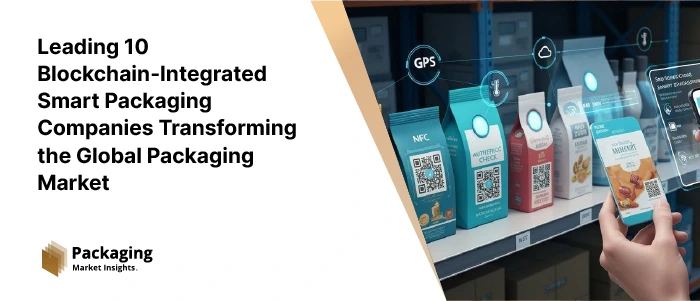
Leading 10 Blockchain-Integrated Smart Packaging Companies Transforming the Global Packaging Market
Introduction
The Top Companies in Blockchain Integrated Smart Packaging Market are transforming how brands ensure product authenticity, traceability, and consumer engagement. By combining smart packaging technologies—such as QR codes, NFC tags, and IoT sensors—with blockchain, companies are delivering secure, tamper-proof data across supply chains. This innovation is gaining strong traction in FMCG, pharmaceuticals, and food & beverage sectors, where transparency is critical.
The market is witnessing increasing adoption, with over 28% of premium FMCG brands integrating blockchain-enabled packaging features. Additionally, smart packaging unit volumes have surpassed 12 billion units annually, with blockchain integration contributing to a growing share of high-value applications. As regulatory pressures and consumer awareness increase, enterprises are investing heavily in secure packaging ecosystems.
Market Overview with Data
The blockchain integrated smart packaging market is evolving rapidly, driven by demand for product traceability and anti-counterfeiting solutions.
● Global production of smart packaging solutions exceeds 12–14 billion units annually, with blockchain-enabled solutions accounting for nearly 18–22% of high-value applications.
● The food & beverage sector contributes approximately 35% of total consumption, followed by pharmaceuticals at 27%.
● North America holds around 32% market share, while Europe accounts for 28%, driven by strict compliance regulations.
● Average pricing for blockchain-enabled smart packaging ranges between $0.08 and $0.45 per unit, depending on technology (QR vs NFC vs RFID).
● Premium NFC-enabled blockchain packaging solutions can reach $0.60 per unit for luxury goods and pharmaceuticals.
The integration of blockchain increases packaging costs by 15–25%, but significantly enhances supply chain visibility, making it attractive for high-margin products.
Top Companies in Blockchain Integrated Smart Packaging Market
Avery Dennison Corporation

Avery Dennison is a leading player in smart labeling and packaging solutions, with strong capabilities in RFID and blockchain integration. The company generates annual revenues exceeding $9 billion, with smart packaging contributing a growing share. Its blockchain-enabled solutions, particularly through its atma.io platform, process over 28 billion connected product events annually.
The company offers RFID tags, NFC-enabled labels, and digital identity solutions for apparel, food, and healthcare industries. Avery Dennison focuses on scalability and interoperability, enabling brands to track products across global supply chains. Its strategic partnerships with technology providers strengthen its blockchain ecosystem. The company holds an estimated 14–16% market share in smart labeling, positioning it as a dominant force in blockchain-integrated packaging.
Smartrac (An Avery Dennison Company)
Smartrac specializes in RFID and NFC inlays, playing a crucial role in blockchain-enabled packaging ecosystems. The company produces over 6 billion RFID inlays annually, making it one of the largest suppliers globally.
Its product portfolio includes NFC tags integrated with blockchain platforms for product authentication and consumer engagement. Smartrac targets industries such as retail, pharmaceuticals, and luxury goods, where counterfeit prevention is critical. Pricing for its NFC solutions ranges between $0.20 and $0.50 per unit, depending on volume and customization.
The company’s strategy focuses on sustainability and digital transformation, with eco-friendly inlays and secure data-sharing frameworks. Its integration capabilities with blockchain platforms position it as a key enabler in the smart packaging value chain.
Zebra Technologies Corporation

Zebra Technologies is a global leader in enterprise asset intelligence, with strong capabilities in IoT and blockchain-enabled tracking systems. The company reports revenues of over $5.5 billion, with supply chain solutions forming a significant portion.
Zebra offers RFID readers, barcode systems, and software platforms that integrate with blockchain for real-time tracking and authentication. Its solutions handle millions of transactions daily across logistics and retail networks. The company supports high-volume deployments, with systems capable of processing over 10 million data points per day in large-scale operations.
Zebra’s market positioning is centered on end-to-end visibility, enabling enterprises to connect physical packaging with digital blockchain records. Its strong presence in North America and أوروبا gives it a competitive edge in regulated industries.
IBM Corporation
IBM is a pioneer in blockchain technology, offering enterprise-grade solutions for supply chain transparency. With annual revenues exceeding $60 billion, IBM has developed blockchain platforms that support smart packaging integration across industries.
Its blockchain solutions are widely used in food safety and pharmaceuticals, tracking millions of products through secure ledgers. IBM Food Trust, for instance, supports over 200 network participants, enabling real-time traceability of packaged goods.
IBM’s strategy focuses on ecosystem development, partnering with packaging companies and retailers to create interoperable platforms. Its blockchain solutions add value by reducing fraud and improving recall efficiency. Pricing for enterprise blockchain integration can range from $50,000 to $500,000 annually, depending on scale and customization.
Tetra Pak International S.A.
Tetra Pak is a global leader in food packaging, with annual revenues estimated at $14 billion. The company has integrated blockchain into its smart packaging solutions to enhance food safety and traceability.
Its connected packaging solutions use QR codes linked to blockchain platforms, enabling consumers to access product origin and supply chain data. Tetra Pak processes over 180 billion packages annually, with a growing share incorporating digital features.
The company focuses on sustainability and transparency, aligning blockchain integration with eco-friendly packaging initiatives. Its solutions are widely adopted in dairy and beverage sectors, where traceability is critical. Tetra Pak’s strong global presence and production scale make it a key player in blockchain-integrated packaging.
SICPA Holding SA

SICPA specializes in security inks and authentication solutions, with a strong focus on anti-counterfeiting technologies. The company generates revenues in the range of $1–2 billion, serving governments and commercial sectors.
Its blockchain-enabled solutions combine secure markers with digital tracking, ensuring product authenticity across supply chains. SICPA’s systems are used in pharmaceuticals, luxury goods, and currency protection. The company processes millions of secure transactions daily through its digital platforms.
SICPA’s strategy emphasizes high-security applications, where blockchain adds an additional layer of trust. Its pricing is premium, with integrated solutions costing significantly higher due to advanced security features. The company holds a niche but critical position in the market.
Scanbuy, Inc.

Scanbuy is a key player in mobile engagement and smart packaging solutions, known for its QR code-based platforms. The company manages billions of scans annually, supporting brands in connecting physical packaging to digital content.
Its blockchain integration enables secure product verification and consumer interaction. Scanbuy’s solutions are widely used in FMCG and retail, where consumer engagement is a priority. Pricing for QR-based smart packaging ranges between $0.05 and $0.15 per unit, making it a cost-effective option.
The company’s strategy focuses on scalability and user experience, enabling brands to deploy blockchain-enabled packaging at large volumes. Its strong presence in North America supports its growth in digital packaging solutions.
Digimarc Corporation
Digimarc Corporation is a technology leader in digital watermarking and smart packaging solutions, with a strong focus on product identification and data accuracy. The company generates annual revenues of approximately $35–40 million, with increasing investments in blockchain-enabled packaging ecosystems.
Its core offering, Digimarc Barcode, allows imperceptible digital codes to be embedded across packaging surfaces, improving scan rates by up to 50% compared to traditional barcodes. When integrated with blockchain, these codes enable secure product authentication and end-to-end traceability. The company processes billions of product scans annually across retail and FMCG sectors.
Digimarc’s market positioning centers on enhancing supply chain efficiency and consumer engagement. Its pricing typically ranges between $0.02 and $0.10 per unit, depending on licensing and scale. The company’s partnerships with global retailers and packaging converters strengthen its role in scalable blockchain-based packaging deployments.
EVRYTHNG (A Digimarc Company)

EVRYTHNG, now part of Digimarc, is a pioneer in digital product cloud solutions and blockchain-enabled smart packaging. The company supports over 10 billion unique digital identities for products, enabling real-time tracking and interaction across supply chains.
Its platform integrates IoT, QR codes, and blockchain to create “digital twins” of physical products. These digital identities allow brands to monitor lifecycle data, combat counterfeiting, and engage consumers directly. EVRYTHNG’s solutions are widely adopted in apparel, cosmetics, and FMCG sectors.
The company’s strategy focuses on data monetization and consumer transparency, offering SaaS-based pricing models ranging from $25,000 to $200,000 annually for enterprise clients. Its ability to handle high-volume data flows and integrate with existing enterprise systems positions it as a critical enabler in blockchain-integrated smart packaging ecosystems.
Antares Vision Group
Antares Vision Group is a global leader in track-and-trace solutions, particularly in pharmaceuticals and food industries. The company reports revenues exceeding $200 million, with a strong emphasis on serialization and blockchain integration.
Its smart packaging solutions combine vision inspection systems, IoT sensors, and blockchain platforms to ensure product authenticity and regulatory compliance. Antares Vision tracks over 20 billion products annually, making it a key player in high-volume, regulated markets.
The company’s pricing varies based on system complexity, with full blockchain-integrated solutions ranging from $100,000 to $1 million per deployment. Its strategy focuses on vertical integration, offering hardware, software, and analytics under a unified platform.
Antares Vision holds a strong market position in Europe and North America, particularly in pharmaceuticals, where compliance requirements drive demand for secure, traceable packaging solutions.
Competitive Landscape Insights
The blockchain integrated smart packaging market is moderately consolidated, with key players controlling a significant share.
● Top 5 companies account for approximately 55–60% of total market share, driven by technological expertise and global presence.
● Mid-tier players hold around 25–30%, focusing on niche applications such as luxury goods and pharmaceuticals.
● Pricing segmentation varies widely:
○ QR-based solutions: $0.05–$0.15 per unit
○ RFID/NFC solutions: $0.20–$0.60 per unit
○ High-security blockchain systems: premium pricing above $0.60 per unit
Supply chain integration remains a critical differentiator. Companies offering end-to-end solutions—from hardware to blockchain platforms—gain higher adoption among large enterprises. Additionally, partnerships between packaging manufacturers and technology providers are increasing, improving interoperability and scalability.
Author : Amalendu Shekhar
Amalendu Shekhar is a skilled market research content professional with 3+ years of experience, known for developing insightful, data-driven narratives. He specializes in transforming technical and market intelligence into clear, engaging content, producing impactful blogs, reports, and thought leadership articles that spotlight evolving global markets and emerging technologies.