Market Overview
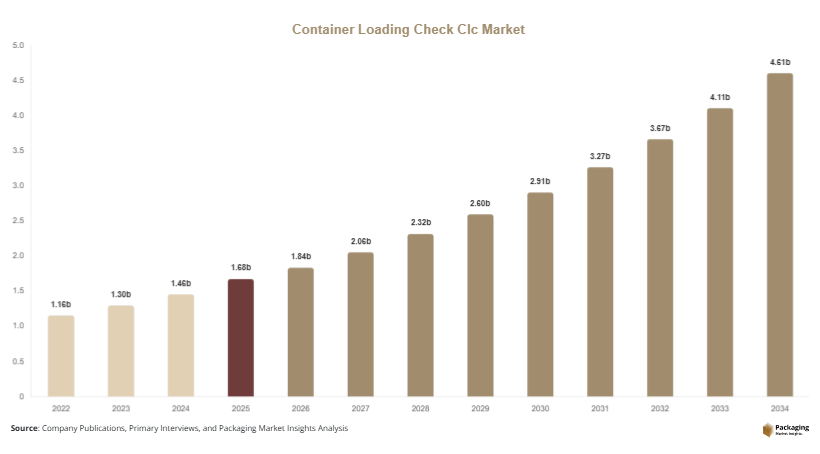
The container loading check (CLC) market size was valued at USD 1.68 billion in 2025 and is estimated to reach USD 1.84 billion in 2026, reflecting steady adoption across global logistics networks. The container loading check market is projected to grow from USD 1.84 billion in 2026 to USD 4.62 billion by 2034, expanding at a compound annual growth rate (CAGR) of 12.18% during the forecast period 2025–2034. Container loading check systems, which use sensor-based scanning, camera vision, and automated volumetric analysis to verify cargo placement, load accuracy, and container fill rates before dispatch, have become a central component of quality assurance frameworks within freight forwarding, third-party logistics, and manufacturing export operations.
Market growth is supported by several converging factors. First, the continued expansion of global containerized trade has increased the need for automated verification tools that reduce manual inspection time and human error at loading docks. Second, rising freight damage claims and cargo insurance costs have pushed shippers and logistics providers to adopt digital loading verification technologies that create auditable records of container condition and load configuration. Third, growing integration of Internet of Things (IoT) sensors, artificial intelligence-based image recognition, and cloud-based reporting dashboards has made container loading check solutions more accessible, scalable, and cost-effective for mid-sized logistics operators, not only large multinational carriers.
Key Highlights:
- North America dominated the container loading check market with the largest share of 34.62% in 2025.
- Asia Pacific is expected to be the fastest-growing region in the container loading check market during the forecast period at a CAGR of 14.87%.
- Based on component, the hardware segment dominated the container loading check market with a share of 46.28% in 2025.
- Based on technology, the camera and vision-based systems segment dominated the market with a share of 41.55% in 2025.
- Based on application, the freight and logistics segment dominated the market with a share of 38.94% in 2025.
- Based on end-use, third-party logistics (3PL) providers dominated the market with 33.71% in 2025.
- The US container loading check market size was valued at USD 512.4 million in 2025 and is projected to reach USD 568.9 million in 2026.
Explore more data points, trends and opportunities Download Free Sample Report
Market Trends
Integration of Artificial Intelligence and Machine Vision in Loading Verification
A prominent trend shaping the container loading check market is the deepening integration of artificial intelligence and machine vision technologies into loading verification workflows. Traditional manual checks are increasingly being replaced by AI-enabled cameras that automatically detect gaps, misalignment, and improper stacking within containers in real time. These systems compare live scans against predefined loading plans, flagging discrepancies before a container is sealed. Logistics operators are pairing these tools with predictive analytics to forecast load-related risks, such as shifting cargo during transit. This shift toward intelligent, self-learning inspection systems is reducing dependency on manual labor while improving consistency of quality checks across multiple warehouse and port locations globally.
Rising Adoption of Cloud-Based and Mobile-Enabled CLC Platforms
Another significant trend is the growing preference for cloud-based and mobile-enabled container loading check platforms that allow remote monitoring and centralized data management. Logistics companies operating across multiple regions are adopting software-as-a-service (SaaS) models that consolidate loading data from various sites into a single dashboard, enabling supervisors to review compliance metrics without being physically present at the dock. Mobile applications integrated with handheld scanners are also gaining traction among small and mid-sized freight operators who require flexible, lower-cost alternatives to fixed installation systems. This trend is broadening market accessibility beyond large enterprise logistics networks into regional trucking and warehousing businesses.
Market Drivers
Increasing Global Containerized Trade Volumes
The steady rise in global containerized trade volumes is a primary driver for the container loading check market. As manufacturing and consumer goods trade continues to move through multimodal shipping networks, the number of containers requiring loading verification has grown substantially. Ports and logistics hubs handling higher container throughput are under pressure to maintain speed without compromising accuracy, making automated loading checks a practical solution for balancing efficiency with cargo safety. Exporters, particularly in electronics, automotive parts, and perishable goods sectors, are prioritizing loading verification to avoid transit damage and contractual penalties tied to delivery condition, reinforcing steady demand for CLC technologies across major trade corridors.
Growing Emphasis on Cargo Damage Reduction and Insurance Cost Control
Rising cargo damage claims and escalating insurance premiums are compelling logistics providers and shippers to invest in container loading check systems as a preventive measure. Damaged or improperly loaded containers often lead to disputes between carriers, shippers, and insurers, resulting in costly claims processes and reputational setbacks for logistics providers. By implementing automated loading verification, companies can generate time-stamped, photographic, and sensor-based evidence of proper loading procedures, which strengthens their position during claims negotiations and reduces liability exposure. This driver is particularly strong among freight forwarders handling high-value or fragile cargo, where a single loading error can result in significant financial loss.
Market Restraints
The container loading check market faces a notable restraint in the form of high initial implementation costs associated with advanced hardware and software integration, particularly for small and mid-sized logistics operators. Comprehensive CLC systems that combine sensor arrays, high-resolution cameras, edge computing devices, and cloud connectivity require substantial upfront capital investment, along with ongoing costs for system calibration, staff training, and software licensing. For smaller freight forwarders and regional warehousing operators working with tighter margins, this cost barrier often delays or limits adoption compared to larger enterprises that can absorb the investment more easily. Additionally, integrating new CLC platforms with existing warehouse management systems and legacy dock infrastructure can present technical compatibility challenges, requiring additional consulting or customization expenses. For example, mid-sized logistics providers operating older dock facilities without pre-installed network infrastructure may need to undertake facility upgrades before deploying camera-based or IoT-enabled loading check systems, adding further cost and implementation time. This restraint is expected to moderate near-term growth in price-sensitive markets, although declining hardware costs and the emergence of subscription-based pricing models are gradually easing adoption barriers over the forecast period.
Market Opportunities
Expansion into Emerging Economies with Growing Export Infrastructure
Emerging economies across Asia Pacific, Latin America, and parts of the Middle East and Africa present a considerable opportunity for container loading check market participants as these regions invest in export-oriented infrastructure and modern logistics hubs. Governments in these regions are actively upgrading port facilities and free trade zones to attract manufacturing investment, creating demand for standardized cargo handling and quality verification systems. Vendors that offer scalable, cost-effective CLC solutions tailored to developing logistics ecosystems stand to capture early-mover advantages in these markets. Partnerships with regional logistics associations and government trade bodies can further accelerate adoption in these high-potential geographies over the coming years.
Integration of Sustainability and Load Optimization Analytics
Growing corporate focus on sustainability is creating an opportunity for container loading check providers to expand their offerings into load optimization analytics that reduce empty space and improve container utilization rates. By combining loading verification with volumetric optimization software, companies can lower the number of containers required per shipment, directly reducing fuel consumption and associated carbon emissions. This dual-purpose functionality appeals to shippers pursuing environmental, social, and governance (ESG) targets alongside operational efficiency goals. Vendors that position their CLC platforms as tools for both compliance and sustainability reporting are likely to strengthen their value proposition among large retail and manufacturing clients with formal emissions reduction commitments.
Report Scope
| Report Metric | Details |
|---|---|
| Market Size in 2025 | USD 1.68 billion |
| Market Size in 2026 | USD 1.84 billion |
| Market Size in 2034 | USD 4.62 billion |
| CAGR | 12.18% (2026-2034) |
| Base Year for Estimation | 2025 |
| Historical Data | 2022-2024 |
| Forecast Period | 2026-2034 |
| Report Coverage | Revenue Forecast, Competitive Landscape, Supply Chain Disruption, Growth Factors, Environment & Regulatory Landscape and Trends |
| Geographies Covered | North America, Europe, APAC, Middle East and Africa, LATAM |
| Countries Covered | U.S., Canada, U.K., Germany, France, Spain, Italy, Russia, Nordic, Benelux, Rest of Europe, China, South Korea, Japan, India, Australia, Singapore, Taiwan, South East Asia, Rest of Asia-Pacific, UAE, Turky, Saudi Arabia, South Africa, Egypt, Nigeria, Rest of MEA, Brazil, Mexico, Argentina, Chile, Colombia, Rest of LATAM |
Explore more data points, trends and opportunities Download Free Sample Report
Segmental Analysis
By Component
The hardware segment dominated the container loading check market with a share of 46.28% in 2025, driven by widespread deployment of sensors, cameras, scanning devices, and edge computing units required to capture and process loading data at dock locations. Hardware forms the foundational layer of any container loading check system, and logistics operators continue to prioritize investment in durable, high-resolution imaging equipment capable of operating reliably in variable warehouse and port environments. The segment's dominance is further reinforced by the need for periodic hardware upgrades and replacements as older camera and sensor models are phased out in favor of higher-precision alternatives, sustaining consistent revenue contribution from this category across the forecast period.
The services segment is projected to register the fastest CAGR of 15.24% during the forecast period, supported by rising demand for installation, calibration, system integration, and ongoing technical support services as logistics companies scale their CLC deployments across multiple facilities. Growth in this segment is closely tied to the increasing complexity of multi-site logistics operations, where companies require specialized consulting to ensure consistent system performance and data standardization across different warehouse configurations. As more mid-sized operators enter the market, demand for managed services and subscription-based support packages is expected to expand at a notably faster pace than hardware sales alone.
By Technology
Camera and vision-based systems dominated the container loading check market with a share of 41.55% in 2025, owing to their versatility in capturing detailed visual data on load configuration, damage detection, and space utilization within containers. These systems offer a practical balance of accuracy and cost, making them the preferred choice among freight forwarders and warehousing operators seeking reliable documentation without the higher expense of full sensor-array installations. The widespread familiarity of camera-based inspection among dock staff, combined with continuous improvements in image resolution and low-light performance, has reinforced the segment's leading position across both developed and emerging logistics markets.
The AI and machine learning-based analytics segment is expected to grow at the fastest CAGR of 16.73% during the forecast period, driven by increasing demand for predictive, automated decision-making capabilities that go beyond simple visual documentation. Growth in this segment is fueled by logistics companies seeking to reduce manual review time through systems that can automatically classify loading errors, predict shifting risks during transit, and generate compliance reports without human intervention. As machine learning models become more refined through larger training datasets across diverse cargo types, adoption of AI-driven container loading check technology is expected to accelerate meaningfully among enterprise-scale logistics providers.
By End-Use
Third-party logistics (3PL) providers dominated the container loading check market with a share of 33.71% in 2025, reflecting the central role these companies play in managing loading operations on behalf of multiple manufacturing and retail clients. 3PL providers handle diverse cargo types across numerous facilities, making standardized, technology-driven loading verification essential for maintaining service quality and contractual compliance across their client base. The scale at which 3PL operators manage container volumes has made them early and consistent adopters of automated loading check systems, as manual inspection processes become increasingly impractical at high-throughput distribution centers.
The e-commerce and retail distribution segment is projected to expand at the fastest CAGR of 15.96% during the forecast period, driven by rising direct-to-consumer shipping volumes and the growing complexity of mixed-product container loads. Retailers and e-commerce fulfillment operators are increasingly adopting container loading check systems to reduce damage-related returns and maintain delivery reliability as order volumes continue to rise across international shipping lanes. This segment's rapid growth reflects the broader shift toward omnichannel retail logistics, where accurate loading verification has become a competitive differentiator in customer satisfaction and cost management.
Container Loading Check Clc Market Segmentations
Component
- Hardware
- Software
- Services
Technology
- Camera and Vision-Based Systems
- Sensor-Based Systems (LiDAR, Ultrasonic, Infrared)
- AI and Machine Learning-Based Analytics
- RFID and Barcode Integration Systems
Application
- Freight and Logistics
- Manufacturing and Export Operations
- Port and Terminal Operations
- Warehousing and Distribution
End-Use
- Third-Party Logistics (3PL) Providers
- E-Commerce and Retail Distribution
- Manufacturing Enterprises
- Freight Forwarders and Carriers
Region
- North America
- Europe
- Asia Pacific
- Middle East & Africa
- Latin America
Regional Analysis
North America
North America held a market share of 34.62% in 2025 and is projected to expand at a CAGR of 10.94% through 2034, supported by mature freight networks and early adoption of automation technologies across major logistics hubs. The region's well-established third-party logistics sector, combined with strong regulatory attention to cargo safety documentation, continues to sustain steady investment in container loading check infrastructure across both port facilities and inland distribution centers.
The United States dominates the North American market, driven by high containerized import-export volumes through West Coast and Gulf Coast ports. A unique growth factor for the region is the widespread integration of CLC systems with existing warehouse management software used by large retail distribution networks, allowing seamless data flow between loading verification and inventory management platforms without requiring separate operational systems.
Europe
Europe accounted for a market share of 24.85% in 2025 and is expected to grow at a CAGR of 10.62% during the forecast period, supported by stringent cargo safety regulations and a dense network of intermodal freight corridors connecting major seaports to inland manufacturing centers. The region's strong automotive and pharmaceutical export industries continue to drive demand for precise, auditable loading verification processes.
Germany leads the European market, owing to its position as a central logistics gateway for continental freight distribution. A unique growth factor for the region is the presence of strict European Union cross-border cargo documentation requirements, which incentivize logistics operators to adopt standardized digital loading check systems that generate compliant, shareable records across multiple national customs authorities.
Asia Pacific
Asia Pacific held a market share of 27.41% in 2025 and is anticipated to register the fastest CAGR of 14.87% through 2034, fueled by rapid expansion of manufacturing exports, port modernization programs, and rising containerized trade volumes across China, India, and Southeast Asia. The region's growing e-commerce and electronics manufacturing sectors are particularly reliant on accurate, high-volume loading verification.
China dominates the Asia Pacific market, supported by its position as the largest global exporter of containerized goods. A unique growth factor for the region is large-scale government investment in smart port initiatives, which incorporate automated container loading check technologies as a standard component of next-generation port infrastructure projects across major coastal trade hubs.
Middle East & Africa
Middle East & Africa accounted for a market share of 7.24% in 2025 and is projected to grow at a CAGR of 12.36% during the forecast period, driven by expanding transshipment hubs and increasing investment in regional logistics infrastructure connecting Asian, European, and African trade routes. Growing free trade zone development is further supporting demand for standardized loading verification processes.
The United Arab Emirates leads the regional market, benefiting from its status as a major transshipment and re-export hub. A unique growth factor for the region is the ongoing expansion of Jebel Ali and other strategic ports, which are incorporating advanced container loading check systems to maintain competitive service levels against other global logistics gateways.
Latin America
Latin America held a market share of 5.88% in 2025 and is expected to grow at a CAGR of 11.42% through 2034, supported by rising agricultural and commodity export volumes that require careful loading verification to prevent spoilage and transit damage. Expanding port privatization efforts across the region are also contributing to modernization of cargo handling practices.
Brazil dominates the Latin American market, driven by its position as a leading exporter of agricultural commodities and manufactured goods. A unique growth factor for the region is the increasing need for temperature-sensitive and perishable cargo verification, which is prompting logistics operators to adopt specialized loading check systems designed for refrigerated and time-sensitive container shipments.
Competitive Landscape
The container loading check market features a competitive landscape comprising established logistics technology providers, industrial automation companies, and specialized inspection system developers. Market participants are focusing on strategic partnerships with port authorities and logistics networks, continuous product innovation in AI-based detection accuracy, and geographic expansion into emerging trade corridors to strengthen their market position. Companies are also investing in modular, scalable platforms that can be tailored to varying facility sizes, from small regional warehouses to large-scale international port terminals.
A leading participant in the market recently expanded its container loading check platform to include integrated volumetric optimization analytics, allowing clients to simultaneously verify loading accuracy and improve container fill efficiency through a single unified dashboard. This development reflects a broader industry trend toward combining compliance-focused inspection tools with operational efficiency features, positioning leading vendors to capture greater value from existing customer relationships while attracting new clients seeking multifunctional logistics technology solutions.
Key Players
- Zebra Technologies Corporation
- Honeywell International Inc.
- Cognex Corporation
- SICK AG
- Siemens Logistics
- Dematic Corp.
- Vitronic Machine Vision Holding GmbH
- Cargo Sense Inc.
- Interroll Group
- Camco Technologies
- Körber Supply Chain
- Datalogic S.p.A.
- Basler AG
- Fetch Robotics Inc.
- Ideal Warehouse Innovations Inc.
- Loadsafe International
- Smart Container Solutions Ltd.