Protein Packaging Market Size and Growth
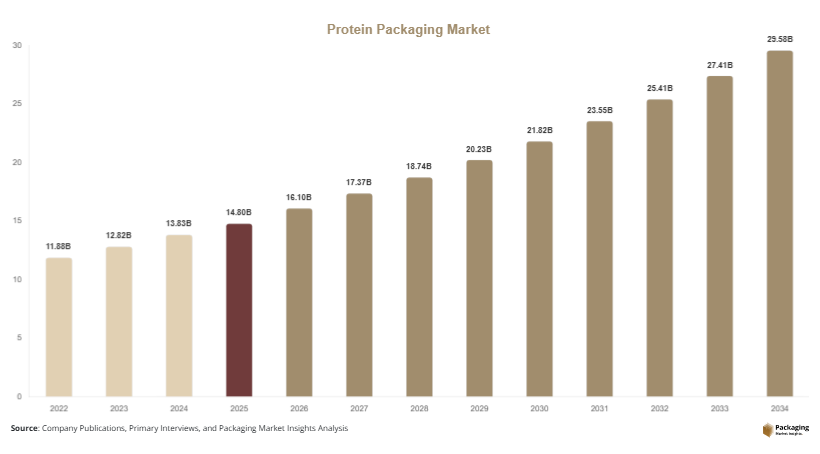
The global protein packaging market size was valued at USD 14.8 billion in 2025 and is expected to reach USD 16.1 billion in 2026, further expanding to approximately USD 29.7 billion by 2034, registering a CAGR of 7.9% during 2025–2034. This growth reflects increasing consumption of protein-enriched products across both developed and emerging economies. The is experiencing steady expansion due to rising demand for protein-based food products, sports nutrition supplements, and ready-to-consume protein beverages.
One of the primary growth factors is the rapid increase in fitness awareness and protein intake among consumers. The demand for protein powders, bars, and shakes has significantly increased, creating a strong need for durable and functional packaging formats that ensure product safety and extended shelf life. Additionally, the expansion of the e-commerce sector has accelerated the need for robust and lightweight packaging solutions that can withstand long-distance transportation.
Key Highlights:
- Asia Pacific dominated the market with a 36.2% share in 2025, while Latin America is projected to grow at the fastest CAGR of 8.5%.
- Flexible packaging led the type segment with a 52.4% share, while rigid packaging is expected to grow at a CAGR of 7.6%.
- Plastic materials dominated with a 54.1% share, while biodegradable materials are forecasted to grow at a CAGR of 9.2%.
- Sports nutrition applications led the segment with 34.7% share, while plant-based protein packaging is expected to grow at a CAGR of 8.8%.
- The United States remained the dominant country with a market size of USD 4.1 billion in 2025 and USD 4.4 billion in 2026.
Explore more data points, trends and opportunities Download Free Sample Report
Market Trends
Rising Adoption of Sustainable and Recyclable Packaging
The protein packaging market is witnessing a growing shift toward sustainable materials such as recyclable plastics, compostable films, and paper-based solutions. Manufacturers are responding to regulatory pressure and consumer awareness by redesigning packaging formats to reduce environmental impact. Flexible pouches made from mono-material plastics are gaining traction due to their recyclability and lower carbon footprint. Additionally, brands are focusing on reducing packaging weight and material usage, which helps lower logistics costs and emissions. This trend is particularly evident in protein powder and snack packaging, where companies are replacing rigid containers with eco-friendly alternatives.
Increasing Demand for Convenience-Oriented Packaging Formats
Convenience remains a major trend influencing packaging innovations in the protein industry. Consumers prefer packaging formats that are easy to use, portable, and resealable. Single-serve sachets, stand-up pouches, and ready-to-drink bottles are becoming increasingly popular, especially among urban consumers and fitness enthusiasts. These formats not only enhance product usability but also support portion control and on-the-go consumption. Additionally, advancements in packaging technology, such as easy-tear openings and zip-lock closures, are improving consumer experience. This trend is expected to continue as busy lifestyles drive demand for quick and accessible nutrition solutions.
Market Drivers
Growth in Sports Nutrition and Fitness Industry
The expanding sports nutrition industry is a major driver for the protein packaging market. Increasing participation in fitness activities and rising awareness about protein consumption have led to higher demand for protein powders, bars, and beverages. Packaging plays a crucial role in preserving product quality, preventing contamination, and ensuring convenience. As the number of gyms, fitness centers, and health-conscious consumers grows, manufacturers are focusing on innovative packaging designs that cater to this segment. The demand for bulk packaging and single-serve options is also increasing, further driving market growth.
Expansion of E-commerce and Direct-to-Consumer Channels
The rapid growth of e-commerce platforms has significantly influenced packaging requirements in the protein industry. Products sold online require packaging that can withstand handling, transportation, and storage without damage. This has led to increased demand for durable and lightweight packaging materials. Additionally, direct-to-consumer brands are focusing on attractive and functional packaging to enhance brand visibility and customer experience. Packaging solutions that offer protection, convenience, and sustainability are becoming essential, driving innovation and growth in the market.
Market Restraint
High Cost of Sustainable Packaging Materials
One of the key challenges in the protein packaging market is the high cost associated with sustainable and eco-friendly materials. While there is increasing demand for biodegradable and recyclable packaging, these materials often come at a higher price compared to conventional plastics. This cost difference can impact profit margins for manufacturers, especially small and medium-sized enterprises. Additionally, the limited availability of sustainable raw materials and the need for specialized production processes further increase costs. For example, switching from traditional plastic containers to biodegradable alternatives may require new machinery and supply chain adjustments. These factors can slow down the adoption of sustainable packaging solutions despite growing environmental concerns.
Market Opportunities
Growth of Plant-Based Protein Products
The rising popularity of plant-based diets presents significant opportunities for the protein packaging market. Products such as pea protein, soy protein, and almond-based protein powders are gaining traction among health-conscious consumers. These products often require specialized packaging to maintain freshness and prevent moisture absorption. Packaging manufacturers can capitalize on this trend by developing innovative solutions tailored to plant-based products. Additionally, the demand for eco-friendly packaging aligns with the values of plant-based consumers, creating further opportunities for growth.
Technological Advancements in Smart Packaging
Smart packaging technologies are creating new growth opportunities in the market. Features such as freshness indicators, QR codes, and temperature-sensitive labels are enhancing product transparency and consumer engagement. These technologies help ensure product quality and provide valuable information to consumers, such as nutritional content and usage instructions. As the demand for premium and high-quality protein products increases, manufacturers are investing in advanced packaging solutions to differentiate their offerings. This trend is expected to drive innovation and open new revenue streams in the market.
Report Scope
| Report Metric | Details |
|---|---|
| Market Size in 2025 | USD 14.8 Billion |
| Market Size in 2026 | USD 16.1 Billion |
| Market Size in 2034 | USD 29.7 Billion |
| CAGR | 7.9% (2026-2034) |
| Base Year for Estimation | 2025 |
| Historical Data | 2022-2024 |
| Forecast Period | 2026-2034 |
| Report Coverage | Revenue Forecast, Competitive Landscape, Supply Chain Disruption, Growth Factors, Environment & Regulatory Landscape and Trends |
| Geographies Covered | North America, Europe, APAC, Middle East and Africa, LATAM |
| Countries Covered | U.S., Canada, U.K., Germany, France, Spain, Italy, Russia, Nordic, Benelux, Rest of Europe, China, South Korea, Japan, India, Australia, Singapore, Taiwan, South East Asia, Rest of Asia-Pacific, UAE, Turky, Saudi Arabia, South Africa, Egypt, Nigeria, Rest of MEA, Brazil, Mexico, Argentina, Chile, Colombia, Rest of LATAM |
Explore more data points, trends and opportunities Download Free Sample Report
Segmental Analysis
By Type
Flexible packaging dominated the market, accounting for 52.4% share in 2024. This segment includes stand-up pouches, sachets, and bags, which are widely used for protein powders and snacks. Flexible packaging offers advantages such as lightweight design, lower material usage, and cost efficiency. It also provides excellent barrier properties, helping maintain product freshness and extend shelf life. The growing demand for convenient and portable packaging formats is further supporting the dominance of this segment.
Rigid packaging is expected to be the fastest-growing segment, with a CAGR of 7.6%. This includes containers, bottles, and jars used for protein supplements and ready-to-drink beverages. The growth of this segment is driven by increasing demand for premium packaging solutions that offer durability and enhanced product protection. Additionally, advancements in material technology are improving the performance and sustainability of rigid packaging.
By Material
Plastic dominated the market with a 54.1% share in 2024, due to its versatility, durability, and cost-effectiveness. It is widely used in both flexible and rigid packaging formats. Plastic materials provide excellent barrier properties, protecting protein products from moisture, oxygen, and contamination. The availability of various types of plastics allows manufacturers to customize packaging according to product requirements.
Biodegradable materials are the fastest-growing segment, with a CAGR of 9.2%. The increasing focus on sustainability and environmental regulations is driving the adoption of eco-friendly materials. These materials are used in flexible packaging formats and are gaining popularity among environmentally conscious consumers. The development of advanced biodegradable materials with improved performance is further supporting the growth of this segment.
By Application
Sports nutrition applications dominated the market, accounting for 34.7% share in 2024. This segment includes protein powders, bars, and beverages used by athletes and fitness enthusiasts. The high demand for these products requires packaging solutions that ensure product safety, convenience, and extended shelf life. Packaging innovations such as resealable pouches and single-serve sachets are widely used in this segment.
Plant-based protein applications are expected to be the fastest-growing segment, with a CAGR of 8.8%. The increasing adoption of plant-based diets is driving demand for protein products derived from sources such as soy, pea, and rice. These products require specialized packaging to maintain freshness and prevent contamination. The growing focus on sustainability is also supporting the adoption of eco-friendly packaging solutions in this segment.
Protein Packaging Market Segmentations
By Type
- Flexible Packaging
- Rigid Packaging
By Material
- Plastic
- Glass
- Metal
- Biodegradable Materials
By Application
- Sports Nutrition
- Dietary Supplements
- Functional Foods
- Plant-Based Protein
Regional Analysis
North America
North America accounted for a significant share of the protein packaging market, contributing approximately 31.4% in 2025, with a projected CAGR of 7.2% during the forecast period. The region benefits from a well-established sports nutrition industry and high consumer awareness regarding protein intake. The demand for convenient and sustainable packaging solutions is driving innovation, particularly in flexible packaging formats.
The United States dominates the regional market due to its large consumer base and strong presence of protein supplement manufacturers. A key growth factor in the region is the increasing demand for ready-to-drink protein beverages, which require advanced packaging solutions to ensure product stability and shelf life.
Europe
Europe held a market share of 24.6% in 2025 and is expected to grow at a CAGR of 7.5%. The region is characterized by strict environmental regulations, which are encouraging the adoption of sustainable packaging materials. Consumers are increasingly opting for eco-friendly products, driving demand for recyclable and biodegradable packaging solutions.
Germany is the leading country in the European market, supported by its strong food processing industry. A unique growth factor is the increasing adoption of circular economy practices, which are promoting the use of recyclable packaging materials across the protein product supply chain.
Asia Pacific
Asia Pacific dominated the market with a 36.2% share in 2025 and is projected to grow at a CAGR of 8.3%. Rapid urbanization, rising disposable incomes, and increasing health awareness are driving the demand for protein products in the region. The expansion of e-commerce platforms is also contributing to market growth.
China is the dominant country in the region, driven by its large population and growing fitness culture. A key growth factor is the increasing demand for affordable protein products, which is encouraging the development of cost-effective packaging solutions.
Middle East & Africa
The Middle East & Africa region accounted for a 4.8% share in 2025 and is expected to grow at a CAGR of 7.8%. The market is gradually expanding due to increasing health awareness and rising demand for protein supplements. The adoption of modern retail formats is also supporting market growth.
The United Arab Emirates leads the regional market, supported by its growing fitness industry. A unique growth factor is the increasing popularity of premium imported protein products, which require high-quality packaging solutions.
Latin America
Latin America held a market share of 3.0% in 2025 and is projected to grow at the fastest CAGR of 8.5%. The region is witnessing increasing demand for protein-rich foods and supplements, driven by changing dietary habits and rising health awareness.
Brazil is the dominant country in the region, supported by its large consumer base. A key growth factor is the expansion of local protein brands, which is driving demand for innovative and cost-effective packaging solutions.
Competitive Landscape
The protein packaging market is moderately fragmented, with several global and regional players competing based on product innovation, material development, and sustainability initiatives. Leading companies are focusing on expanding their product portfolios and enhancing their manufacturing capabilities to meet the growing demand for protein packaging solutions.
Amcor plc is a key leader in the market, known for its extensive range of flexible and rigid packaging solutions. The company recently introduced a new line of recyclable packaging for protein powders, aimed at reducing environmental impact. Other major players such as AptarGroup, Berry Global, and Gerresheimer are investing in research and development to create advanced packaging solutions.
Strategic partnerships, mergers, and acquisitions are common in the market, as companies aim to strengthen their market presence and expand their geographic reach. The focus on sustainability and innovation is expected to drive competition in the coming years.
Key Players List
- Amcor plc
- AptarGroup, Inc.
- Berry Global Inc.
- Gerresheimer AG
- Silgan Holdings Inc.
- Mondi Group
- Sonoco Products Company
- Huhtamaki Oyj
- Sealed Air Corporation
- Winpak Ltd.
- ProAmpac
- Coveris Holdings S.A.
- Constantia Flexibles
- Graham Packaging Company
- Plastipak Holdings Inc.