Plastic Blister Packs Market Size and Growth
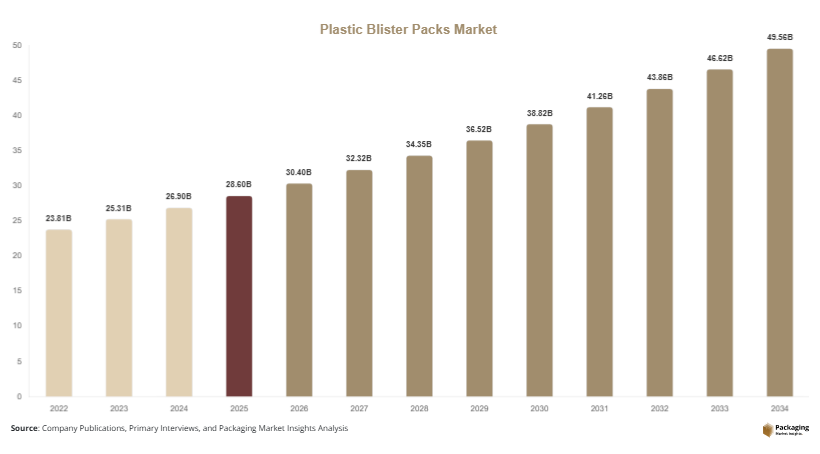
The global plastic blister packs market size is estimated at USD 28.6 billion in 2025 and is projected to reach USD 30.4 billion in 2026. The market is expected to grow significantly, reaching USD 52.8 billion by 2034, expanding at a CAGR of 6.3% during the forecast period (2025–2034). The plastic blister packs market is witnessing steady expansion driven by increasing demand for secure, lightweight, and cost-effective packaging solutions across multiple industries. Plastic blister packs are widely used in pharmaceuticals, consumer goods, electronics, and food packaging due to their durability, transparency, and ability to protect products from contamination and damage.
One of the primary growth factors is the increasing demand from the pharmaceutical industry. Blister packs are widely used for packaging tablets and capsules due to their ability to maintain product integrity and extend shelf life. The growing prevalence of chronic diseases and increasing consumption of pharmaceutical products are driving demand for blister packaging solutions globally.
Key Highlights:
- Market size is projected to reach USD 52.8 billion by 2034, reflecting steady growth supported by rising demand for protective and efficient packaging solutions. Increasing applications across healthcare and consumer industries are contributing to long-term expansion.
- The market is expected to grow at a CAGR of 6.3% from 2025 to 2034, indicating consistent adoption across multiple sectors. Continuous improvements in packaging design and functionality are supporting this growth trajectory.
- Strong demand from pharmaceutical and consumer goods sectors is driving the market forward. Blister packs are widely used for product safety, visibility, and extended shelf life in these industries.
- Increasing adoption in retail and e-commerce packaging is boosting market growth. These packaging solutions offer durability and product protection during storage and transportation.
- Advancements in recyclable and high-barrier materials are improving sustainability and performance. Innovations are enabling manufacturers to meet environmental regulations while maintaining packaging efficiency.
Explore more data points, trends and opportunities Download Free Sample Report
Market Trends
Shift Toward Sustainable and Recyclable Blister Packaging
A significant trend in the plastic blister packs market is the shift toward sustainable and recyclable materials. Companies are increasingly adopting eco-friendly materials such as PET and bio-based plastics to reduce environmental impact. This trend is driven by regulatory pressure and growing consumer awareness regarding sustainability. Manufacturers are developing recyclable blister packs that maintain performance while reducing waste. Additionally, innovations in mono-material blister designs are improving recyclability. This trend is expected to influence product development strategies and encourage companies to invest in sustainable packaging solutions.
Growing Adoption of Smart and Tamper-Evident Packaging Solutions
Another notable trend is the increasing adoption of smart and tamper-evident blister packaging solutions. These features are particularly important in the pharmaceutical and healthcare sectors, where product safety and authenticity are critical. Companies are integrating technologies such as QR codes and RFID tags to enhance traceability and consumer engagement. Tamper-evident designs provide additional security, ensuring product integrity throughout the supply chain. This trend is supported by regulatory requirements and the need to combat counterfeiting, driving innovation in blister packaging technologies.
Market Drivers
Rising Demand from the Pharmaceutical Industry
The growing demand for pharmaceutical products is a major driver of the plastic blister packs market. Blister packaging is widely used for unit-dose packaging of tablets and capsules, offering protection against moisture, light, and contamination. The increasing prevalence of chronic diseases and aging populations are driving pharmaceutical consumption globally. Additionally, the convenience and safety offered by blister packs are supporting their adoption. Pharmaceutical companies are increasingly using blister packaging to enhance product safety and compliance with regulatory standards.
Expansion of Retail and E-commerce Sectors
The expansion of retail and e-commerce sectors is another key driver of the market. Plastic blister packs are widely used for packaging consumer goods due to their durability and visibility. The growth of online shopping is increasing the demand for secure packaging solutions that protect products during transportation. Blister packs provide an effective solution by preventing damage and ensuring product integrity. This trend is particularly strong in electronics and personal care products, driving market growth.
Market Restraint
Environmental Concerns and Regulatory Challenges
One of the major restraints in the plastic blister packs market is the growing concern over environmental impact and plastic waste. Governments and regulatory bodies are implementing strict regulations to reduce plastic usage and promote sustainable alternatives. These regulations can increase compliance costs and limit the use of certain plastic materials. For example, companies may need to invest in recyclable or biodegradable materials, which can be more expensive. Additionally, consumer preference for eco-friendly packaging may reduce demand for traditional plastic blister packs. These factors can pose challenges for market growth and require companies to adapt their strategies.
Market Opportunities
Development of Eco-Friendly Blister Packaging Solutions
The development of eco-friendly blister packaging solutions presents significant opportunities for the market. Companies are investing in research and development to create biodegradable and recyclable blister packs. These innovations are helping to address environmental concerns and comply with regulatory requirements. The growing demand for sustainable packaging is encouraging companies to adopt eco-friendly materials and processes. This trend is expected to drive market growth and create new opportunities for manufacturers.
Growth in Emerging Markets
The expansion of blister packaging in emerging markets offers promising opportunities for the plastic blister packs market. Rapid urbanization, increasing disposable income, and growing healthcare infrastructure are driving demand for packaged products in these regions. Countries in Asia Pacific, Latin America, and Africa are witnessing significant growth in pharmaceutical and consumer goods sectors. This is creating opportunities for blister packaging manufacturers to expand their presence and tap into new markets.
Report Scope
| Report Metric | Details |
|---|---|
| Market Size in 2025 | USD 28.6 Billion |
| Market Size in 2026 | USD 30.4 Billion |
| Market Size in 2034 | USD 52.8 Billion |
| CAGR | 6.3% (2026-2034) |
| Base Year for Estimation | 2025 |
| Historical Data | 2022-2024 |
| Forecast Period | 2026-2034 |
| Report Coverage | Revenue Forecast, Competitive Landscape, Supply Chain Disruption, Growth Factors, Environment & Regulatory Landscape and Trends |
| Geographies Covered | North America, Europe, APAC, Middle East and Africa, LATAM |
| Countries Covered | U.S., Canada, U.K., Germany, France, Spain, Italy, Russia, Nordic, Benelux, Rest of Europe, China, South Korea, Japan, India, Australia, Singapore, Taiwan, South East Asia, Rest of Asia-Pacific, UAE, Turky, Saudi Arabia, South Africa, Egypt, Nigeria, Rest of MEA, Brazil, Mexico, Argentina, Chile, Colombia, Rest of LATAM |
Explore more data points, trends and opportunities Download Free Sample Report
Segmental Analysis
By Type
The thermoformed blister packs segment dominated the market in 2024, accounting for approximately 62% of the total share. These packs are widely used due to their cost-effectiveness and versatility. Thermoforming allows for the production of customized shapes and sizes, making it suitable for various applications. The growing demand for efficient packaging solutions is driving the adoption of this segment.
The cold-formed blister packs segment is expected to be the fastest-growing, with a CAGR of 6.9% during the forecast period. These packs offer superior barrier properties, protecting products from moisture and light. The growth of this segment is driven by increasing demand from the pharmaceutical industry.
By Application
The pharmaceutical packaging segment held the largest market share of approximately 55% in 2024. The need for safe and reliable packaging solutions is driving the adoption of blister packs in this segment. The increasing consumption of pharmaceutical products is supporting market growth.
The consumer goods segment is expected to grow at the highest CAGR of 7.1% during the forecast period. The demand for attractive and protective packaging solutions is driving the adoption of blister packs in this segment.
By End-Use Industry
The healthcare segment dominated the market in 2024, accounting for around 57% of the total share. The growing demand for pharmaceutical products is driving the adoption of blister packaging in this sector.
The electronics segment is expected to be the fastest-growing, with a CAGR of 7.3% during the forecast period. The need for secure packaging solutions for electronic products is driving market growth.
Plastic Blister Packs Market Segmentations
By Type
- Thermoformed Blister Packs
- Cold-Formed Blister Packs
By Application
- Pharmaceutical Packaging
- Consumer Goods Packaging
- Electronics Packaging
- Food Packaging
By End-Use Industry
- Healthcare
- Consumer Goods
- Electronics
- Food & Beverage
Regional Analysis
North America
North America accounted for approximately 34% of the global plastic blister packs market share in 2025 and is projected to grow at a CAGR of 5.8% during the forecast period. The region benefits from a strong pharmaceutical industry and advanced packaging technologies. High consumer awareness and strict regulatory standards are also driving the adoption of blister packaging solutions.
The United States dominates the regional market, supported by its large healthcare sector and high demand for pharmaceutical packaging. A unique growth factor is the increasing use of blister packs for unit-dose packaging, which enhances patient compliance and safety.
Europe
Europe held around 28% of the market share in 2025 and is expected to grow at a CAGR of 6.0%. The region’s focus on sustainability and regulatory compliance is influencing the adoption of advanced blister packaging solutions. Companies are investing in recyclable materials to meet environmental standards.
Germany is the leading country in Europe, driven by its strong manufacturing base and pharmaceutical industry. A unique growth factor is the adoption of eco-friendly blister packaging solutions to comply with stringent environmental regulations.
Asia Pacific
Asia Pacific accounted for approximately 25% of the market share in 2025 and is expected to grow at the fastest CAGR of 7.5%. Rapid industrialization and increasing healthcare expenditure are driving demand for blister packaging in the region.
China dominates the Asia Pacific market due to its large manufacturing base and growing pharmaceutical industry. A key growth factor is the increasing demand for affordable and efficient packaging solutions in emerging economies.
Middle East & Africa
The Middle East & Africa region held a market share of around 7% in 2025 and is projected to grow at a CAGR of 5.6%. The market is driven by increasing healthcare investments and rising demand for packaged consumer goods.
The United Arab Emirates is a leading country in this region, with growing adoption of advanced packaging solutions. A unique growth factor is the expansion of healthcare infrastructure and pharmaceutical distribution networks.
Latin America
Latin America accounted for approximately 6% of the market share in 2025 and is expected to grow at a CAGR of 5.9%. The region is witnessing increasing demand for blister packaging in pharmaceuticals and consumer goods.
Brazil dominates the regional market, supported by its large population and growing healthcare sector. A key growth factor is the increasing adoption of blister packaging for over-the-counter medicines and consumer products.
Competitive Landscape
The plastic blister packs market is characterized by the presence of several global and regional players focusing on product innovation and sustainability. Companies are investing in advanced manufacturing technologies and eco-friendly materials to enhance their competitive position.
Amcor plc is considered a leading player in the market, known for its extensive product portfolio and focus on sustainable packaging solutions. The company recently introduced recyclable blister packaging solutions to meet growing environmental requirements. Other key players such as Sonoco Products Company, WestRock Company, and Constantia Flexibles are also actively investing in research and development. Strategic partnerships and acquisitions are common, enabling companies to expand their market presence and improve operational efficiency.
Key Players List
- Amcor plc
- Sonoco Products Company
- WestRock Company
- Constantia Flexibles
- Berry Global Inc.
- Sealed Air Corporation
- Tekni-Plex, Inc.
- Klockner Pentaplast Group
- Display Pack Inc.
- Honeywell International Inc.
- Dow Inc.
- Bemis Company, Inc.
- Uflex Ltd.
- Huhtamaki Oyj
- DS Smith Plc