Luxury Packaging Market Size and Growth
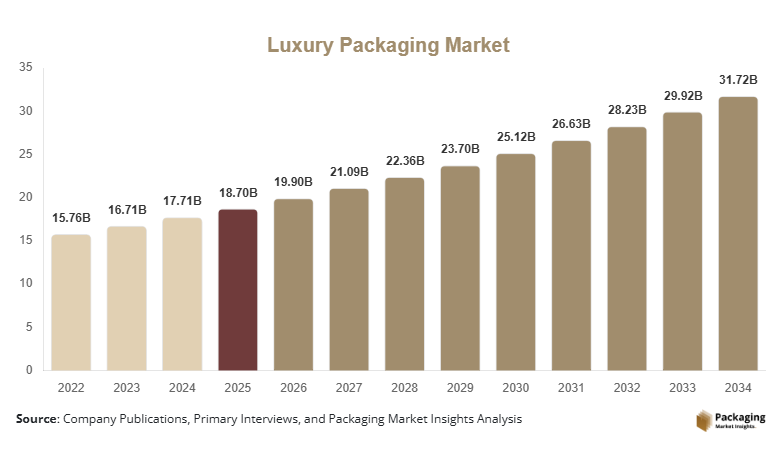
The global luxury packaging market size was valued at USD 18.7 billion in 2025 and is estimated to reach USD 19.9 billion in 2026. The market is projected to grow to USD 33.6 billion by 2034, expanding at a CAGR of 6.0% during the forecast period from 2025 to 2034. Rising disposable incomes in emerging economies, expansion of luxury cosmetic brands, and growing gifting culture are contributing to market growth. Premium packaging materials such as textured paperboard, glass, metal, and sustainable rigid plastics are increasingly being used to improve shelf visibility and customer experience.
Luxury packaging manufacturers are also integrating digital printing, embossing, magnetic closures, holographic finishes, and smart authentication technologies into packaging solutions. The rise of premium skincare and fragrance products in Asia Pacific and North America is accelerating the demand for decorative and sustainable packaging designs. Furthermore, luxury brands are emphasizing recyclable and reusable packaging formats to align with environmental targets and consumer expectations regarding sustainability.
Key Highlights
- North America dominated the luxury packaging market with a 34.8% share in 2025.
- Asia Pacific is projected to grow at the fastest CAGR of 7.1%.
- Rigid boxes led the packaging type segment with a 31.4% share in 2024.
- Paper and paperboard materials dominated the market with a 38.7% share.
- Cosmetics and fragrances accounted for 36.9% of total application share in 2024.
- The US remained the dominant country market with a market size of USD 4.8 billion in 2025 and USD 5.1 billion in 2026.
Explore more data points, trends and opportunities Download Free Sample Report
Market Trends
Growing Adoption of Sustainable Luxury Packaging
Luxury brands are increasingly shifting toward recyclable, reusable, and biodegradable packaging materials to align with sustainability goals and changing consumer expectations. Premium brands are replacing conventional plastics with FSC-certified paperboard, molded fiber, glass, and compostable materials without compromising packaging aesthetics. Consumers purchasing luxury products are becoming more conscious of environmental impact, encouraging manufacturers to adopt eco-friendly production methods and low-emission packaging technologies. Luxury cosmetic and fragrance brands are particularly investing in refillable containers and reusable gift boxes to strengthen sustainability positioning. The use of soy-based inks, water-based coatings, and minimalistic structural packaging designs is also increasing across premium product categories globally.
Expansion of Smart and Personalized Packaging Solutions
Personalization and smart packaging technologies are becoming important trends within the luxury packaging market. Brands are using QR codes, NFC-enabled labels, augmented reality integration, and serialized authentication systems to improve consumer engagement and prevent counterfeiting. Personalized gift packaging with customized names, festive themes, and premium finishes is becoming increasingly common across online luxury retail channels. Luxury packaging producers are also investing in digital printing systems capable of short-run customization and rapid design adaptation. Smart packaging enables companies to create stronger customer relationships while collecting product interaction data. The rising demand for limited-edition collections and influencer-driven branding campaigns continues to support innovation in personalized premium packaging formats.
Market Drivers
Rising Demand for Premium Cosmetics and Fragrances
The expansion of premium beauty and fragrance industries is a significant driver for the luxury packaging market. Luxury cosmetic brands rely heavily on visually appealing packaging to create product differentiation and reinforce brand identity. Consumers often associate high-quality packaging with product authenticity and premium value, particularly in skincare, perfumes, and makeup products. Glass bottles, magnetic rigid boxes, embossed labels, and metallic finishes are widely used to improve consumer perception and retail presentation. The growth of social media marketing and beauty influencers has also increased emphasis on visually attractive packaging suitable for online product promotion. As luxury skincare and fragrance consumption rises across Asia Pacific and North America, demand for sophisticated packaging solutions continues to expand steadily.
Growth of Luxury E-Commerce and Gifting Culture
The rapid expansion of luxury e-commerce platforms and premium gifting culture is accelerating demand for durable and visually appealing packaging solutions. Luxury brands are focusing on creating memorable unboxing experiences to improve customer loyalty and brand engagement. Decorative rigid boxes, custom inserts, silk linings, and premium wrapping materials are increasingly used for online deliveries and festive gifting applications. High-income consumers are spending more on personalized gift sets, luxury confectionery, premium beverages, and fashion accessories, creating additional packaging demand. Moreover, luxury packaging manufacturers are developing protective designs capable of reducing product damage during transportation while maintaining visual quality. This trend is especially visible during seasonal sales, holiday campaigns, and limited-edition product launches.
Market Restraint
High Production Costs and Material Price Volatility
One of the primary restraints affecting the luxury packaging market is the high cost associated with premium packaging materials, advanced printing technologies, and decorative finishing processes. Luxury packaging requires specialized manufacturing techniques such as embossing, foil stamping, magnetic closures, and textured coatings, which significantly increase production expenses compared to conventional packaging solutions. Rising raw material prices for paperboard, aluminum, specialty glass, and decorative fabrics further impact manufacturer profitability and product pricing strategies.
Small and medium-sized luxury brands often face difficulties in managing high packaging costs while maintaining competitive pricing in retail markets. In addition, fluctuations in pulp prices and global supply chain disruptions have increased operational uncertainty for packaging suppliers. For example, premium fragrance brands using imported decorative glass bottles experienced cost increases during logistics disruptions, forcing some manufacturers to reduce packaging complexity or redesign packaging structures. Environmental regulations related to plastic reduction and waste management also require additional investments in sustainable packaging development. These cost pressures can limit adoption among emerging luxury brands and create challenges for market expansion in price-sensitive regions.
Market Opportunities
Rising Demand for Refillable and Reusable Packaging
The increasing popularity of refillable luxury products presents strong growth opportunities for packaging manufacturers. Premium skincare, fragrance, and personal care brands are launching reusable containers and refill systems to reduce packaging waste and improve customer retention. Luxury consumers are showing growing interest in long-term reusable packaging formats that combine sustainability with premium aesthetics. Refillable glass bottles, metal containers, and reusable rigid gift boxes are becoming more common in high-end product portfolios. Packaging companies capable of developing durable and visually appealing refill systems are likely to gain competitive advantages. This trend is particularly strong in Europe and North America, where sustainability regulations and environmentally conscious purchasing behaviors continue to influence product packaging strategies.
Expansion of Premium Food and Beverage Packaging
Luxury packaging suppliers are benefiting from increasing demand for premium food, confectionery, wine, and spirits packaging across global markets. High-end chocolate brands, gourmet food companies, and premium alcohol producers are investing in decorative packaging to improve brand visibility and gifting appeal. Consumers are increasingly purchasing premium packaged food products for festive occasions, corporate gifting, and personal celebrations. Packaging manufacturers are responding by introducing rigid boxes, embossed labels, luxury bottle packaging, and customized gift packaging solutions. The growth of luxury food exports and international premium retail chains is also supporting market expansion. Advanced printing technologies and sustainable decorative materials are expected to create additional opportunities within this segment over the forecast period.
Report Scope
| Report Metric | Details |
|---|---|
| Market Size in 2025 | USD 18.7 Billion |
| Market Size in 2026 | USD 19.9 Billion |
| Market Size in 2034 | USD 33.6 Billion |
| CAGR | 6.0% (2026-2034) |
| Base Year for Estimation | 2025 |
| Historical Data | 2022-2024 |
| Forecast Period | 2026-2034 |
| Report Coverage | Revenue Forecast, Competitive Landscape, Supply Chain Disruption, Growth Factors, Environment & Regulatory Landscape and Trends |
| Geographies Covered | North America, Europe, APAC, Middle East and Africa, LATAM |
| Countries Covered | U.S., Canada, U.K., Germany, France, Spain, Italy, Russia, Nordic, Benelux, Rest of Europe, China, South Korea, Japan, India, Australia, Singapore, Taiwan, South East Asia, Rest of Asia-Pacific, UAE, Turky, Saudi Arabia, South Africa, Egypt, Nigeria, Rest of MEA, Brazil, Mexico, Argentina, Chile, Colombia, Rest of LATAM |
Explore more data points, trends and opportunities Download Free Sample Report
Segmental Analysis
By Packaging Type
Rigid boxes dominated the luxury packaging market with a 31.4% revenue share in 2024 due to their premium appearance, durability, and customization capabilities. Luxury brands widely use rigid boxes for cosmetics, jewelry, watches, perfumes, and premium confectionery products. These boxes provide strong structural integrity while supporting decorative finishes such as embossing, foil stamping, magnetic closures, and textured coatings. Rigid packaging also enhances consumer perception regarding product quality and exclusivity. High-end brands increasingly prefer rigid packaging because it improves unboxing experiences and supports reusable packaging initiatives. The growth of premium gifting culture and online luxury retail has further strengthened demand for visually attractive rigid box packaging formats globally.
Luxury pouches are expected to witness the fastest CAGR of 6.8% during the forecast period due to increasing demand for lightweight, reusable, and travel-friendly packaging solutions. Premium fashion accessories, cosmetics, and jewelry brands are increasingly adopting velvet, satin, and leather-based luxury pouches for product presentation and protective packaging applications. The growing focus on sustainable reusable packaging is supporting innovation in fabric-based luxury pouch manufacturing. In addition, luxury consumers increasingly prefer compact and aesthetically designed pouches suitable for gifting and personal storage. Packaging companies are also integrating digital printing and customized branding elements into pouch designs to improve product differentiation and consumer engagement across premium retail channels.
By Material Type
Paper and paperboard materials accounted for 38.7% of the global luxury packaging market share in 2024 due to strong demand for recyclable and customizable premium packaging solutions. Luxury brands increasingly prefer paper-based packaging because it supports decorative printing, embossing, and sustainable branding strategies. High-quality paperboard is widely used for rigid boxes, luxury shopping bags, cosmetic cartons, and gift packaging applications. Consumers are becoming more environmentally conscious, encouraging premium brands to reduce plastic usage and adopt recyclable packaging formats. Paper materials also provide flexibility for creative structural designs and premium finishing options. The growing popularity of sustainable luxury packaging across cosmetics, food gifting, and fashion sectors continues to strengthen segment growth.
Sustainable bioplastic packaging is expected to grow at a CAGR of 7.3% during the forecast period owing to increasing environmental regulations and demand for low-impact packaging solutions. Luxury brands are exploring bio-based plastics derived from renewable resources to reduce carbon emissions while maintaining premium packaging aesthetics. Bioplastics are increasingly being used for cosmetic containers, decorative caps, and protective inserts. Advancements in material technology are improving the durability, transparency, and design flexibility of sustainable plastic alternatives. Luxury consumers are increasingly supporting environmentally responsible brands, encouraging investments in biodegradable and recyclable materials. This trend is expected to create new opportunities for packaging suppliers specializing in sustainable luxury product solutions.
By Application
Cosmetics and fragrances represented the largest application segment with a 36.9% market share in 2024 due to increasing global demand for premium beauty and skincare products. Luxury cosmetic companies rely heavily on high-end packaging to strengthen product visibility, enhance brand identity, and improve customer experience. Decorative glass bottles, metallic finishes, magnetic closures, and embossed cartons are commonly used in fragrance and skincare packaging applications. The growth of beauty influencers and digital product marketing has increased demand for visually appealing packaging formats optimized for social media engagement. Premium skincare launches and celebrity-endorsed fragrance collections are also contributing significantly to market expansion across developed and emerging economies.
Premium food gifting is projected to register the fastest CAGR of 6.9% over the forecast period due to increasing consumer spending on gourmet chocolates, luxury confectionery, and premium beverage gifting products. Seasonal celebrations, corporate gifting trends, and rising demand for artisanal food products are driving packaging innovation in this segment. Luxury food brands are increasingly using decorative rigid boxes, textured paperboard, and customized inserts to improve visual presentation and product protection. Sustainable packaging materials and personalized gift packaging formats are also gaining popularity among consumers seeking premium gifting experiences. The expansion of international gourmet food retail chains continues to create additional growth opportunities for luxury packaging manufacturers.
Luxury Packaging Market Segmentations
By Packaging Type
- Rigid Boxes
- Folding Cartons
- Luxury Bags
- Bottles and Containers
- Pouches
- Wrapping Materials
By Material Type
- Paper & Paperboard
- Glass
- Metal
- Plastic
- Sustainable Bioplastics
- Fabric Materials
By Application
- Cosmetics & Fragrances
- Fashion Accessories
- Jewelry & Watches
- Premium Food Gifting
- Wines & Spirits
- Consumer Electronics
Regional Analysis
North America
North America accounted for 34.8% of the global luxury packaging market share in 2025 and is expected to expand at a CAGR of 5.6% during the forecast period. The region benefits from strong luxury retail sales, rising premium cosmetic consumption, and increasing demand for personalized packaging solutions. Growth in direct-to-consumer luxury e-commerce and premium gifting trends continues to strengthen demand for decorative packaging formats across multiple industries, including fragrances, fashion accessories, and premium beverages.
The United States dominates the North American market due to strong spending on luxury beauty products and designer accessories. One unique growth factor supporting the U.S. market is the rapid adoption of influencer-driven luxury product launches requiring customized packaging designs for social media visibility. Luxury brands are investing in premium unboxing experiences to strengthen customer engagement and increase repeat purchases across online retail channels.
Europe
Europe represented 29.6% of the global luxury packaging market in 2025 and is forecast to grow at a CAGR of 5.4% through 2034. The region has a well-established luxury fashion, fragrance, and cosmetics industry supported by premium packaging innovation. European consumers increasingly prefer recyclable luxury packaging solutions, encouraging manufacturers to develop sustainable paperboard, glass, and reusable packaging formats for high-end products.
France remains the leading country market within Europe due to its strong luxury cosmetics, perfumes, and fashion industries. A unique growth factor in France is the integration of artisanal craftsmanship into luxury packaging production. Premium brands are emphasizing handcrafted finishes, decorative embossing, and heritage-inspired packaging designs to strengthen brand exclusivity and support international product demand.
Asia Pacific
Asia Pacific is projected to register the fastest CAGR of 7.1% during the forecast period due to expanding luxury consumer bases and rising disposable incomes. The region is witnessing increasing demand for premium skincare products, luxury confectionery, and designer accessories. Rapid urbanization and growth in luxury retail infrastructure are supporting packaging investments across China, Japan, South Korea, and Southeast Asia.
China dominates the Asia Pacific market owing to rising consumption of luxury cosmetics, premium beverages, and high-end gifting products. One unique growth factor supporting the Chinese market is the rapid expansion of digital luxury commerce platforms that emphasize visually distinctive packaging. Premium brands are increasingly introducing limited-edition packaging collections tailored to online shopping festivals and luxury gifting campaigns.
Middle East & Africa
The Middle East & Africa region accounted for a moderate share of the luxury packaging market in 2025 and is expected to grow at a CAGR of 5.1% through 2034. Increasing luxury retail investments, premium fragrance consumption, and tourism-related spending are contributing to market growth. Luxury perfumes, chocolates, and decorative gift packaging products are experiencing growing demand across urban retail centers in the Gulf countries.
The United Arab Emirates leads the regional market due to strong demand for luxury perfumes, cosmetics, and premium gifting products. A unique growth factor supporting the UAE market is the increasing popularity of customized festive packaging solutions during regional celebrations and tourism events. Luxury retailers are investing in premium decorative packaging formats to attract international shoppers and high-income consumers.
Latin America
Latin America accounted for a smaller but steadily expanding share of the luxury packaging market in 2025 and is projected to grow at a CAGR of 5.7% over the forecast period. Rising middle-class spending, expansion of premium cosmetics brands, and increasing adoption of luxury gifting products are supporting regional growth. International luxury brands are gradually increasing packaging investments across major urban markets.
Brazil dominates the Latin American market due to strong cosmetic consumption and growing premium retail activity. One unique growth factor in Brazil is the increasing demand for luxury packaging in premium personal care and beauty subscription services. Companies are introducing decorative and sustainable packaging formats to improve customer experience and strengthen online brand differentiation in competitive retail markets.
Competitive Landscape
The luxury packaging market is moderately fragmented with the presence of global packaging manufacturers and specialized premium packaging companies competing through design innovation, sustainable material development, and customized production capabilities. Leading companies are investing in advanced printing technologies, recyclable materials, and premium finishing solutions to strengthen market positioning. Strategic partnerships with luxury cosmetic, fashion, and beverage brands are becoming increasingly common across the industry.
WestRock Company, Amcor plc, DS Smith Plc, International Paper Company, and Mondi Group are among the major players operating in the market. WestRock Company remains one of the leading participants due to its extensive premium paperboard packaging portfolio and strong global manufacturing network. The company recently introduced recyclable luxury rigid packaging solutions designed for premium cosmetics and fragrance applications to support sustainable packaging demand.
Companies are also expanding digital printing capabilities to support personalized packaging production and short-run customization. Mergers, acquisitions, and regional production expansions remain common competitive strategies. Manufacturers are focusing on balancing premium aesthetics with sustainability requirements while improving packaging durability for e-commerce luxury shipments.
Key Players List
- WestRock Company
- Amcor plc
- DS Smith Plc
- International Paper Company
- Mondi Group
- Smurfit Westrock plc
- Graphic Packaging International
- Sonoco Products Company
- Stora Enso Oyj
- Huhtamaki Oyj
- GPA Global
- Burt Rigid Box Inc.
- Pendragon Presentation Packaging Ltd.
- McLaren Packaging Ltd.
- Delta Global
- Karl Knauer KG
- Elite Marking Systems
- Owens-Illinois Inc.