Inflatable Bags Packaging Market Size and Growth
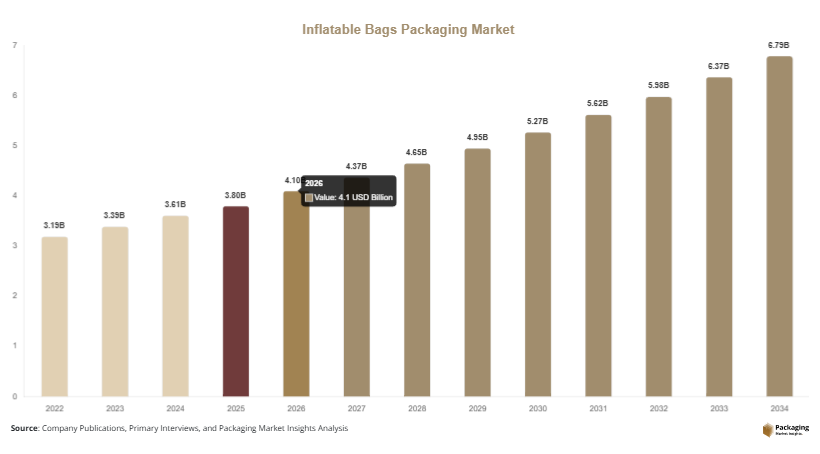
The global inflatable bags packaging market size is estimated at USD 3.8 billion in 2025, rising to approximately USD 4.1 billion in 2026. Over the forecast period from 2025 to 2034, the market is projected to reach USD 7.2 billion by 2034, expanding at a CAGR of 6.5%. The inflatable bags packaging market is gaining steady traction across global supply chains as companies seek lightweight, cost-efficient, and protective packaging solutions. Inflatable bags, often referred to as air cushion packaging or dunnage bags, are widely used to secure products during transit and prevent damage caused by vibration, shock, and shifting loads.
The growth of the market is strongly linked to the expansion of e-commerce logistics, where product protection and efficient packaging are critical. Inflatable packaging solutions are increasingly replacing traditional fillers such as foam peanuts and molded pulp due to their lower material consumption and space-saving benefits. Additionally, the rise of cross-border trade has increased the need for protective packaging that can withstand long transit times and multiple handling points.
Key Market Insights:
- Asia Pacific dominated the market with a 39.1% share in 2025.
- Latin America is projected to grow at the fastest CAGR of 6.8%.
- Air pillow bags led the type segment with a 31.4% share.
- Polyethylene material dominated with a 62.7% share.
- E-commerce applications led the segment with 44.3% share.
- China remained the dominant country with a market size of USD 0.9 billion in 2025 and USD 1.0 billion in 2026.
Explore more data points, trends and opportunities Download Free Sample Report
Market Trends
Shift Toward Sustainable and Recyclable Inflatable Packaging
Sustainability is emerging as a major trend in the inflatable bags packaging market. Companies are transitioning from traditional plastic fillers to recyclable and biodegradable inflatable materials to reduce environmental impact. Manufacturers are developing air cushions made from recycled polyethylene and bio-based polymers, aligning with regulatory requirements and corporate sustainability goals. For instance, e-commerce companies are increasingly using recyclable air pillows to replace foam packaging, reducing waste volume.
In the future, innovations in biodegradable films and reusable inflatable systems will further enhance sustainability. Governments in regions such as Europe are implementing stricter packaging regulations, encouraging adoption of eco-friendly solutions. This trend is expected to drive long-term market growth as companies prioritize environmentally responsible packaging.
Integration of Automated Packaging Systems
The integration of automation in packaging operations is transforming the inflatable bags packaging market. Automated inflation machines enable on-demand production of air cushions, reducing storage space and improving operational efficiency. Companies are investing in compact, high-speed inflation systems that can be integrated into existing packaging lines. For example, large distribution centers are using automated systems to produce air pillows in real time, minimizing packaging waste and labor costs.
This trend is expected to accelerate as logistics operations become more complex and demand faster turnaround times. Future advancements may include smart systems that adjust air pressure and cushion size based on product requirements. Automation will continue to enhance efficiency and reduce operational costs across the packaging industry.
Market Drivers
Growth of E-commerce and Last-Mile Delivery
The rapid expansion of e-commerce is a key driver of the inflatable bags packaging market. As online shopping increases, the need for protective packaging solutions that can prevent product damage during transit is rising. Inflatable bags provide cushioning and shock absorption, making them ideal for shipping fragile items such as electronics and glassware.
For example, online retailers use air pillows to secure products within shipping boxes, reducing movement and minimizing damage. This not only improves customer satisfaction but also reduces return rates. As e-commerce continues to grow globally, the demand for inflatable packaging solutions will increase significantly.
Cost Efficiency and Material Optimization
Cost efficiency is another major driver of market growth. Inflatable packaging uses less material compared to traditional packaging solutions, reducing production and transportation costs. Additionally, the lightweight nature of air cushions lowers shipping expenses, making them an attractive option for businesses.
For instance, manufacturers replacing foam fillers with inflatable bags can significantly reduce packaging weight and storage requirements. This results in cost savings and improved operational efficiency. As companies focus on optimizing supply chains, the adoption of inflatable packaging is expected to rise.
Market Restraint
Environmental Concerns Related to Plastic Usage
Despite sustainability advancements, environmental concerns related to plastic usage remain a key restraint in the inflatable bags packaging market. Most inflatable bags are made from polyethylene, which contributes to plastic waste if not properly recycled. Increasing regulatory pressure on single-use plastics is challenging market growth.
For example, certain regions have implemented restrictions on plastic packaging, forcing companies to explore alternative materials. This can increase costs and limit adoption, particularly for small and medium-sized enterprises. Addressing this challenge requires innovation in biodegradable materials and improved recycling infrastructure.
Market Opportunities
Development of Biodegradable Inflatable Packaging
The development of biodegradable inflatable packaging presents significant growth opportunities. Manufacturers are investing in bio-based materials that offer similar performance to traditional plastics while reducing environmental impact. These solutions are particularly attractive to companies seeking to meet sustainability targets.
In the future, advancements in material science will enable the production of fully compostable air cushions. This will open new markets and increase adoption across industries such as food and healthcare packaging.
Expansion in Emerging Logistics Markets
Emerging markets offer strong growth potential for the inflatable bags packaging market. Rapid urbanization and industrialization in regions such as Asia Pacific and Latin America are driving demand for efficient packaging solutions.
For instance, the expansion of e-commerce platforms in countries like India and Brazil is increasing the need for protective packaging. Companies can capitalize on this opportunity by establishing local production facilities and offering cost-effective solutions. This will support long-term market growth.
Report Scope
| Report Metric | Details |
|---|---|
| Market Size in 2025 | USD 3.8 Billion |
| Market Size in 2026 | USD 4.1 Billion |
| Market Size in 2034 | USD 7.2 Billion |
| CAGR | 6.5% (2026-2034) |
| Base Year for Estimation | 2025 |
| Historical Data | 2022-2024 |
| Forecast Period | 2026-2034 |
| Report Coverage | Revenue Forecast, Competitive Landscape, Supply Chain Disruption, Growth Factors, Environment & Regulatory Landscape and Trends |
| Geographies Covered | North America, Europe, APAC, Middle East and Africa, LATAM |
| Countries Covered | U.S., Canada, U.K., Germany, France, Spain, Italy, Russia, Nordic, Benelux, Rest of Europe, China, South Korea, Japan, India, Australia, Singapore, Taiwan, South East Asia, Rest of Asia-Pacific, UAE, Turky, Saudi Arabia, South Africa, Egypt, Nigeria, Rest of MEA, Brazil, Mexico, Argentina, Chile, Colombia, Rest of LATAM |
Explore more data points, trends and opportunities Download Free Sample Report
Segmental Analysis
By Type
Air pillow bags dominated the market in 2024 with a 31.4% share. Their popularity is driven by their versatility, ease of use, and cost efficiency. These bags are widely used in e-commerce packaging to fill empty spaces within shipping boxes, preventing product movement. For example, online retailers use air pillows to protect items such as electronics and cosmetics during transit. The lightweight nature of these bags also reduces shipping costs, making them a preferred choice for businesses.
Bubble wrap inflatable systems are the fastest-growing segment, with a projected CAGR of 6.9%. These systems provide enhanced cushioning and are suitable for fragile items. The growth of this segment is driven by increasing demand for protective packaging in industries such as electronics and healthcare. Future innovations in material design are expected to improve performance and expand applications.
By Material
Polyethylene dominated the market with a 62.7% share in 2024, driven by its durability, flexibility, and cost-effectiveness. This material is widely used for manufacturing inflatable bags due to its ability to provide strong cushioning and resistance to punctures. For instance, e-commerce companies rely on polyethylene air cushions to protect products during shipping. The availability of recycled polyethylene also supports sustainability efforts.
Biodegradable films are the fastest-growing material segment, with a CAGR of 7.2%. The growth is driven by increasing environmental concerns and regulatory pressure on plastic usage. Manufacturers are developing bio-based films that offer similar performance to traditional materials. In the future, advancements in biodegradable materials will enhance adoption across industries.
By End-Use
E-commerce accounted for the largest share of 44.3% in 2024, driven by the need for efficient and protective packaging solutions. The rapid growth of online shopping is increasing demand for inflatable bags, which provide cushioning and reduce product damage. For example, online retailers use air cushions to secure products during transit, improving customer satisfaction.
Healthcare is the fastest-growing end-use segment, with a CAGR of 6.7%. The need for safe transportation of medical devices and pharmaceuticals is driving demand for protective packaging. Inflatable bags provide cushioning and stability, reducing the risk of damage. As the healthcare industry expands, the demand for advanced packaging solutions is expected to grow.
Inflatable Bags Packaging Market Segmentations
By Type
- Air Pillow Bags
- Bubble Wrap Inflatable Packaging
- Void Fill Air Cushions
By Material
- Polyethylene
- Biodegradable Films
By End-Use
- E-commerce
- Electronics
- Healthcare
- Automotive
Regional Analysis
North America
North America accounted for approximately 25.2% of the global market share in 2025 and is projected to grow at a CAGR of 6.0% through 2034. The region benefits from a mature e-commerce ecosystem and advanced logistics infrastructure, which drive consistent demand for inflatable packaging solutions. The widespread adoption of automated packaging systems in warehouses and fulfillment centers is a key growth factor. Additionally, the presence of large retail and technology companies supports the demand for protective packaging. Sustainability initiatives are also influencing market trends, with companies increasingly adopting recyclable materials.
The United States dominates the regional market due to its strong e-commerce sector and high consumer demand. A unique growth driver is the increasing adoption of subscription-based delivery services, which require efficient and protective packaging. For example, companies offering monthly product subscriptions rely on inflatable packaging to ensure product safety during transit. The integration of smart packaging technologies is also gaining traction, enhancing supply chain visibility and efficiency.
Europe
Europe held a 22.4% market share in 2025 and is expected to grow at a CAGR of 5.8% during the forecast period. The region’s focus on environmental sustainability and strict regulations on plastic usage are shaping the market. Countries such as Germany, France, and the UK are leading the adoption of eco-friendly packaging solutions. The demand for recyclable and biodegradable inflatable bags is increasing as companies aim to comply with regulatory requirements.
Germany is the dominant country in the region, driven by its strong industrial base and export-oriented economy. A unique growth driver is the implementation of circular economy practices, which encourage the use of recyclable materials. For example, German companies are investing in advanced recycling technologies to improve material recovery rates. This trend is expected to support the growth of the inflatable packaging market in Europe.
Asia Pacific
Asia Pacific emerged as the largest regional market with a 39.1% share in 2025 and is projected to grow at a CAGR of 6.9%. Rapid industrialization, expanding e-commerce platforms, and increasing exports are driving market growth. Countries such as China, India, and Japan are major contributors to the market. The growing middle-class population and rising disposable incomes are also boosting demand for online shopping, which in turn drives packaging demand.
China dominates the Asia Pacific market due to its large manufacturing base and strong export activities. A significant growth driver is the expansion of cross-border e-commerce, which requires reliable packaging solutions. For instance, Chinese exporters use inflatable bags to protect goods during international shipments. Government initiatives to promote sustainable packaging are also supporting market growth in the region.
Middle East & Africa
The Middle East & Africa region accounted for 7.9% of the market share in 2025 and is expected to grow at a CAGR of 6.2%. The region’s growth is driven by increasing investments in logistics and infrastructure development. Countries such as the UAE and South Africa are focusing on improving supply chain efficiency, which boosts demand for packaging solutions. The growth of retail and e-commerce sectors is also contributing to market expansion.
Saudi Arabia is a key market in the region, supported by its economic diversification initiatives. A unique growth driver is the expansion of the retail sector, which increases demand for protective packaging. For example, the growth of online shopping platforms in the country is driving the adoption of inflatable packaging solutions. The region is expected to witness steady growth due to ongoing development projects.
Latin America
Latin America held a 5.4% market share in 2025 and is projected to grow at the fastest CAGR of 6.8%. The region is experiencing growth due to expanding e-commerce and increasing trade activities. Countries such as Brazil and Mexico are key contributors to market expansion. The rising demand for efficient packaging solutions in the retail sector is driving growth.
Brazil dominates the regional market, supported by its large consumer base and growing e-commerce industry. A key growth driver is the expansion of logistics networks, which require protective packaging solutions. For instance, Brazilian companies are adopting inflatable bags to reduce product damage during transit. The region’s focus on improving supply chain efficiency is expected to support market growth.
Competitive Landscape
The inflatable bags packaging market is moderately fragmented, with several global and regional players competing based on innovation, pricing, and sustainability. Companies are focusing on developing eco-friendly materials and advanced packaging solutions to gain a competitive edge.
Sealed Air Corporation is identified as the market leader due to its strong product portfolio and global presence. The company has been investing in sustainable packaging solutions and expanding its manufacturing capabilities. Other key players are adopting strategies such as mergers, acquisitions, and partnerships to strengthen their market position.
Recent developments include the introduction of biodegradable inflatable packaging and advancements in automated inflation systems. Companies are also investing in digital technologies to improve supply chain efficiency. These strategies are expected to drive competition and innovation in the market.
Key Players
- Sealed Air Corporation
- Pregis LLC
- Storopack Hans Reichenecker GmbH
- Automated Packaging Systems
- Polyair Inter Pack Inc.
- AirPack Systems
- Inflatable Packaging Inc.
- 3G Packaging Corp
- Shandong Xinya Plastic Products
- Shenzhen Dingli Packing Products
- Free-Flow Packaging International
- Rajapack Ltd
- FROMM Packaging Systems
- Green Light Packaging Ltd
- PackBest Air Packaging