HAZMAT Packaging Market Size and Growth
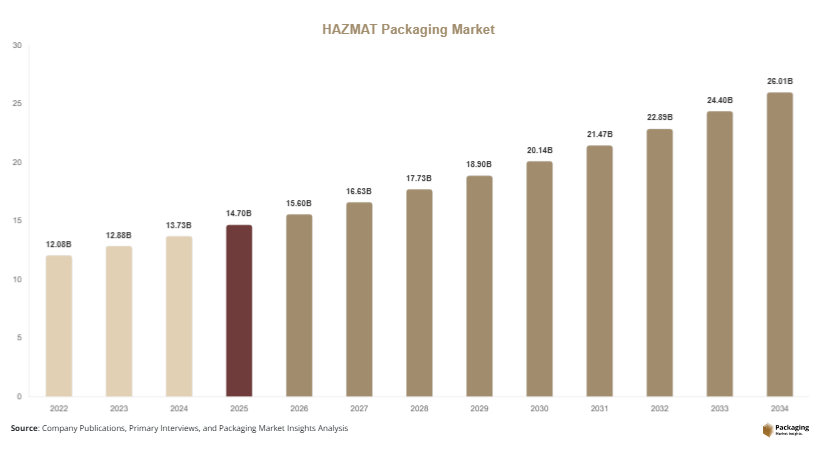
The global hazmat packaging market size was valued at approximately USD 14.7 billion in 2025 and is projected to reach USD 15.6 billion in 2026. By 2034, the market is expected to attain nearly USD 27.8 billion, registering a CAGR of 6.6% during 2025–2034. The hazmat packaging market is experiencing consistent growth due to increasing global transportation of hazardous materials across industries such as chemicals, pharmaceuticals, oil & gas, industrial manufacturing, and healthcare. HAZMAT packaging is specifically designed to safely contain hazardous substances, including flammable liquids, toxic chemicals, radioactive materials, corrosive compounds, and biohazardous waste.
The market is primarily driven by increasing regulatory requirements related to hazardous material handling and transportation. Governments and international regulatory agencies are enforcing stricter packaging and labeling standards to reduce risks associated with chemical spills, contamination, and industrial accidents. Another major growth factor is the expansion of the global chemical and pharmaceutical industries, both of which require specialized packaging solutions to transport sensitive and dangerous substances safely. In addition, the rapid growth of cross-border industrial trade and e-commerce logistics for industrial chemicals is increasing demand for compliant and durable HAZMAT packaging systems.
Key Highlights
- North America dominated the market with a 34.7% share in 2025.
- Asia Pacific is projected to grow at the fastest CAGR of 7.2%.
- Drums led the packaging type segment with a 32.8% share.
- Plastic materials dominated the market with a 48.5% share.
- Chemical applications accounted for 44.3% market share.
- The US remained the dominant country with a market size of USD 4.1 billion in 2025 and USD 4.4 billion in 2026.
Explore more data points, trends and opportunities Download Free Sample Report
Market Trends
Increasing Adoption of Sustainable HAZMAT Packaging Solutions
Sustainability is becoming a significant trend in the hazmat packaging market as manufacturers and end users seek environmentally responsible solutions without compromising safety standards. Companies are increasingly introducing reusable drums, recyclable plastic containers, and lightweight composite packaging materials to reduce waste generation and transportation costs. Industrial customers are demanding packaging systems that comply with hazardous material regulations while supporting corporate sustainability goals. In addition, regulatory authorities are encouraging reduction of single-use industrial packaging through stricter waste management frameworks. Packaging manufacturers are investing in eco-friendly coatings and recyclable liners that maintain chemical resistance and durability. This trend is expected to accelerate innovation in reusable hazardous material containment systems during the forecast period.
Integration of Smart Tracking and Monitoring Technologies
The integration of digital monitoring systems into HAZMAT packaging is transforming hazardous material transportation practices. Companies are increasingly using IoT-enabled sensors, GPS tracking systems, and temperature-monitoring devices to improve shipment visibility and reduce safety risks. Smart packaging solutions help logistics providers monitor pressure, temperature, vibration, and leakage conditions in real time. This trend is particularly important for pharmaceutical chemicals, radioactive materials, and temperature-sensitive industrial substances. Real-time monitoring improves compliance with transportation regulations and minimizes the risk of environmental contamination during transit. The growing use of digital supply chain technologies is expected to increase adoption of intelligent HAZMAT packaging systems across global logistics networks.
Market Drivers
Strict Government Regulations for Hazardous Material Transportation
Stringent regulations governing hazardous material transportation are a major driver of the hazmat packaging market. Governments and regulatory organizations require industries to use certified packaging solutions that meet safety and environmental standards. Regulations related to dangerous goods transportation, spill prevention, and labeling compliance are encouraging companies to invest in advanced packaging systems. Industries handling toxic chemicals, flammable liquids, and infectious waste must use specialized containers to avoid accidents and legal penalties. In addition, increasing inspections and safety audits are pushing manufacturers and logistics providers to adopt UN-certified packaging solutions. Regulatory compliance has therefore become a critical factor influencing purchasing decisions in the market.
Expansion of Chemical and Pharmaceutical Industries
The rapid growth of chemical and pharmaceutical industries is significantly supporting demand for HAZMAT packaging solutions. Industrial chemicals, laboratory reagents, pharmaceutical ingredients, and hazardous medical substances require secure packaging during storage and transportation. Rising global production of specialty chemicals and active pharmaceutical ingredients has increased the need for high-performance containment systems. Pharmaceutical manufacturers are also transporting larger volumes of temperature-sensitive and biohazardous materials, creating demand for advanced leak-proof and insulated packaging. In addition, increasing international trade of industrial chemicals is encouraging logistics providers to invest in durable and regulation-compliant packaging systems for long-distance transportation.
Market Restraint
High Compliance Costs and Complex Regulatory Standards
One of the major restraints affecting the hazmat packaging market is the high cost associated with regulatory compliance and certification procedures. Hazardous material packaging must undergo strict performance testing related to pressure resistance, impact durability, leak prevention, and chemical compatibility. These testing and certification processes increase production costs for manufacturers and raise procurement expenses for end users. Small and medium-sized enterprises often face challenges in maintaining compliance with constantly changing regulations across multiple countries. For example, a packaging solution approved for chemical transportation in North America may require additional modifications to comply with European transportation standards. Such regulatory complexity can delay product launches, increase operational expenses, and limit market entry for smaller packaging providers. Furthermore, compliance-related costs may discourage adoption of premium HAZMAT packaging solutions in price-sensitive industries.
Market Opportunities
Growth of Hazardous Waste Management Programs
The expansion of hazardous waste management initiatives is creating strong opportunities for the hazmat packaging market. Governments and industrial organizations are increasing investment in safe waste collection, transportation, and disposal systems to reduce environmental risks. Industries such as healthcare, oil & gas, mining, and manufacturing generate significant quantities of hazardous waste that require specialized packaging for handling and storage. Demand for leak-proof containers, chemical-resistant drums, and secure disposal packaging is rising steadily. Emerging economies are also implementing stricter waste management regulations, which is expected to support adoption of certified HAZMAT packaging products. This trend provides long-term growth opportunities for packaging manufacturers serving industrial and municipal waste management sectors.
Expansion of Cross-Border Chemical Trade
Increasing international trade of industrial chemicals and specialty materials presents another important opportunity for the market. Global manufacturing industries rely heavily on imported and exported hazardous substances, including solvents, industrial acids, flammable liquids, and specialty coatings. This has increased demand for durable packaging systems capable of withstanding long-distance transportation and varying environmental conditions. Logistics providers and chemical manufacturers are investing in high-performance intermediate bulk containers and reusable transport drums to improve shipping efficiency. Growing industrialization in Asia Pacific and Latin America is expected to further strengthen cross-border trade volumes, creating additional opportunities for HAZMAT packaging suppliers worldwide.
Report Scope
| Report Metric | Details |
|---|---|
| Market Size in 2025 | USD 14.7 Billion |
| Market Size in 2026 | USD 15.6 Billion |
| Market Size in 2034 | USD 27.8 Billion |
| CAGR | 6.6% (2026-2034) |
| Base Year for Estimation | 2025 |
| Historical Data | 2022-2024 |
| Forecast Period | 2026-2034 |
| Report Coverage | Revenue Forecast, Competitive Landscape, Supply Chain Disruption, Growth Factors, Environment & Regulatory Landscape and Trends |
| Geographies Covered | North America, Europe, APAC, Middle East and Africa, LATAM |
| Countries Covered | U.S., Canada, U.K., Germany, France, Spain, Italy, Russia, Nordic, Benelux, Rest of Europe, China, South Korea, Japan, India, Australia, Singapore, Taiwan, South East Asia, Rest of Asia-Pacific, UAE, Turky, Saudi Arabia, South Africa, Egypt, Nigeria, Rest of MEA, Brazil, Mexico, Argentina, Chile, Colombia, Rest of LATAM |
Explore more data points, trends and opportunities Download Free Sample Report
Segmental Analysis
By Packaging Type
Drums dominated the hazmat packaging market in 2024, accounting for approximately 32.8% of the total market share. These packaging solutions are widely used for storing and transporting chemicals, petroleum products, industrial solvents, and hazardous liquids due to their durability and high containment efficiency. Steel and plastic drums are commonly preferred because they provide strong resistance against leakage, corrosion, and external impact. Industries handling flammable and toxic materials rely heavily on UN-certified drums to ensure transportation safety and regulatory compliance. The segment also benefits from growing cross-border trade of industrial chemicals, where drums remain one of the most practical bulk packaging formats for long-distance logistics and warehouse handling operations.
Intermediate bulk containers (IBCs) are expected to witness the fastest CAGR of 7.4% during the forecast period. IBCs are increasingly adopted because they offer higher storage capacity, improved transportation efficiency, and reduced packaging waste compared to smaller containers. Industries handling liquid chemicals, pharmaceutical ingredients, and industrial lubricants are rapidly shifting toward reusable IBC systems to optimize logistics costs. The growing focus on sustainability and operational efficiency is encouraging adoption of composite and foldable bulk containers. In addition, increasing industrial automation and expansion of global chemical exports are supporting demand for large-capacity hazardous material packaging solutions across manufacturing and logistics sectors.
By Material
Plastic materials accounted for the largest market share of 48.5% in 2024 due to their lightweight structure, chemical resistance, and cost-effectiveness. Plastic HAZMAT packaging solutions are widely used across pharmaceutical, chemical, and industrial sectors because they provide strong durability while reducing transportation costs. High-density polyethylene and polypropylene materials are commonly preferred for drums, bottles, and bulk containers handling corrosive or toxic substances. Manufacturers are increasingly developing advanced plastic formulations that improve impact resistance and leakage protection. In addition, plastic packaging offers design flexibility and compatibility with automated filling systems, making it suitable for large-scale industrial operations. These advantages continue to support the dominance of plastic materials in hazardous goods transportation.
Composite materials are projected to grow at the fastest CAGR of 6.9% during the forecast period. Composite HAZMAT packaging combines multiple material layers to improve strength, insulation, and chemical resistance. Industries handling highly reactive or temperature-sensitive substances are increasingly adopting composite containers to improve transportation safety and minimize contamination risks. Composite intermediate bulk containers are also gaining popularity due to their lightweight design and improved structural performance compared to traditional metal packaging. Sustainability initiatives are further encouraging the use of recyclable composite materials that reduce industrial waste generation. Increasing investment in advanced packaging technologies is expected to accelerate growth of this segment over the forecast period.
By Application
Chemical applications dominated the hazmat packaging market in 2024 and accounted for approximately 44.3% of the overall market share. Industrial chemicals, acids, solvents, coatings, and flammable liquids require secure and regulation-compliant packaging solutions for transportation and storage. The rapid expansion of chemical manufacturing and international trade activities has significantly increased demand for high-performance drums, containers, and bulk packaging systems. Regulatory authorities require industries handling hazardous chemicals to use certified packaging products that reduce risks associated with spills and contamination. The chemical sector also benefits from continuous investment in industrial safety programs and logistics infrastructure, which further supports adoption of specialized HAZMAT packaging systems globally.
Pharmaceutical applications are expected to grow at the fastest CAGR of 7.1% through 2034. Increasing transportation of biohazardous substances, active pharmaceutical ingredients, and temperature-sensitive medicines is driving demand for advanced HAZMAT packaging solutions. Pharmaceutical companies require leak-proof, insulated, and tamper-evident packaging systems to comply with strict healthcare regulations and ensure product integrity during transportation. Rising global vaccine distribution activities and expansion of biotechnology manufacturing are also supporting segment growth. In addition, healthcare waste management programs are increasing demand for secure packaging products used in handling infectious medical waste and hazardous laboratory materials across hospitals and research facilities.
HAZMAT Packaging Market Segmentations
By Packaging Type
- Drums
- Intermediate Bulk Containers
- Pails & Cans
- Corrugated Boxes
- Flexible Bulk Containers
By Material
- Plastic
- Metal
- Composite Materials
- Fiberboard
By Application
- Chemicals
- Pharmaceuticals
- Oil & Gas
- Industrial Waste
- Agriculture Chemicals
Regional Analysis
North America
North America accounted for approximately 34.7% of the global hazmat packaging market share in 2025 and is projected to grow at a CAGR of 5.9% during the forecast period. The region benefits from strong regulatory enforcement related to hazardous material transportation and industrial safety standards. High chemical production volumes and advanced logistics infrastructure continue to support market expansion. Increasing transportation of pharmaceutical and biohazardous substances is also contributing to demand for specialized packaging systems across the region.
The United States dominates the North American market due to its large chemical manufacturing base and extensive industrial transportation network. A unique growth factor in the country is the rising investment in hazardous waste management and environmental protection programs. Federal regulations related to chemical handling and disposal are encouraging industries to adopt certified HAZMAT packaging solutions with enhanced safety and leak prevention capabilities.
Europe
Europe held nearly 25.6% of the market share in 2025 and is expected to expand at a CAGR of 5.8% through 2034. Strict environmental regulations and advanced industrial safety frameworks are driving demand for HAZMAT packaging solutions across the region. Industries handling dangerous goods are increasingly adopting reusable and recyclable packaging systems to align with sustainability goals. Growth in pharmaceutical manufacturing and specialty chemical production is further supporting regional market expansion.
Germany remains the leading country in the European hazmat packaging market because of its strong industrial manufacturing and chemical export sectors. One unique growth factor is the country’s emphasis on sustainable industrial logistics practices. Manufacturers are increasingly using reusable hazardous material containers and recyclable composite drums to reduce waste generation while maintaining regulatory compliance during transportation operations.
Asia Pacific
Asia Pacific accounted for 28.9% of the global market share in 2025 and is projected to register the fastest CAGR of 7.2% during the forecast period. Rapid industrialization, increasing chemical production, and expanding pharmaceutical manufacturing activities are key factors driving regional growth. The region is also witnessing increased investment in logistics infrastructure and hazardous material transportation systems. Growing industrial exports are creating substantial demand for compliant HAZMAT packaging products.
China dominates the Asia Pacific market due to its extensive chemical manufacturing industry and growing international trade activities. A unique growth factor in the country is the rapid expansion of specialty chemical exports to North America and Europe. Export-focused industries are increasingly adopting advanced HAZMAT packaging systems to comply with international transportation standards and improve shipment safety during long-distance logistics operations.
Middle East & Africa
The Middle East & Africa region represented around 5.4% of the market share in 2025 and is expected to grow at a CAGR of 6.1% during the forecast period. Expansion of oil & gas operations and petrochemical industries is increasing demand for industrial hazardous material packaging solutions. Governments are also strengthening industrial safety regulations to reduce environmental risks associated with chemical transportation and storage. Rising infrastructure development is supporting regional logistics expansion.
Saudi Arabia is the dominant country in the regional market due to its extensive petrochemical and refining industries. A unique growth factor is the increasing export of industrial chemicals and petroleum-based products to global markets. This has increased demand for durable HAZMAT drums, containers, and intermediate bulk packaging systems capable of meeting international shipping and safety requirements.
Latin America
Latin America accounted for approximately 5.4% of the global hazmat packaging market share in 2025 and is projected to grow at a CAGR of 6.4% through 2034. Increasing industrialization and mining activities are supporting demand for hazardous material packaging across the region. Growth in chemical imports and pharmaceutical distribution networks is also contributing to market expansion. Governments are gradually implementing stricter regulations related to hazardous waste transportation and industrial safety practices.
Brazil dominates the Latin American market due to its large industrial manufacturing and agricultural chemical sectors. A unique growth factor in the country is the increasing transportation of agrochemicals and industrial solvents across domestic and export markets. Packaging manufacturers are introducing chemical-resistant drums and flexible bulk containers to improve transportation safety and reduce leakage risks during long-distance shipping operations.
Competitive Landscape
The hazmat packaging market is moderately competitive, with global and regional companies focusing on product innovation, regulatory compliance, and sustainable packaging technologies. Leading market participants are investing in advanced containment systems, reusable packaging products, and smart monitoring solutions to strengthen their competitive positions. The market is also witnessing increased collaboration between packaging manufacturers and chemical logistics providers to improve hazardous goods transportation efficiency.
Greif Inc. remains one of the leading companies in the market due to its extensive portfolio of industrial packaging products and strong global distribution network. In 2024, the company introduced a new line of reusable composite intermediate bulk containers designed for hazardous chemical transportation. Other major players include Mauser Packaging Solutions, SCHÜTZ GmbH & Co. KGaA, Snyder Industries, and Eagle Manufacturing Company. These companies are expanding manufacturing capacity and developing recyclable packaging materials to meet evolving industry requirements. Strategic acquisitions and regional expansion initiatives are also expected to remain key competitive strategies throughout the forecast period.
Key Players List
- Greif Inc.
- Mauser Packaging Solutions
- SCHÜTZ GmbH & Co. KGaA
- Snyder Industries
- Eagle Manufacturing Company
- Thielmann US LLC
- Sicagen India Limited
- CL Smith Company
- Time Technoplast Ltd.
- Balmer Lawrie & Co. Ltd.
- Nefab Group
- Hoover Ferguson Group
- Myers Industries Inc.
- BASCO Inc.
- Schutz Container Systems Inc.