ESD Protective Packaging Market Size and Growth
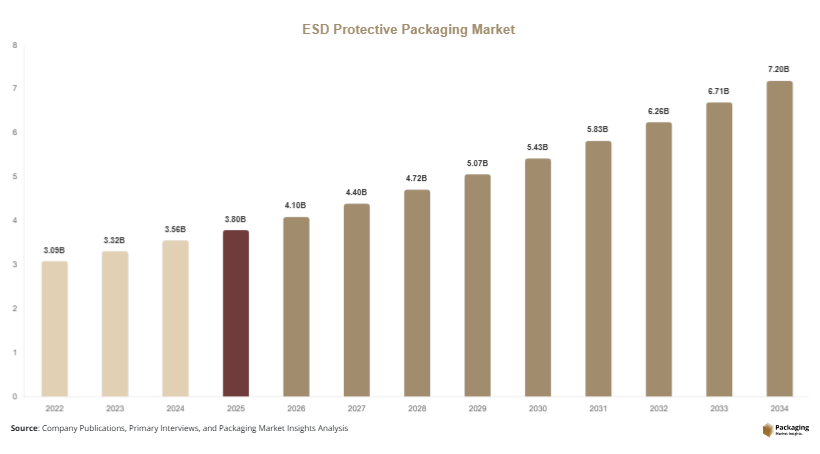
The global ESD Protective Packaging Market size was valued at USD 3.8 billion in 2025 and is projected to reach USD 4.1 billion in 2026. The market is forecasted to grow to USD 7.2 billion by 2034, registering a CAGR of 7.3% during the forecast period from 2025 to 2034. Growing demand for anti-static bags, conductive trays, moisture barrier bags, and shielding materials is supporting market expansion across multiple industries including electronics, automotive, aerospace, telecommunications, and healthcare devices.
The ESD Protective Packaging Market is witnessing consistent growth due to the rising production of electronic devices, semiconductor components, and sensitive industrial equipment that require protection from electrostatic discharge during storage and transportation. Electrostatic discharge can damage integrated circuits, printed circuit boards, sensors, and other electronic parts, making ESD-safe packaging an essential requirement across electronics manufacturing and logistics operations. The market is also benefiting from increased investments in semiconductor fabrication plants and the rapid expansion of consumer electronics production worldwide.
Key Highlights
- North America accounted for 31.6% of the global market share in 2025.
- Asia Pacific is projected to grow at the fastest CAGR of 8.4%.
- Anti-static bags dominated the product segment with a 34.2% share in 2025.
- Polyethylene-based materials led the material segment with a 41.8% share.
- Electronics and semiconductor applications held 52.4% of the market share.
- The US remained the dominant country with a market size of USD 1.1 billion in 2025 and USD 1.2 billion in 2026.
Explore more data points, trends and opportunities Download Free Sample Report
Market Trends
Growing Adoption of Sustainable ESD Packaging Materials
Manufacturers in the ESD Protective Packaging Market are increasingly focusing on sustainable and recyclable packaging materials to align with environmental regulations and corporate sustainability goals. Traditional ESD packaging often relies on multi-layer plastics and conductive additives that are difficult to recycle. To address this issue, companies are introducing recyclable conductive polymers, reusable trays, and biodegradable anti-static films. Electronics manufacturers are demanding packaging solutions that reduce environmental impact without compromising electrostatic protection performance. This shift is encouraging material innovation and creating new product development opportunities across the market.
In addition, large electronics brands are implementing circular packaging initiatives that promote reusable ESD containers for component transportation between suppliers and assembly facilities. Logistics providers are also adopting returnable conductive bins and durable packaging systems to lower waste generation and reduce operational costs. The integration of sustainable materials into ESD packaging designs is expected to become a long-term market trend as environmental compliance requirements continue to expand across global manufacturing industries.
Rising Integration of Smart Tracking Technologies in Packaging
The integration of smart labeling and tracking technologies is emerging as an important trend in the ESD Protective Packaging Market. Companies are incorporating RFID tags, QR codes, and IoT-enabled monitoring systems into packaging solutions to improve supply chain visibility and product tracking. These technologies help manufacturers monitor the movement of sensitive electronic components during transportation and warehouse handling. Smart packaging systems also reduce the risk of product damage, theft, and inventory errors across complex logistics networks.
Another factor supporting this trend is the increasing demand for real-time monitoring in semiconductor and electronics supply chains. Smart ESD packaging allows companies to maintain detailed tracking records while ensuring compliance with handling standards for static-sensitive products. Several packaging providers are developing intelligent packaging platforms that combine electrostatic protection with environmental monitoring features such as humidity and temperature tracking. These innovations are improving operational efficiency and enhancing quality assurance in electronics distribution channels.
Market Drivers
Expansion of Global Semiconductor Manufacturing
The rapid growth of semiconductor manufacturing activities is a major driver for the ESD Protective Packaging Market. Semiconductor devices are highly sensitive to electrostatic discharge, making specialized packaging essential throughout manufacturing, storage, and transportation processes. Governments and private companies are investing heavily in semiconductor fabrication facilities to strengthen domestic chip production capacities. This trend is increasing demand for anti-static bags, conductive containers, and shielding materials across semiconductor supply chains.
The expansion of chip manufacturing in countries such as the United States, South Korea, Taiwan, and India is creating strong opportunities for ESD packaging suppliers. Advanced packaging technologies used in artificial intelligence processors, automotive chips, and communication systems require higher levels of electrostatic protection. As semiconductor production volumes continue to increase globally, the need for reliable and certified ESD packaging solutions is expected to grow steadily during the forecast period.
Increasing Demand for Consumer Electronics and Electric Vehicles
The rising production of consumer electronics and electric vehicles is supporting market growth significantly. Smartphones, laptops, wearable devices, gaming systems, and smart home products contain delicate electronic components that require electrostatic-safe packaging during transportation and assembly operations. The growing popularity of connected devices and high-performance electronics is increasing the demand for protective packaging materials with advanced conductivity and cushioning properties.
Electric vehicles also rely heavily on sophisticated electronic systems including battery management units, sensors, and control modules. These components are vulnerable to electrostatic damage during shipping and storage. Automotive manufacturers are therefore adopting high-quality ESD protective packaging to maintain product integrity and reduce financial losses caused by damaged electronic systems. The continued growth of the electronics and EV industries is expected to create consistent demand for advanced ESD packaging solutions worldwide.
Market Restraint
High Production Costs and Material Complexity
High manufacturing costs associated with ESD protective materials remain a major restraint for market expansion. Conductive polymers, anti-static coatings, metalized films, and multilayer shielding structures are generally more expensive than conventional packaging materials. These added costs can create challenges for small and medium-sized electronics manufacturers operating with limited packaging budgets. In price-sensitive markets, some companies continue to rely on lower-cost traditional packaging solutions despite the risk of electrostatic damage.
The complexity of material formulation and compliance testing also affects production efficiency and operational expenses. ESD packaging products must meet strict electrostatic discharge standards, conductivity requirements, and durability specifications before being approved for industrial use. Manufacturers often need specialized equipment and technical expertise to produce reliable ESD-safe materials. For example, conductive moisture barrier bags used in semiconductor packaging require multiple protective layers and precise quality control procedures, increasing production time and manufacturing costs.
Another challenge is the volatility of raw material prices, particularly for petroleum-based conductive plastics and specialty additives. Fluctuations in resin pricing can affect profit margins and create supply chain uncertainty for packaging manufacturers. In addition, environmental concerns related to plastic waste are increasing pressure on companies to develop recyclable alternatives, which may require additional investment in research and material innovation. These factors collectively limit faster adoption of ESD packaging solutions across certain industries and developing economies.
Market Opportunities
Growth in Medical Electronics and Healthcare Devices
The increasing use of medical electronics and digital healthcare equipment is creating strong opportunities for the ESD Protective Packaging Market. Medical devices such as imaging systems, diagnostic equipment, wearable health monitors, and implantable electronics contain highly sensitive components that require protection against electrostatic discharge. Healthcare manufacturers are adopting advanced ESD packaging solutions to maintain device reliability and comply with regulatory quality standards during transportation and storage.
The growth of telemedicine, portable healthcare devices, and connected medical technologies is expected to support long-term market demand. In addition, pharmaceutical and medical device companies are investing in secure logistics systems for electronic healthcare products. This trend is encouraging the adoption of conductive trays, anti-static films, and moisture-resistant ESD packaging materials designed specifically for healthcare applications. As global healthcare technology investments continue to increase, the market is likely to witness new product development opportunities in this segment.
Rising Demand for Reusable Industrial Packaging Solutions
The growing preference for reusable industrial packaging systems is opening new growth opportunities for ESD packaging manufacturers. Electronics companies are focusing on returnable packaging solutions that reduce waste generation and lower long-term logistics costs. Reusable conductive containers, collapsible bins, and durable ESD trays are gaining popularity in semiconductor and automotive electronics supply chains due to their durability and operational efficiency.
Industrial manufacturers are also implementing closed-loop logistics systems that support repeated use of ESD packaging materials between suppliers and production facilities. This approach helps companies reduce packaging disposal expenses and improve sustainability performance. In addition, advancements in lightweight conductive polymers and modular packaging designs are improving the practicality of reusable ESD containers. As industries continue to prioritize cost efficiency and environmental compliance, reusable ESD protective packaging solutions are expected to gain wider market acceptance.
Report Scope
| Report Metric | Details |
|---|---|
| Market Size in 2025 | USD 3.8 Billion |
| Market Size in 2026 | USD 4.1 Billion |
| Market Size in 2034 | USD 7.2 Billion |
| CAGR | 7.3% (2026-2034) |
| Base Year for Estimation | 2025 |
| Historical Data | 2022-2024 |
| Forecast Period | 2026-2034 |
| Report Coverage | Revenue Forecast, Competitive Landscape, Supply Chain Disruption, Growth Factors, Environment & Regulatory Landscape and Trends |
| Geographies Covered | North America, Europe, APAC, Middle East and Africa, LATAM |
| Countries Covered | U.S., Canada, U.K., Germany, France, Spain, Italy, Russia, Nordic, Benelux, Rest of Europe, China, South Korea, Japan, India, Australia, Singapore, Taiwan, South East Asia, Rest of Asia-Pacific, UAE, Turky, Saudi Arabia, South Africa, Egypt, Nigeria, Rest of MEA, Brazil, Mexico, Argentina, Chile, Colombia, Rest of LATAM |
Explore more data points, trends and opportunities Download Free Sample Report
Segmental Analysis
By Product Type
Anti-static bags dominated the product type segment and accounted for 34.2% of the global market share in 2024. These products are widely used for packaging semiconductor devices, printed circuit boards, and electronic components due to their cost efficiency and reliable electrostatic protection capabilities. Anti-static bags are commonly adopted across electronics manufacturing and distribution operations because they provide lightweight, flexible, and moisture-resistant packaging solutions. Their broad compatibility with automated packaging systems and global transportation requirements further supports segment dominance.
Conductive foam packaging is expected to register the fastest CAGR of 8.1% during the forecast period. The growth of this subsegment is driven by increasing demand for cushioning protection for fragile electronic components and medical devices. Conductive foam packaging provides both electrostatic protection and shock absorption, making it suitable for high-value products such as sensors, processors, and aerospace electronics. Manufacturers are also developing lightweight and reusable conductive foam materials to improve sustainability and reduce transportation costs.
By Material Type
Polyethylene-based materials held the largest market share of 41.8% in 2024 due to their affordability, flexibility, and strong electrostatic protection performance. Polyethylene materials are widely used in anti-static bags, bubble wraps, and moisture barrier packaging products. Their durability and compatibility with conductive additives make them suitable for a broad range of electronics packaging applications. In addition, polyethylene materials offer good resistance to punctures and environmental exposure during shipping operations.
Recyclable conductive polymers are anticipated to grow at the fastest CAGR of 8.6% over the forecast period. Rising environmental concerns and regulatory pressure on plastic waste reduction are encouraging manufacturers to invest in recyclable ESD packaging materials. Companies are developing innovative conductive polymer formulations that maintain electrostatic discharge protection while improving recyclability and sustainability performance. Growing demand for eco-friendly packaging from electronics brands and industrial manufacturers is expected to accelerate the adoption of recyclable conductive polymers.
By End-Use Industry
Electronics and semiconductor applications dominated the end-use industry segment with a market share of 52.4% in 2024. The segment benefits from the high sensitivity of semiconductor chips, processors, and circuit boards to electrostatic discharge. Electronics manufacturers rely heavily on anti-static bags, conductive trays, and shielding materials to reduce product damage during production and transportation processes. Expanding global semiconductor production and increasing demand for advanced consumer electronics continue to strengthen this segment’s market position.
Healthcare electronics packaging is projected to witness the fastest CAGR of 7.9% during the forecast period. Medical devices and diagnostic equipment contain sensitive electronic components that require specialized protective packaging solutions. The increasing adoption of digital healthcare technologies, wearable medical devices, and portable monitoring systems is supporting segment growth. Healthcare manufacturers are also emphasizing product reliability and regulatory compliance, encouraging greater use of certified ESD packaging materials for medical electronics logistics and storage.
ESD Protective Packaging Market Segmentations
By Product Type
- Anti-Static Bags
- Conductive Trays
- Conductive Foam Packaging
- Moisture Barrier Bags
- ESD Tapes and Films
By Material Type
- Polyethylene
- Polypropylene
- Metalized Films
- Conductive Polymers
- Foam Materials
By End-Use Industry
- Electronics and Semiconductors
- Automotive Electronics
- Aerospace and Defense
- Healthcare Electronics
- Telecommunications
Regional Analysis
North America
North America accounted for 31.6% of the global ESD Protective Packaging Market share in 2025 and is expected to expand at a CAGR of 6.8% during the forecast period. The region benefits from strong semiconductor manufacturing investments, advanced electronics production facilities, and strict industrial quality standards. Growing demand for electrostatic-safe logistics solutions across aerospace, healthcare electronics, and automotive industries is also supporting market growth throughout the region.
The United States dominated the North American market due to its large semiconductor manufacturing base and expanding electronics supply chain infrastructure. One unique growth factor in the country is the increasing investment in domestic chip fabrication plants supported by federal industrial policies. The expansion of advanced semiconductor production facilities is generating significant demand for conductive trays, anti-static bags, and moisture barrier packaging products.
Europe
Europe represented 24.3% of the global market share in 2025 and is projected to register a CAGR of 6.5% through 2034. The regional market is supported by strong automotive electronics production, industrial automation growth, and rising adoption of sustainable packaging materials. Demand for certified ESD packaging solutions is increasing among electronics manufacturers seeking compliance with strict European safety and environmental regulations.
Germany remained the leading country in the European market due to its strong automotive and industrial electronics sectors. A key growth factor is the rapid expansion of electric vehicle manufacturing and smart factory automation systems. Automotive suppliers are increasingly adopting advanced ESD protective packaging solutions to safeguard sensors, control units, and semiconductor devices during transportation and assembly operations.
Asia Pacific
Asia Pacific held 29.8% of the global ESD Protective Packaging Market share in 2025 and is anticipated to grow at the fastest CAGR of 8.4% during the forecast period. The region dominates global electronics manufacturing and semiconductor assembly operations, creating substantial demand for ESD-safe packaging products. Rapid industrialization and rising consumer electronics exports are contributing to strong market expansion across several Asian economies.
China emerged as the dominant country in Asia Pacific due to its large electronics production ecosystem and growing semiconductor investments. A unique growth factor in the country is the rapid expansion of domestic consumer electronics brands and component manufacturing facilities. This trend is increasing the demand for anti-static bags, conductive foam packaging, and shielding materials across production and export supply chains.
Middle East & Africa
The Middle East & Africa region accounted for 6.1% of the global market share in 2025 and is expected to expand at a CAGR of 5.9% over the forecast period. Growth in industrial electronics imports, telecommunications infrastructure development, and logistics modernization is contributing to rising demand for ESD protective packaging solutions. Several regional distributors are also expanding electronics warehousing and transportation operations.
The United Arab Emirates led the regional market due to its role as a major electronics trading and logistics hub. One important growth factor is the development of advanced free trade zones and smart warehousing facilities that support electronics distribution across the Middle East and Africa. These logistics expansions are increasing demand for secure and electrostatic-safe packaging systems.
Latin America
Latin America captured 8.2% of the global market share in 2025 and is projected to grow at a CAGR of 6.2% through 2034. The regional market is benefiting from growth in electronics assembly activities, industrial automation adoption, and consumer electronics imports. Increasing investments in warehouse infrastructure and supply chain modernization are also contributing to market development across the region.
Brazil remained the dominant country in Latin America due to its growing electronics manufacturing sector and expanding automotive industry. A unique growth factor supporting the market is the increasing localization of consumer electronics assembly operations within the country. Domestic production growth is creating additional demand for anti-static packaging products used in component transportation and storage processes.
Competitive Landscape
The ESD Protective Packaging Market is moderately consolidated, with leading companies focusing on product innovation, material advancements, and global distribution expansion. Major players are investing in recyclable conductive materials, reusable packaging systems, and smart packaging technologies to strengthen their competitive position. Companies are also expanding manufacturing facilities and forming partnerships with semiconductor and electronics manufacturers to improve supply chain integration.
Desco Industries Inc. remains one of the leading companies in the market due to its extensive portfolio of ESD-safe packaging products and strong global distribution network. In 2025, the company introduced a new line of recyclable moisture barrier bags designed for advanced semiconductor packaging applications. This product launch supported the company’s sustainability initiatives while addressing growing demand for environmentally responsible ESD packaging solutions.
Other prominent market participants include 3M Company, Teknis Limited, Smurfit Westrock, and Dou Yee Enterprises. These companies are focusing on improving packaging durability, electrostatic performance, and cost efficiency. Competitive strategies across the market include acquisitions, product portfolio expansion, automation investments, and regional manufacturing expansion to meet rising demand from electronics and automotive industries.
Key Players List
- Desco Industries Inc.
- 3M Company
- Teknis Limited
- Dou Yee Enterprises
- Smurfit Westrock
- Conductive Containers Inc.
- Elcom UK Ltd.
- GWP Group
- Botron Company Inc.
- Polyplus Packaging
- Nefab Group
- Kiva Container
- Miller Supply Inc.
- Protective Packaging Corporation
- Electrotek Static Controls Pvt. Ltd.