Effervescent Packaging Market Size and Growth
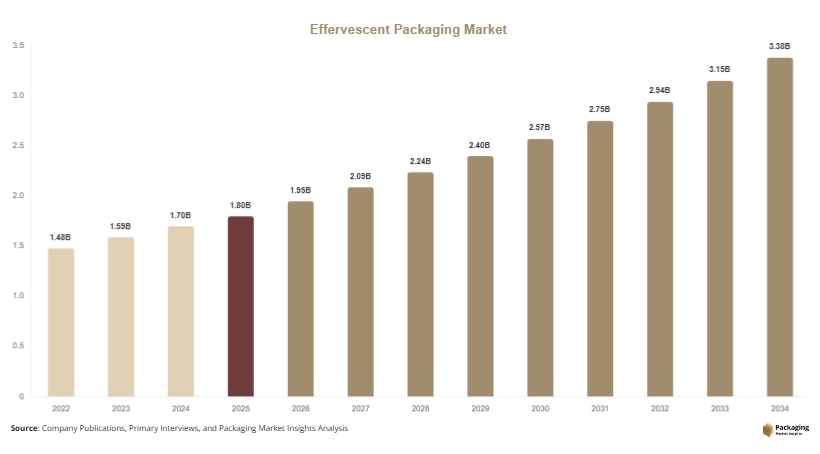
The global effervescent packaging market size was valued at approximately USD 1.8 billion in 2025 and is projected to reach USD 1.95 billion in 2026. By 2034, the market is forecasted to attain nearly USD 3.6 billion, registering a CAGR of 7.1% during 2025–2034. The effervescent packaging market is witnessing steady growth due to increasing demand for moisture-resistant and convenient packaging solutions in pharmaceutical, nutraceutical, and food industries. Effervescent products such as tablets, powders, and granules require specialized packaging to protect against humidity and environmental exposure, making advanced packaging systems essential for maintaining product stability and shelf life.
The increasing consumption of dietary supplements and effervescent pharmaceutical products is one of the primary factors driving market expansion. Consumers are showing preference for fast-dissolving healthcare formulations that improve convenience and absorption rates. This trend has increased demand for high-barrier packaging materials capable of preserving product integrity. Another important growth factor is the rising aging population worldwide, which is increasing the use of vitamin supplements and over-the-counter medications packaged in moisture-protective containers and blister packs. Furthermore, technological advancements in sustainable packaging materials and child-resistant closures are supporting product innovation across the industry.
Key Highlights
- Europe dominated the market with a 34.9% share in 2025.
- Asia Pacific is projected to grow at the fastest CAGR of 7.8%.
- Tubes led the packaging type segment with a 39.4% share.
- Plastic-based materials dominated with a 46.8% share.
- Pharmaceutical applications accounted for 52.1% of the market share.
- Germany remained the leading country with a market size of USD 310 million in 2025 and USD 334 million in 2026.
Explore more data points, trends and opportunities Download Free Sample Report
Market Trends
Rising Adoption of Sustainable and Recyclable Packaging Materials
Sustainability is becoming a significant trend in the effervescent packaging market as packaging manufacturers and pharmaceutical companies seek environmentally responsible solutions. Companies are increasingly shifting toward recyclable aluminum tubes, biodegradable laminates, and lightweight plastic alternatives to reduce packaging waste. Regulatory policies regarding single-use plastics are encouraging the adoption of eco-friendly packaging formats across Europe and North America. Manufacturers are also focusing on reducing material consumption while maintaining moisture resistance and product safety. The growing awareness among consumers regarding sustainable healthcare packaging is supporting demand for recyclable containers and refillable systems. This trend is expected to encourage continuous innovation in barrier materials and environmentally efficient production technologies.
Growth in Portable and Convenience-Oriented Packaging Formats
Another major trend influencing the market is the increasing demand for portable and user-friendly packaging solutions. Consumers prefer compact packaging formats such as stick packs, sachets, and small effervescent tubes that are easy to carry and use while traveling or exercising. The growing popularity of health supplements, hydration tablets, and sports nutrition products is accelerating demand for single-dose and on-the-go packaging. Pharmaceutical and nutraceutical brands are introducing resealable and child-resistant packaging systems that improve safety and convenience. In addition, attractive printing designs and digital labeling technologies are helping companies enhance product visibility and strengthen brand positioning in retail and e-commerce channels.
Market Drivers
Increasing Demand for Nutraceutical and Dietary Supplement Products
The growing global focus on preventive healthcare and wellness is a major driver for the effervescent packaging market. Consumers are increasingly purchasing vitamin supplements, immunity boosters, hydration tablets, and mineral formulations in effervescent forms due to their ease of consumption and rapid absorption. This trend is particularly strong among aging populations and fitness-conscious consumers. Effervescent products require packaging solutions with high moisture barriers to maintain chemical stability and product effectiveness. As a result, pharmaceutical and nutraceutical manufacturers are investing in advanced tubes, blister packs, and sachets with enhanced protective properties. The expansion of online healthcare product sales is also supporting demand for durable and tamper-resistant packaging formats.
Expansion of Pharmaceutical Manufacturing Activities
The pharmaceutical industry is significantly contributing to market growth through rising production of effervescent medications and over-the-counter healthcare products. Effervescent tablets are widely used for pain relief, digestive treatments, and vitamin supplements because they dissolve quickly and improve patient compliance. Pharmaceutical companies require specialized packaging solutions that prevent moisture penetration and contamination during storage and transportation. Increasing healthcare expenditure, expanding access to medicines, and growing demand for convenient dosage forms are driving adoption of advanced packaging technologies. In addition, strict pharmaceutical packaging regulations are encouraging manufacturers to invest in high-quality barrier materials and child-resistant packaging systems to ensure safety and product stability.
Market Restraint
High Production Costs and Complex Barrier Requirements
One of the major restraints affecting the effervescent packaging market is the high cost associated with manufacturing moisture-resistant packaging solutions. Effervescent products are highly sensitive to humidity, requiring specialized barrier materials such as aluminum laminates, multilayer plastics, and desiccant-integrated closures. These materials increase overall production expenses and create challenges for small and medium-sized packaging manufacturers. In addition, maintaining strict quality standards during packaging production requires advanced machinery and testing systems, further increasing operational costs. For example, pharmaceutical companies producing effervescent vitamin tablets often require customized packaging structures with moisture-control features, which can raise packaging expenses significantly compared to standard tablet packaging. Fluctuating prices of aluminum and polymer materials also impact profit margins across the supply chain. Furthermore, sustainability regulations are encouraging companies to shift toward recyclable alternatives, which may require additional research and development investment. These cost-related challenges can limit adoption in price-sensitive markets and affect the affordability of premium packaging solutions for smaller healthcare and nutraceutical brands operating in emerging economies.
Market Opportunities
Expansion of Personalized Healthcare and Supplement Products
The increasing popularity of personalized healthcare products presents significant opportunities for the effervescent packaging market. Consumers are increasingly seeking customized vitamin blends, electrolyte formulations, and wellness supplements tailored to specific health conditions and lifestyles. This trend is driving demand for innovative packaging formats capable of supporting single-dose convenience and product differentiation. Manufacturers are developing compact tubes, sachets, and multi-compartment packaging systems designed for personalized supplement kits. Digital health platforms and subscription-based wellness services are also contributing to higher demand for portable and secure packaging solutions. Companies capable of offering customized packaging designs and sustainable materials are expected to benefit from expanding personalized healthcare markets worldwide.
Growth Potential in Emerging Pharmaceutical Markets
Emerging economies across Asia Pacific, Latin America, and the Middle East offer strong opportunities due to increasing healthcare access and rising pharmaceutical consumption. Governments are investing in local pharmaceutical manufacturing capabilities, creating demand for high-quality packaging materials for effervescent medicines and supplements. Urbanization, increasing disposable income, and growing awareness regarding preventive healthcare are supporting market expansion. In addition, international pharmaceutical companies are expanding production facilities and distribution networks in developing countries, increasing the need for advanced packaging systems. The growth of online pharmacies and healthcare e-commerce platforms is also expected to accelerate demand for protective and tamper-evident effervescent packaging solutions.
Report Scope
| Report Metric | Details |
|---|---|
| Market Size in 2025 | USD 1.8 Billion |
| Market Size in 2026 | USD 1.95 Billion |
| Market Size in 2034 | USD 3.6 Billion |
| CAGR | 7.1% (2026-2034) |
| Base Year for Estimation | 2025 |
| Historical Data | 2022-2024 |
| Forecast Period | 2026-2034 |
| Report Coverage | Revenue Forecast, Competitive Landscape, Supply Chain Disruption, Growth Factors, Environment & Regulatory Landscape and Trends |
| Geographies Covered | North America, Europe, APAC, Middle East and Africa, LATAM |
| Countries Covered | U.S., Canada, U.K., Germany, France, Spain, Italy, Russia, Nordic, Benelux, Rest of Europe, China, South Korea, Japan, India, Australia, Singapore, Taiwan, South East Asia, Rest of Asia-Pacific, UAE, Turky, Saudi Arabia, South Africa, Egypt, Nigeria, Rest of MEA, Brazil, Mexico, Argentina, Chile, Colombia, Rest of LATAM |
Explore more data points, trends and opportunities Download Free Sample Report
Segmental Analysis
By Packaging Type
Tubes dominated the effervescent packaging market in 2024, accounting for approximately 39.4% of the total market share. Effervescent tubes are widely preferred due to their strong moisture protection, portability, and resealable design. Pharmaceutical and nutraceutical manufacturers commonly use polypropylene and aluminum tubes with desiccant closures to maintain product freshness and chemical stability. Tubes are particularly suitable for effervescent vitamin tablets and electrolyte supplements because they provide convenient storage and transportation. In addition, attractive labeling and compact packaging designs support branding efforts in retail environments. The widespread use of tubes in healthcare and wellness applications continues to strengthen their position within the market, particularly across developed economies with high supplement consumption rates.
Stick packs are projected to be the fastest-growing subsegment, registering a CAGR of 8.0% during the forecast period. Growth is driven by increasing consumer preference for portable, single-dose packaging formats suitable for travel and active lifestyles. Stick packs are commonly used for powdered effervescent supplements, hydration products, and functional beverages. Their lightweight structure reduces transportation costs while improving convenience for end users. Manufacturers are increasingly adopting multilayer barrier materials and advanced sealing technologies to improve product stability within stick packs. In addition, the rapid expansion of e-commerce and direct-to-consumer supplement brands is encouraging companies to introduce compact packaging formats that support subscription-based wellness products and personalized healthcare solutions.
By Material Type
Plastic-based materials dominated the market in 2024 with a share of approximately 46.8%. Polypropylene and polyethylene packaging materials are widely used because of their lightweight nature, durability, and moisture-resistant properties. Plastic tubes and containers are cost-effective and compatible with high-speed manufacturing processes, making them suitable for pharmaceutical and nutraceutical applications. Manufacturers also prefer plastics because they allow flexible design customization and attractive labeling options. Furthermore, advancements in multilayer plastic barrier technologies are improving shelf life and product protection. The availability of recyclable plastic variants is also supporting continued adoption in healthcare and wellness packaging applications across multiple regions.
Recyclable aluminum packaging is expected to be the fastest-growing subsegment with a CAGR of 7.5% through 2034. The growth is primarily driven by increasing environmental regulations and rising consumer demand for sustainable packaging solutions. Aluminum offers excellent moisture and oxygen barrier properties, making it suitable for highly sensitive effervescent products. Pharmaceutical companies are increasingly adopting aluminum tubes and blister packs to improve product stability while meeting sustainability goals. Additionally, the recyclability of aluminum supports circular economy initiatives in Europe and North America. Manufacturers are also investing in lightweight aluminum structures to reduce transportation costs and improve packaging efficiency without compromising protective performance.
By Application
Pharmaceutical applications dominated the market in 2024, accounting for nearly 52.1% of the total market share. Effervescent packaging is widely used for pain relief medications, vitamin tablets, digestive products, and electrolyte supplements due to strict moisture protection requirements. Pharmaceutical manufacturers require high-barrier packaging materials capable of maintaining chemical stability during transportation and storage. Increasing demand for convenient dosage forms among aging populations and chronic disease patients is further supporting segment growth. Additionally, child-resistant closures and tamper-evident packaging systems are becoming increasingly important within pharmaceutical applications. Regulatory compliance standards continue to encourage investment in advanced packaging technologies designed to improve patient safety and product reliability across global healthcare markets.
Nutraceutical applications are projected to witness the fastest CAGR of 7.9% during the forecast period. Rising consumer awareness regarding preventive healthcare and wellness is increasing demand for vitamin supplements, immunity boosters, and sports nutrition products in effervescent formats. Nutraceutical companies are focusing on attractive and portable packaging designs that appeal to health-conscious consumers. Single-dose sachets, stick packs, and recyclable tubes are gaining popularity due to convenience and sustainability benefits. In addition, online supplement sales and subscription wellness programs are creating opportunities for innovative packaging formats that improve product protection and brand visibility. These factors are expected to drive strong demand for advanced effervescent packaging solutions within the nutraceutical sector.
Effervescent Packaging Market Segmentations
By Packaging Type
- Tubes
- Stick Packs
- Blister Packs
- Sachets
By Material Type
- Plastic
- Aluminum
- Laminates
By Application
- Pharmaceuticals
- Nutraceuticals
- Food & Beverages
Regional Analysis
North America
North America accounted for approximately 27.4% of the global effervescent packaging market share in 2025 and is projected to grow at a CAGR of 6.5% during the forecast period. The region benefits from high healthcare expenditure, strong pharmaceutical manufacturing capabilities, and rising demand for dietary supplements. Consumers increasingly prefer convenient dosage formats such as effervescent tablets and powders. Growing investments in sustainable packaging technologies and advanced barrier materials are further supporting market growth across the region.
The United States dominates the North American market due to its large pharmaceutical and nutraceutical industries. A unique growth factor is the increasing popularity of sports nutrition and hydration supplements among fitness-conscious consumers. This trend is encouraging manufacturers to introduce portable stick packs and moisture-resistant packaging formats suitable for active lifestyles and e-commerce distribution channels.
Europe
Europe held nearly 34.9% of the global market share in 2025 and is expected to grow at a CAGR of 6.8% through 2034. The region’s growth is supported by strong pharmaceutical regulations, rising consumption of dietary supplements, and increasing focus on sustainable packaging materials. Manufacturers across Europe are adopting recyclable aluminum tubes and environmentally responsible packaging solutions to comply with regional environmental standards. Growing healthcare awareness is also contributing to market expansion.
Germany remains the dominant country in the European market because of its advanced pharmaceutical production infrastructure and strong nutraceutical sector. A unique growth factor is the country’s emphasis on recyclable pharmaceutical packaging solutions. German packaging manufacturers are investing heavily in sustainable barrier technologies designed to improve product shelf life while reducing environmental impact.
Asia Pacific
Asia Pacific represented approximately 25.8% of the market share in 2025 and is projected to register the fastest CAGR of 7.8% during the forecast period. Rapid urbanization, rising healthcare awareness, and increasing demand for nutritional supplements are supporting regional growth. Expanding pharmaceutical manufacturing activities in China and India are also increasing demand for advanced effervescent packaging systems. The growth of e-commerce healthcare sales further contributes to market development.
China dominates the regional market due to its expanding pharmaceutical industry and growing middle-class population. A unique growth factor is the increasing production of affordable vitamin and electrolyte supplements targeted at younger consumers. Local manufacturers are introducing cost-effective moisture-resistant packaging solutions to support rising domestic and export demand for effervescent healthcare products.
Middle East & Africa
The Middle East & Africa region accounted for approximately 5.3% of the global market share in 2025 and is expected to grow at a CAGR of 6.1% through 2034. Growth in the region is driven by increasing healthcare investment, rising demand for over-the-counter supplements, and improving pharmaceutical distribution networks. Governments are focusing on expanding healthcare infrastructure and encouraging domestic pharmaceutical production to reduce import dependency.
Saudi Arabia leads the regional market due to increasing healthcare spending and rising awareness regarding nutritional supplementation. A unique growth factor is the growing demand for hydration tablets and electrolyte products in hot climate conditions. This has encouraged pharmaceutical and nutraceutical companies to introduce durable and portable packaging solutions suitable for outdoor and travel-related applications.
Latin America
Latin America held around 6.6% of the global market share in 2025 and is projected to grow at a CAGR of 7.0% during the forecast period. Increasing urbanization, rising healthcare awareness, and expanding access to pharmaceutical products are supporting market growth. Consumers are increasingly adopting effervescent vitamins and nutritional supplements due to convenience and ease of consumption. Investments in healthcare packaging infrastructure are also contributing to regional market expansion.
Brazil dominates the Latin American market because of its growing nutraceutical and pharmaceutical industries. A unique growth factor is the increasing demand for immunity-boosting supplements among urban consumers. Packaging manufacturers are responding by developing affordable moisture-resistant tubes and sachets suitable for high-volume retail distribution and online healthcare platforms.
Competitive Landscape
The effervescent packaging market is moderately competitive, with companies focusing on sustainable materials, advanced barrier technologies, and customized packaging solutions to strengthen market presence. Packaging manufacturers are investing in research and development activities to improve moisture resistance, portability, and recyclability. Strategic collaborations with pharmaceutical and nutraceutical companies are also shaping competitive dynamics across the industry.
Amcor plc remains one of the leading players in the market due to its extensive pharmaceutical packaging portfolio and global manufacturing capabilities. In 2024, the company introduced a recyclable high-barrier packaging solution designed specifically for effervescent healthcare products. Other key participants include Gerresheimer AG, Berry Global Inc., Huhtamaki Oyj, and Constantia Flexibles. These companies continue to expand production capacities and focus on sustainable packaging innovation to meet evolving industry requirements. Competitive strategies such as mergers, acquisitions, and technological partnerships are expected to remain important throughout the forecast period as companies seek to improve regional market penetration and product differentiation.
Key Players List
- Amcor plc
- Gerresheimer AG
- Berry Global Inc.
- Huhtamaki Oyj
- Constantia Flexibles
- SGD Pharma
- AptarGroup Inc.
- Sonoco Products Company
- Winpak Ltd.
- Albea Group
- Clondalkin Group
- Tekni-Plex Inc.
- Bilcare Limited
- UFlex Limited
- Schott AG