Dietary Supplement Packaging Market Size and Growth
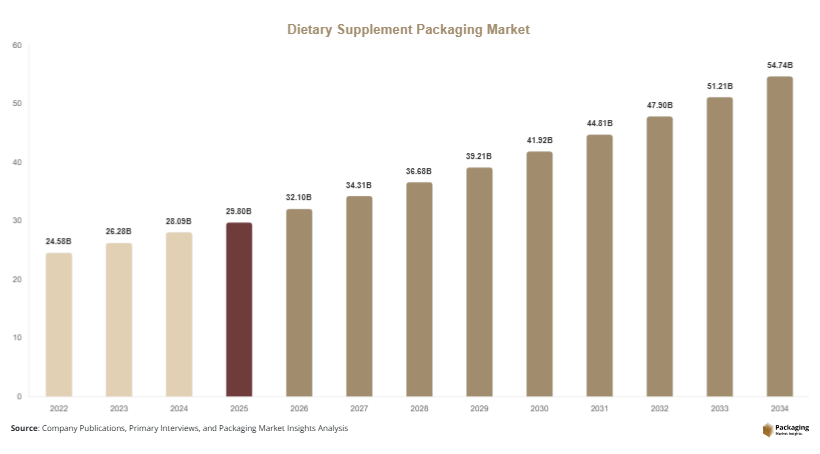
The Dietary Supplement Packaging Market is witnessing steady growth due to the increasing consumption of vitamins, minerals, and nutraceutical products across global markets. The market size was valued at approximately USD 29.8 billion in 2025 and is projected to reach USD 32.1 billion in 2026. Over the forecast period from 2025 to 2034, the market is expected to expand at a CAGR of 6.9%, reaching an estimated value of USD 58.7 billion by 2034. This growth reflects the rising demand for packaging solutions that ensure product safety, extend shelf life, and maintain the efficacy of dietary supplements.
One of the primary growth factors is the increasing health awareness among consumers, which has led to a surge in demand for dietary supplements. This trend drives the need for advanced packaging solutions that protect sensitive ingredients from moisture, light, and oxygen. Another key factor is the growth of the aging population, which contributes to higher consumption of supplements for health maintenance. Additionally, the expansion of e-commerce platforms has increased the demand for durable and tamper-evident packaging solutions to ensure product integrity during transportation.
Technological advancements in packaging materials and designs are further supporting market growth. Innovations such as barrier films, child-resistant closures, and smart labeling systems are improving product safety and compliance with regulatory standards. The increasing focus on sustainability is also influencing the adoption of recyclable and eco-friendly packaging materials. Furthermore, regulatory requirements related to labeling and packaging standards are encouraging manufacturers to invest in high-quality packaging solutions. These factors collectively drive the growth of the dietary supplement packaging market.
Key Highlights:
- Market size reached USD 29.8 billion in 2025
- Expected to grow to USD 58.7 billion by 2034
- CAGR of 6.9% from 2025 to 2034
- Rising demand for dietary supplements and nutraceuticals
- Increasing focus on product safety and sustainable packaging
Explore more data points, trends and opportunities Download Free Sample Report
Market Trends
Increasing Adoption of Sustainable and Eco-Friendly Packaging Materials
The dietary supplement packaging market is experiencing a shift toward sustainable and eco-friendly packaging materials. Manufacturers are increasingly adopting recyclable plastics, biodegradable materials, and paper-based solutions to reduce environmental impact. This trend is driven by consumer demand for environmentally responsible products and regulatory pressure to minimize packaging waste. Companies are also focusing on reducing material usage and improving packaging efficiency. Sustainable packaging not only supports environmental goals but also enhances brand reputation. As sustainability becomes a key consideration in purchasing decisions, the adoption of eco-friendly packaging solutions is expected to grow significantly.
Growing Use of Smart and Functional Packaging Solutions
The integration of smart and functional packaging technologies is shaping the dietary supplement packaging market. Features such as QR codes, NFC tags, and tamper-evident seals provide enhanced product information and security. Smart packaging allows consumers to access details about ingredients, usage, and authenticity through digital platforms. Functional packaging solutions, such as moisture-resistant containers and oxygen barriers, help maintain product quality. This trend is particularly important for dietary supplements, which require strict protection against environmental factors. The adoption of smart packaging technologies is expected to increase as companies focus on improving consumer engagement and product safety.
Market Drivers
Rising Demand for Nutraceuticals and Health Supplements
The increasing demand for nutraceuticals and health supplements is a major driver of the dietary supplement packaging market. Consumers are becoming more health-conscious and are incorporating supplements into their daily routines. This trend is driven by factors such as lifestyle changes, increasing prevalence of chronic diseases, and growing awareness of preventive healthcare. As the consumption of dietary supplements rises, the need for reliable and high-quality packaging solutions also increases. Packaging plays a critical role in preserving the effectiveness of supplements and ensuring product safety. This driver is expected to continue supporting market growth.
Stringent Regulatory Requirements for Packaging and Labeling
Regulatory requirements related to packaging and labeling are another key driver of the market. Authorities mandate strict standards for packaging materials, labeling information, and product safety. Compliance with these regulations requires the use of advanced packaging solutions that meet quality and safety standards. Manufacturers must ensure that packaging protects the product and provides accurate information to consumers. This driver encourages companies to invest in innovative packaging technologies and materials. As regulations become more stringent, the demand for compliant packaging solutions is expected to increase.
Market Restraints
Fluctuating Raw Material Prices and Supply Chain Challenges
Fluctuating raw material prices and supply chain challenges present a significant restraint in the dietary supplement packaging market. Packaging materials such as plastics, glass, and metals are subject to price volatility due to changes in raw material availability and market conditions. This can increase production costs and impact profit margins for manufacturers. Additionally, supply chain disruptions can lead to delays in production and delivery. For example, a packaging manufacturer may face difficulties in sourcing high-quality materials during periods of supply shortage. These challenges can limit market growth and create uncertainty for businesses operating in the market.
Market Opportunities
Expansion of E-commerce and Direct-to-Consumer Sales Channels
The growth of e-commerce and direct-to-consumer sales channels presents significant opportunities for the dietary supplement packaging market. Online sales of dietary supplements are increasing, driven by convenience and wider product availability. This trend requires packaging solutions that ensure product safety during shipping and handling. Durable and tamper-evident packaging is essential to maintain product integrity. Companies are developing packaging designs specifically for e-commerce applications, which enhances customer experience and reduces damage rates. The expansion of online sales channels is expected to drive demand for innovative packaging solutions.
Development of Personalized and Innovative Packaging Designs
The development of personalized and innovative packaging designs offers new growth opportunities in the market. Companies are focusing on creating packaging that appeals to consumers and enhances brand differentiation. Customizable packaging solutions, including unique shapes, colors, and labeling, help attract consumer attention. Additionally, innovative designs that improve convenience, such as easy-open caps and portion-controlled packaging, are gaining popularity. These developments support market growth by meeting evolving consumer preferences and improving user experience.
Report Scope
| Report Metric | Details |
|---|---|
| Market Size in 2025 | USD 29.8 Billion |
| Market Size in 2026 | USD 32.1 Billion |
| Market Size in 2034 | USD 58.7 Billion |
| CAGR | 6.9% (2026-2034) |
| Base Year for Estimation | 2025 |
| Historical Data | 2022-2024 |
| Forecast Period | 2026-2034 |
| Report Coverage | Revenue Forecast, Competitive Landscape, Supply Chain Disruption, Growth Factors, Environment & Regulatory Landscape and Trends |
| Geographies Covered | North America, Europe, APAC, Middle East and Africa, LATAM |
| Countries Covered | U.S., Canada, U.K., Germany, France, Spain, Italy, Russia, Nordic, Benelux, Rest of Europe, China, South Korea, Japan, India, Australia, Singapore, Taiwan, South East Asia, Rest of Asia-Pacific, UAE, Turky, Saudi Arabia, South Africa, Egypt, Nigeria, Rest of MEA, Brazil, Mexico, Argentina, Chile, Colombia, Rest of LATAM |
Explore more data points, trends and opportunities Download Free Sample Report
Segmental Analysis
By Packaging Type
Bottles dominated the dietary supplement packaging market in 2024, accounting for approximately 42% of the total market share. Bottles are widely used due to their durability, convenience, and ability to protect supplements from environmental factors. They are available in various materials such as plastic and glass, providing flexibility in design and application. Bottles also support features such as child-resistant closures and tamper-evident seals, enhancing product safety. The widespread use of bottles in the dietary supplement industry supports their dominance in the market.
Blister packs are expected to be the fastest-growing segment, with a CAGR of 7.5% during the forecast period. These packs offer precise dosage control and improved product protection. They are widely used for tablets and capsules, ensuring convenience and safety. Increasing demand for unit-dose packaging drives the growth of this segment.
By Material
Plastic packaging dominated the market in 2024, with a share of approximately 48%. Plastic materials offer advantages such as lightweight, durability, and cost efficiency. They are widely used in bottles, containers, and closures for dietary supplements. The availability of various plastic types allows manufacturers to meet different packaging requirements. This supports the dominance of plastic packaging in the market.
Glass packaging is expected to grow at the highest CAGR of 7.2% during the forecast period. Glass offers superior barrier properties and is considered safe for storing sensitive products. Increasing demand for premium packaging solutions drives the growth of this segment.
By Application
Vitamins and minerals dominated the market in 2024, accounting for approximately 44% of the total market share. These products require reliable packaging to maintain their efficacy and shelf life. The high consumption of vitamins and minerals supports the demand for packaging solutions in this segment.
Sports nutrition products are expected to grow at the fastest CAGR of 7.6% during the forecast period. The increasing popularity of fitness and active lifestyles drives demand for these products. Packaging solutions for sports nutrition focus on convenience and durability, supporting market growth.
Dietary Supplement Packaging Market Segmentations
Packaging Type
- Bottles
- Blister Packs
- Pouches
- Sachets
Material
- Plastic
- Glass
- Metal
- Paper
Application
- Vitamins & Minerals
- Herbal Supplements
- Sports Nutrition
- Others
Regional Analysis
North America
North America accounted for approximately 36% of the dietary supplement packaging market share in 2025 and is expected to grow at a CAGR of 6.4% during the forecast period. The region’s strong demand for dietary supplements and advanced packaging technologies supports market growth. High consumer awareness regarding health and wellness further drives demand.
The United States dominates the regional market due to its large nutraceutical industry. A unique growth factor is the increasing adoption of child-resistant and tamper-evident packaging solutions to meet regulatory requirements and ensure product safety.
Europe
Europe held around 27% of the market share in 2025 and is projected to grow at a CAGR of 6.6% through 2034. The region’s focus on sustainability and strict regulatory standards influences packaging practices. Companies are investing in eco-friendly packaging solutions.
Germany leads the European market, supported by its strong pharmaceutical and nutraceutical sectors. A key growth factor is the emphasis on recyclable packaging materials to reduce environmental impact.
Asia Pacific
Asia Pacific accounted for approximately 24% of the market share in 2025 and is expected to grow at a CAGR of 7.8% during the forecast period. Rapid urbanization and increasing health awareness drive demand for dietary supplements.
China dominates the Asia Pacific market due to its large population and expanding healthcare sector. A unique growth factor is the growth of online retail platforms, which increases demand for secure packaging solutions.
Middle East & Africa
The Middle East & Africa region held about 7% of the market share in 2025 and is projected to grow at a CAGR of 6.7% over the forecast period. The market is driven by increasing investments in healthcare and retail sectors.
UAE leads the regional market, supported by its growing consumer base. A key growth factor is the rising demand for premium packaging solutions in dietary supplements.
Latin America
Latin America accounted for nearly 6% of the market share in 2025 and is expected to grow at a CAGR of 7.1% through 2034. Economic development and increasing health awareness contribute to market growth.
Brazil dominates the Latin American market due to its expanding nutraceutical industry. A unique growth factor is the increasing demand for cost-effective packaging solutions in the region.
Competitive Landscape
The dietary supplement packaging market is moderately competitive, with several global players focusing on innovation and sustainability. Companies are investing in advanced packaging technologies to meet evolving market demands. Strategic partnerships and product launches are common strategies used to strengthen market presence.
Amcor plc is a leading player in the market, known for its wide range of packaging solutions. The company recently introduced sustainable packaging options for dietary supplements. Other major players such as Berry Global Inc., Gerresheimer AG, WestRock Company, and AptarGroup Inc. are also focusing on innovation and expanding their product portfolios. The competitive landscape is expected to evolve as companies adapt to changing consumer preferences and regulatory requirements.
Key Players List
- Amcor plc
- Berry Global Inc.
- Gerresheimer AG
- WestRock Company
- AptarGroup Inc.
- Alpha Packaging
- CCL Industries Inc.
- Constantia Flexibles
- Sonoco Products Company
- RPC Group Plc
- Alpla Group
- Silgan Holdings Inc.
- Owens-Illinois Inc.
- Graham Packaging Company
- Comar LLC