Cold Seal Packaging Market Size and Growth
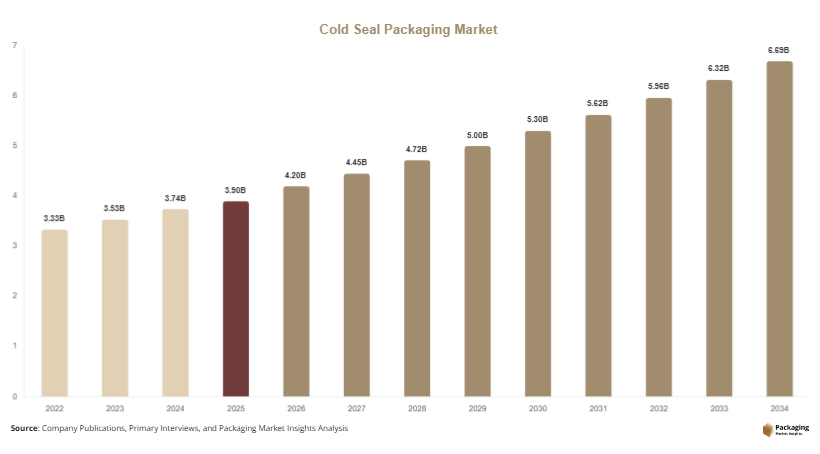
The global market size was valued at approximately USD 3.9 billion in 2025 and is projected to reach USD 4.2 billion in 2026. By 2034, the market is forecasted to grow to nearly USD 7.1 billion, registering a CAGR of 6.0% during 2025–2034. The cold seal packaging market is experiencing stable expansion due to rising demand for high-speed packaging solutions across food, pharmaceutical, and consumer goods industries. Cold seal packaging uses pressure-sensitive adhesives that bond without the application of heat, making it suitable for heat-sensitive products such as chocolates, confectionery, protein bars, and medical devices.
One of the major growth factors driving the cold seal packaging market is the rapid expansion of the global packaged food sector. Manufacturers are increasingly adopting cold seal packaging to improve packaging speed and preserve product freshness. Another important factor is the growing demand for sustainable and lightweight flexible packaging materials. Cold seal packaging consumes less energy compared to heat seal alternatives, supporting sustainability initiatives among packaging companies. In addition, increasing pharmaceutical production and demand for sterile medical packaging are supporting market growth, particularly in developed economies.
Key Highlights
- Asia Pacific dominated the market with a 36.8% share in 2025.
- Latin America is projected to grow at the fastest CAGR of 6.6%.
- Flexible films led the material segment with a 42.5% share.
- Food packaging dominated with a 58.4% share.
- Confectionery applications accounted for 33.7% of the market share.
- The US remained the leading country with a market size of USD 1.1 billion in 2025 and USD 1.2 billion in 2026.
Explore more data points, trends and opportunities Download Free Sample Report
Market Trends
Increasing Adoption of Sustainable Cold Seal Materials
Sustainability has become a major trend shaping the cold seal packaging market as packaging manufacturers focus on reducing environmental impact and improving recyclability. Companies are developing mono-material flexible films and paper-based cold seal solutions that align with circular economy goals. Brand owners in food and personal care industries are increasingly shifting toward biodegradable adhesives and recyclable laminates to comply with changing regulations and consumer expectations. The reduced energy consumption associated with cold seal technology compared to heat sealing is another factor supporting adoption. Packaging converters are also introducing solvent-free coatings and lightweight packaging structures to minimize waste generation while maintaining product protection and sealing efficiency.
Growth in High-Speed Automated Packaging Operations
The expansion of automated manufacturing and high-speed packaging lines is another important trend in the market. Cold seal packaging allows faster sealing processes because it does not require heat application, making it suitable for industries with large production volumes such as confectionery and snack foods. Manufacturers are integrating advanced cold seal systems into automated packaging machinery to improve operational efficiency and reduce downtime. In addition, modern printing technologies are enabling high-quality graphics and branding on cold seal packaging materials. This trend is particularly visible in large-scale food processing facilities where companies aim to improve throughput while maintaining product freshness and packaging consistency across multiple product categories.
Market Drivers
Rising Demand for Packaged Food and Confectionery Products
The growing consumption of packaged snacks, confectionery items, bakery products, and ready-to-eat foods is a major driver of the cold seal packaging market. Consumers increasingly prefer convenient and portable food products, creating strong demand for flexible packaging solutions with secure sealing capabilities. Cold seal packaging is widely used for chocolates, cereal bars, biscuits, and candies because it prevents heat damage during the sealing process. Food manufacturers also prefer this packaging method because it supports faster production speeds and improves shelf appeal. Expanding urban populations and changing eating habits in emerging economies are further contributing to higher demand for cold seal packaging materials worldwide.
Expansion of Pharmaceutical and Medical Packaging Applications
The healthcare and pharmaceutical industries are significantly contributing to market growth due to increasing demand for sterile and tamper-resistant packaging. Cold seal packaging is suitable for medical devices, diagnostic kits, and pharmaceutical products that require controlled packaging conditions. The absence of heat during sealing helps preserve sensitive materials and reduces contamination risks. Rising healthcare expenditure, aging populations, and expanding pharmaceutical manufacturing activities are driving adoption across hospitals and healthcare facilities. Additionally, regulatory requirements related to product safety and packaging integrity are encouraging pharmaceutical companies to invest in advanced cold seal packaging technologies that ensure consistent protection throughout the supply chain.
Market Restraint
Volatility in Raw Material Prices and Adhesive Costs
One of the major restraints affecting the cold seal packaging market is the fluctuation in prices of raw materials used in flexible films, coatings, and adhesives. Cold seal packaging relies heavily on specialty pressure-sensitive adhesives and polymer-based substrates, which are influenced by petroleum price volatility and supply chain disruptions. Rising material costs can reduce profit margins for packaging manufacturers and increase final product prices for end users. Small and medium-sized packaging companies often face challenges in maintaining stable production costs during periods of raw material inflation. For example, sudden increases in polyethylene and adhesive prices can significantly impact packaging contracts within the food industry, where pricing competition remains intense. Additionally, environmental regulations related to plastic usage may increase compliance costs for manufacturers using conventional flexible materials. These factors can slow adoption in cost-sensitive markets and create operational challenges for packaging converters aiming to maintain competitive pricing while investing in sustainable product development and technological upgrades.
Market Opportunities
Expansion of Recyclable and Paper-Based Packaging Solutions
The increasing global focus on sustainable packaging presents a major opportunity for manufacturers operating in the cold seal packaging market. Companies are investing in recyclable paper laminates, compostable films, and water-based adhesive technologies to reduce environmental impact. Retailers and food brands are adopting eco-friendly packaging strategies to meet consumer expectations and government regulations regarding plastic waste reduction. Paper-based cold seal packaging is gaining attention because it combines convenience with improved sustainability performance. The demand for environmentally responsible packaging formats is expected to create growth opportunities for converters that can provide innovative and cost-effective recyclable solutions for food, healthcare, and consumer goods applications.
Growth Potential in Emerging Economies
Emerging economies across Asia Pacific, Latin America, and the Middle East offer strong growth opportunities due to rising industrialization and changing consumer lifestyles. Increasing disposable income and urbanization are driving higher consumption of packaged food products and pharmaceutical goods. Expanding retail infrastructure and e-commerce penetration are also supporting demand for flexible packaging materials. Governments in developing countries are investing in food processing and healthcare infrastructure, creating favorable conditions for packaging manufacturers. In addition, multinational food and beverage companies are expanding production facilities in these regions, which is expected to increase demand for efficient and cost-effective cold seal packaging solutions during the forecast period.
Report Scope
| Report Metric | Details |
|---|---|
| Market Size in 2025 | USD 3.9 Billion |
| Market Size in 2026 | USD 4.2 Billion |
| Market Size in 2034 | USD 7.1 Billion |
| CAGR | 6.0% (2026-2034) |
| Base Year for Estimation | 2025 |
| Historical Data | 2022-2024 |
| Forecast Period | 2026-2034 |
| Report Coverage | Revenue Forecast, Competitive Landscape, Supply Chain Disruption, Growth Factors, Environment & Regulatory Landscape and Trends |
| Geographies Covered | North America, Europe, APAC, Middle East and Africa, LATAM |
| Countries Covered | U.S., Canada, U.K., Germany, France, Spain, Italy, Russia, Nordic, Benelux, Rest of Europe, China, South Korea, Japan, India, Australia, Singapore, Taiwan, South East Asia, Rest of Asia-Pacific, UAE, Turky, Saudi Arabia, South Africa, Egypt, Nigeria, Rest of MEA, Brazil, Mexico, Argentina, Chile, Colombia, Rest of LATAM |
Explore more data points, trends and opportunities Download Free Sample Report
Segmental Analysis
By Material Type
Flexible plastic films dominated the cold seal packaging market in 2024, accounting for nearly 42.5% of the total market share. These materials are widely used because they offer strong barrier protection, lightweight performance, and compatibility with high-speed packaging systems. Polyethylene, polypropylene, and multilayer laminates remain common choices for confectionery and snack food applications. Manufacturers prefer flexible films because they help extend shelf life while maintaining product freshness and appearance. In addition, advanced printing technologies allow attractive branding and product visibility on flexible packaging structures. The combination of cost efficiency, sealing performance, and durability continues to support the widespread adoption of plastic-based cold seal materials across multiple end-use industries.
Paper-based cold seal materials are projected to be the fastest-growing subsegment, expanding at a CAGR of 6.8% during the forecast period. Growth is largely driven by increasing environmental awareness and regulatory pressure to reduce plastic waste. Food brands and retailers are adopting recyclable paper packaging to improve sustainability performance and meet changing consumer preferences. Technological advancements in barrier coatings and adhesive formulations are enabling paper-based materials to provide enhanced sealing performance and moisture resistance. In addition, governments across Europe and North America are introducing stricter packaging regulations, encouraging manufacturers to invest in eco-friendly alternatives that can support circular economy objectives without compromising product quality or operational efficiency.
By Application
Food packaging represented the dominant application segment in 2024, holding approximately 58.4% of the market share. Cold seal packaging is widely used for chocolates, biscuits, energy bars, frozen desserts, and snack foods because it allows rapid sealing without heat exposure. This helps preserve flavor, texture, and product quality while supporting high-speed manufacturing operations. Food manufacturers are increasingly adopting cold seal packaging to improve productivity and reduce energy consumption during packaging processes. Additionally, rising demand for convenience foods and single-serve packaging formats is contributing to continued growth within the segment. Attractive graphics and tamper-evident sealing capabilities are also helping food brands enhance product appeal and consumer confidence in retail environments.
Pharmaceutical packaging is expected to register the fastest CAGR of 6.7% through 2034 due to increasing healthcare spending and expanding medical product distribution. Cold seal packaging is suitable for medical devices, diagnostic kits, and pharmaceutical supplies that require contamination-free sealing conditions. The absence of heat during packaging reduces the risk of product degradation and supports regulatory compliance standards. Growth in global pharmaceutical exports and rising investment in healthcare infrastructure are driving adoption of advanced packaging technologies. Furthermore, increasing demand for sterile and secure packaging solutions following higher awareness of healthcare safety standards is encouraging pharmaceutical companies to integrate cold seal materials into their packaging operations across both developed and emerging economies.
By End Use
The confectionery industry dominated the end-use segment in 2024 with a market share of approximately 33.7%. Cold seal packaging is highly preferred in confectionery manufacturing because it prevents melting and deformation of temperature-sensitive products such as chocolates and candies during packaging operations. High-speed wrapping systems used in confectionery production facilities are compatible with cold seal technology, allowing efficient and consistent packaging performance. Additionally, the growing popularity of premium chocolates and impulse snack purchases is supporting continued demand for visually appealing and protective packaging formats. Packaging manufacturers are also focusing on improved barrier protection and customizable printing options to meet branding requirements within the confectionery sector.
Ready-to-eat snacks are anticipated to be the fastest-growing end-use subsegment, recording a CAGR of 6.9% during the forecast period. Busy lifestyles and increasing consumer demand for convenient food options are driving the growth of packaged snack products worldwide. Cold seal packaging provides quick sealing, lightweight handling, and improved shelf-life protection for chips, protein bars, baked snacks, and healthy snack alternatives. The expansion of convenience retail stores and online grocery platforms is also supporting market growth. In addition, manufacturers are introducing resealable and easy-open packaging designs to improve user convenience, creating further opportunities for cold seal packaging suppliers targeting the rapidly growing snack food industry.
Cold Seal Packaging Market Segmentations
By Material Type
- Plastic Films
- Paper-Based Materials
- Aluminum Laminates
By Application
- Food Packaging
- Pharmaceutical Packaging
- Consumer Goods Packaging
By End User
- Confectionery
- Ready-to-Eat Snacks
- Medical Devices
- Personal Care Products
Regional Analysis
North America
North America accounted for approximately 28.6% of the global cold seal packaging market share in 2025 and is expected to grow at a CAGR of 5.5% during the forecast period. The region benefits from strong demand for packaged snack foods, pharmaceutical products, and advanced flexible packaging solutions. The presence of large food processing companies and established packaging manufacturers continues to support market expansion. Additionally, investments in automated packaging machinery are increasing the use of cold seal technology across industrial production lines.
The United States dominates the regional market due to its extensive food manufacturing sector and growing healthcare packaging requirements. A unique growth factor is the rising demand for convenience foods among working consumers, which has encouraged manufacturers to adopt fast and efficient packaging systems. Increasing investments in sustainable packaging materials are also supporting long-term market development in the country.
Europe
Europe held around 24.1% of the global market share in 2025 and is projected to register a CAGR of 5.4% through 2034. The region’s growth is supported by strong sustainability regulations and increasing demand for recyclable flexible packaging materials. Food manufacturers across Europe are adopting cold seal packaging to improve operational efficiency and reduce energy consumption. The expansion of pharmaceutical manufacturing activities is also contributing to regional demand.
Germany represents the leading country within the European market because of its advanced manufacturing infrastructure and strong packaging innovation capabilities. A unique growth factor is the rapid adoption of paper-based and mono-material packaging formats driven by environmental legislation. Companies are investing heavily in research and development to create recyclable cold seal products suitable for food and medical applications.
Asia Pacific
Asia Pacific dominated the cold seal packaging market with a 36.8% share in 2025 and is anticipated to grow at a CAGR of 6.8% during the forecast period. Rapid urbanization, rising disposable income, and increasing consumption of packaged foods are supporting strong regional growth. Expanding retail chains and e-commerce activities are increasing demand for flexible packaging materials. The presence of large-scale food processing industries further contributes to market expansion across the region.
China remains the dominant country in Asia Pacific due to its large manufacturing base and growing packaged food industry. A unique growth factor is the expansion of automated food packaging facilities designed to increase production efficiency. The country’s growing pharmaceutical exports are also increasing demand for reliable and tamper-resistant cold seal packaging solutions.
Middle East & Africa
The Middle East & Africa region accounted for nearly 5.1% of the market share in 2025 and is projected to grow at a CAGR of 5.9% over the forecast period. Rising investments in food processing and healthcare infrastructure are contributing to regional growth. Demand for packaged consumer products is increasing due to urbanization and changing purchasing habits. The development of retail and logistics networks is further supporting market penetration.
Saudi Arabia leads the regional market because of its expanding food manufacturing sector and rising healthcare expenditure. A unique growth factor is the government’s focus on local pharmaceutical production and food security initiatives. These investments are creating opportunities for packaging companies offering efficient and protective cold seal solutions across industrial applications.
Latin America
Latin America held approximately 5.4% of the global market share in 2025 and is expected to register the fastest CAGR of 6.6% through 2034. The region is benefiting from growing demand for packaged snacks, confectionery products, and healthcare supplies. Expanding urban populations and improvements in retail infrastructure are driving the use of flexible packaging materials. The growth of regional food exports is also supporting demand for efficient packaging technologies.
Brazil dominates the Latin American market due to its large food processing industry and increasing consumption of packaged products. A unique growth factor is the rising investment in domestic snack and confectionery manufacturing facilities. These developments are increasing the adoption of cold seal packaging systems capable of supporting high-volume production environments.
Competitive Landscape
The cold seal packaging market is moderately fragmented, with several regional and international players competing through product innovation, sustainable packaging development, and strategic partnerships. Major companies are focusing on advanced adhesive technologies, recyclable materials, and high-performance flexible packaging solutions to strengthen their market presence. Many packaging manufacturers are expanding production facilities and investing in automated converting technologies to meet rising demand from food and healthcare industries.
Amcor plc remains one of the leading companies in the market due to its broad flexible packaging portfolio and strong global distribution network. In 2024, the company introduced a recyclable cold seal packaging structure designed for confectionery applications, supporting sustainability initiatives among food manufacturers. Other significant players include Mondi Group, Sonoco Products Company, ProAmpac, and Constantia Flexibles. These companies continue to focus on research and development activities aimed at improving sealing performance, barrier protection, and recyclability. Strategic mergers, acquisitions, and collaborations with food brands are also shaping the competitive landscape as companies seek to expand regional reach and product capabilities.
Key Players List
- Amcor plc
- Mondi Group
- Sonoco Products Company
- ProAmpac
- Constantia Flexibles
- Huhtamaki Oyj
- Coveris Holdings S.A.
- Sealed Air Corporation
- Glenroy Inc.
- C-P Flexible Packaging
- Tekni-Plex Inc.
- American Printpak
- Getpac India
- Billerud AB
- UFlex Limited
- Winpak Ltd.