Bulky Cosmetic Packaging Market Size and Growth
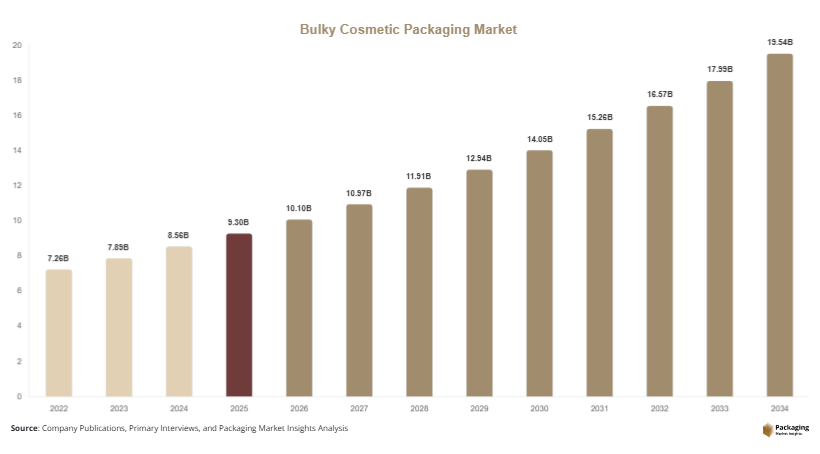
The global bulky cosmetic packaging market size was valued at USD 9.3 billion in 2025 and is projected to reach USD 10.1 billion in 2026, further expanding to approximately USD 19.6 billion by 2034, registering a CAGR of 8.6% during the forecast period (2025–2034). Bulky cosmetic packaging, which includes large jars, containers, dispensers, and multi-use packaging formats, is gaining traction as brands focus on product differentiation and extended usage formats. The bulky cosmetic packaging market is experiencing consistent growth due to increasing demand for premium, large-format, and visually distinctive packaging solutions across the global beauty and personal care industry.
One of the key growth factors is the rising demand for premium and luxury cosmetic products. Consumers are increasingly associating larger, aesthetically appealing packaging with higher product value. As a result, brands are investing in bulky packaging formats that enhance shelf presence and improve user experience. These formats are commonly used in skincare products such as creams, body lotions, and hair masks.
Key Highlights:
- Asia Pacific dominated the market with a 35.9% share in 2025, while Latin America is projected to grow at the fastest CAGR of 9.2%.
- Rigid packaging led the type segment with a 61.4% share, while flexible packaging is expected to grow at a CAGR of 7.8%.
- Plastic materials dominated with a 54.6% share, while glass materials are forecasted to grow at a CAGR of 8.9%.
- Skincare applications led the segment with 41.8% share, while haircare is expected to grow at a CAGR of 8.7%.
- China remained the dominant country with a market size of USD 1.7 billion in 2025 and USD 1.9 billion in 2026.
Explore more data points, trends and opportunities Download Free Sample Report
Market Trends
Increasing Adoption of Refillable and Reusable Bulky Packaging
A prominent trend in the bulky cosmetic packaging market is the growing adoption of refillable and reusable packaging formats. Brands are introducing large containers designed for multiple refills, reducing the need for single-use packaging. This approach helps decrease plastic waste and aligns with sustainability goals. Consumers are also showing preference for refillable packaging, with nearly 58% indicating willingness to switch to refill systems. Packaging manufacturers are developing durable materials and modular designs that support repeated usage without compromising aesthetics or functionality. This trend is particularly strong in skincare and body care segments, where products are frequently used in large quantities.
Premiumization Through Design and Material Innovation
Another key trend is the focus on premium packaging designs that enhance brand value and consumer experience. Companies are using high-quality materials such as thick-walled glass, acrylic, and metal finishes to create visually appealing bulky packaging. These designs not only improve product perception but also provide better protection and durability. Innovations such as airless pumps and multi-layered containers are being integrated into bulky packaging formats. The premium packaging segment is growing steadily, with brands investing in unique shapes, textures, and finishes to differentiate their products in competitive markets.
Market Drivers
Rising Demand for Bulk and Value-Based Purchasing
The increasing consumer preference for bulk purchasing is a major driver for the bulky cosmetic packaging market. Consumers are opting for larger packaging sizes to reduce the frequency of purchases and lower overall costs. Bulk packaging offers better value per unit, making it attractive for families and frequent users. This trend is particularly evident in emerging markets, where price sensitivity is high. Additionally, retailers are promoting bulk packaging through discounts and promotional offers, further driving demand. The ability of bulky packaging to store larger volumes while maintaining product quality is a key factor supporting its adoption.
Growth of E-commerce and Direct-to-Consumer Channels
The rapid expansion of e-commerce platforms is significantly influencing the demand for bulky cosmetic packaging. Online sales of beauty products have increased by over 20% annually, creating a need for packaging solutions that can withstand shipping conditions. Bulky packaging is being designed with enhanced durability and protective features to prevent damage during transit. Brands are also using larger packaging formats to reduce shipping frequency and improve customer convenience. The growth of subscription-based models is further supporting the demand for bulk packaging solutions.
Market Restraint
High Material and Transportation Costs
One of the key restraints in the bulky cosmetic packaging market is the high cost associated with materials and transportation. Bulky packaging requires more raw materials, such as plastic, glass, or metal, increasing production costs. Additionally, the larger size and weight of these packages lead to higher transportation and storage expenses. For example, shipping costs for bulky packaging can be 15–20% higher compared to standard packaging formats. These costs can impact profit margins, particularly for small and medium-sized manufacturers. Furthermore, environmental concerns related to increased material usage can also limit market growth, as companies seek to balance sustainability with cost efficiency.
Market Opportunities
Development of Lightweight Bulky Packaging Solutions
The development of lightweight materials presents a significant opportunity for the market. Manufacturers are focusing on reducing the weight of bulky packaging without compromising strength and durability. Innovations in material science, such as advanced polymers and composite materials, are enabling the production of lightweight yet robust packaging solutions. These materials can reduce transportation costs and environmental impact, making them attractive to both manufacturers and consumers. The adoption of lightweight bulky packaging is expected to increase significantly over the forecast period.
Expansion in Emerging Markets
Emerging markets offer substantial growth opportunities for the bulky cosmetic packaging market. Increasing disposable incomes, urbanization, and changing consumer lifestyles are driving demand for cosmetic products in regions such as Asia Pacific and Latin America. Consumers in these regions are increasingly adopting bulk purchasing habits, creating demand for larger packaging formats. Additionally, the expansion of retail and e-commerce infrastructure is supporting market growth. Companies are investing in local production facilities to cater to regional demand and reduce costs.
Report Scope
| Report Metric | Details |
|---|---|
| Market Size in 2025 | USD 9.3 Billion |
| Market Size in 2026 | USD 10.1 Billion |
| Market Size in 2034 | USD 19.6 Billion |
| CAGR | 8.6% (2026-2034) |
| Base Year for Estimation | 2025 |
| Historical Data | 2022-2024 |
| Forecast Period | 2026-2034 |
| Report Coverage | Revenue Forecast, Competitive Landscape, Supply Chain Disruption, Growth Factors, Environment & Regulatory Landscape and Trends |
| Geographies Covered | North America, Europe, APAC, Middle East and Africa, LATAM |
| Countries Covered | U.S., Canada, U.K., Germany, France, Spain, Italy, Russia, Nordic, Benelux, Rest of Europe, China, South Korea, Japan, India, Australia, Singapore, Taiwan, South East Asia, Rest of Asia-Pacific, UAE, Turky, Saudi Arabia, South Africa, Egypt, Nigeria, Rest of MEA, Brazil, Mexico, Argentina, Chile, Colombia, Rest of LATAM |
Explore more data points, trends and opportunities Download Free Sample Report
Segmental Analysis
By Packaging Type
Rigid packaging dominated the market, accounting for 61.4% share in 2024, driven by its durability and ability to protect products effectively. Materials such as plastic, glass, and metal are commonly used in rigid packaging formats, including jars, bottles, and containers. These formats are preferred for bulky cosmetic products as they provide structural integrity and enhance product presentation. The demand for rigid packaging is also supported by the growing popularity of premium cosmetic products.
Flexible packaging is the fastest-growing segment, expected to register a CAGR of 7.8% during the forecast period. This growth is driven by its lightweight nature and cost efficiency. Flexible packaging formats such as pouches and refill packs are gaining popularity as they reduce material usage and transportation costs. These formats are also compatible with refillable systems, supporting sustainability initiatives.
By Material
Plastic materials held the largest share of 54.6% in 2024, driven by their versatility, cost-effectiveness, and durability. Plastics are widely used in bulky cosmetic packaging due to their ability to be molded into various shapes and sizes. High-density polyethylene and polypropylene are commonly used materials that offer strength and resistance to impact.
Glass materials are the fastest-growing segment, with a projected CAGR of 8.9%. The increasing demand for sustainable and premium packaging solutions is driving the adoption of glass. Glass packaging offers advantages such as recyclability and chemical stability, making it suitable for high-end cosmetic products.
By Application
Skincare applications dominated the market with a 41.8% share in 2024, driven by the high demand for products such as creams, lotions, and serums. Bulky packaging formats are commonly used in this segment to provide larger quantities and enhance product usability. The growing focus on skincare routines is further supporting market growth.
Haircare is the fastest-growing segment, expected to register a CAGR of 8.7%. The increasing demand for products such as shampoos, conditioners, and hair masks is driving the adoption of bulky packaging. These products are often used in large quantities, making bulky packaging formats more suitable.
Bulky Cosmetic Packaging Market Segmentations
By Packaging Type
- Rigid Packaging
- Flexible Packaging
By Material
- Plastic
- Glass
- Metal
By Application
- Skincare
- Haircare
- Personal Care
- Fragrances
Regional Analysis
North America
North America accounted for approximately 26.8% of the market share in 2025, with a projected CAGR of 8.0% during the forecast period. The region benefits from high consumer spending on personal care products and strong demand for premium packaging solutions. The presence of established cosmetic brands and advanced packaging technologies supports market growth. Companies are increasingly adopting sustainable materials and refillable packaging formats to meet regulatory requirements and consumer expectations.
The United States dominates the regional market, driven by high demand for skincare and personal care products. A unique growth factor is the increasing adoption of subscription-based beauty services, which require larger packaging formats for repeated use. This trend is encouraging manufacturers to develop durable and reusable packaging solutions.
Europe
Europe held a 25.1% market share in 2025 and is expected to grow at a CAGR of 8.3%. The region’s focus on sustainability and environmental regulations is driving the adoption of recyclable and reusable packaging materials. Companies are investing in eco-friendly packaging solutions to reduce their environmental footprint. The demand for premium cosmetic products is also contributing to market growth.
Germany is the leading country in the region, supported by its strong manufacturing base and innovation in packaging technologies. A unique growth factor is the increasing use of glass packaging in premium cosmetic products, driven by consumer preference for sustainable and high-quality materials.
Asia Pacific
Asia Pacific dominated the market with a 35.9% share in 2025 and is projected to grow at a CAGR of 9.1%. Rapid urbanization, increasing disposable incomes, and growing demand for personal care products are driving market growth. The region is also witnessing significant investments in packaging manufacturing infrastructure.
China leads the regional market, driven by its large consumer base and growing cosmetic industry. A unique growth factor is the increasing demand for bulk packaging in online retail channels, where consumers prefer larger product sizes for convenience and cost savings.
Middle East & Africa
The Middle East & Africa accounted for 6.2% of the market share in 2025, with a projected CAGR of 7.5%. The region is gradually adopting modern packaging solutions, supported by growth in the retail and personal care sectors. Increasing consumer awareness and demand for premium products are contributing to market growth.
The United Arab Emirates is a key market, driven by high demand for luxury cosmetic products. A unique growth factor is the preference for visually appealing packaging, which is encouraging the adoption of bulky packaging formats with premium designs.
Latin America
Latin America held a 6.0% market share in 2025 and is expected to grow at the fastest CAGR of 9.2%. The region is experiencing growth in the personal care industry, supported by increasing consumer spending and urbanization. The demand for bulk packaging is also rising due to cost considerations.
Brazil dominates the regional market, supported by its large population and growing cosmetic industry. A unique growth factor is the increasing adoption of family-size packaging formats, which offer better value and convenience for consumers.
Competitive Landscape
The bulky cosmetic packaging market is moderately competitive, with several global and regional players focusing on innovation and sustainability. Companies are investing in advanced materials and design technologies to develop packaging solutions that meet evolving consumer preferences. Strategic partnerships and acquisitions are also common, enabling companies to expand their market presence.
A leading player in the market has recently introduced a new range of lightweight bulky packaging solutions that reduce material usage by 12%, reflecting the industry’s focus on sustainability. Other companies are focusing on developing refillable packaging systems and expanding their production capacities. The competitive landscape is characterized by continuous innovation and the ability to deliver cost-effective and environmentally friendly packaging solutions.
Key Players List
- Amcor plc
- AptarGroup, Inc.
- Berry Global Inc.
- Gerresheimer AG
- Albea Group
- Silgan Holdings Inc.
- HCP Packaging
- Quadpack Industries
- Libo Cosmetics Company Ltd.
- Cosmopak Corp.
- Fusion Packaging
- Graham Packaging Company
- RPC Group plc
- Verescence France SAS
- Raepak Ltd.