Automotive Packaging Market Size and Growth
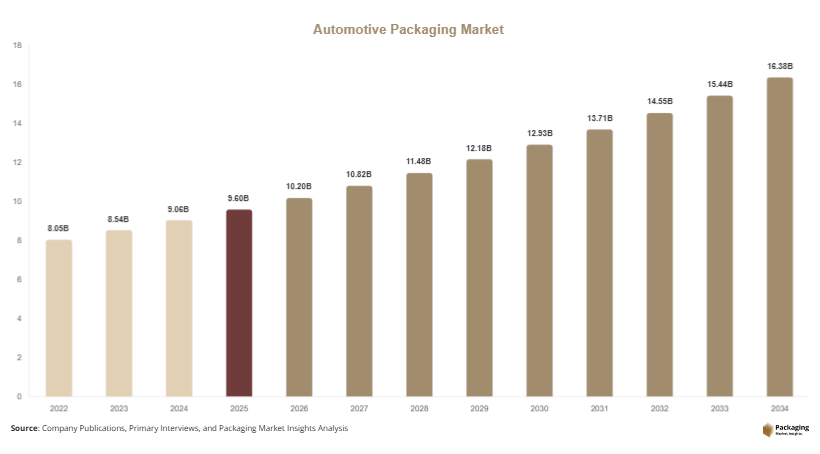
The Automotive Packaging Market is gaining steady traction due to the increasing demand for efficient, protective, and reusable packaging solutions across the automotive supply chain. The market size was valued at approximately USD 9.6 billion in 2025 and is expected to reach USD 10.2 billion in 2026. Over the forecast period from 2025 to 2034, the market is projected to grow at a CAGR of 6.1%, reaching an estimated value of USD 17.4 billion by 2034. This growth is driven by rising automotive production, global trade of components, and the need for secure transportation of parts.
One of the key growth factors is the expansion of global automotive manufacturing, which requires reliable packaging solutions for parts such as engines, electronics, and body components. Another important factor is the increasing complexity of automotive components, particularly in electric vehicles, which demand specialized packaging to prevent damage during handling and transit. Additionally, the adoption of reusable and returnable packaging systems is gaining momentum, as companies aim to reduce waste and optimize logistics costs.
Key Highlights:
- Market size reached USD 9.6 billion in 2025
- Expected to grow to USD 17.4 billion by 2034
- CAGR of 6.1% from 2025 to 2034
- Rising automotive production and global trade
- Increasing demand for reusable packaging solutions
Explore more data points, trends and opportunities Download Free Sample Report
Market Trends
Increasing Adoption of Returnable and Reusable Packaging
The automotive packaging market is witnessing a growing shift toward returnable and reusable packaging solutions, driven by cost efficiency and sustainability goals. Automotive manufacturers and suppliers are increasingly adopting reusable containers, pallets, and racks to reduce waste and lower long-term packaging costs. These systems are designed for multiple cycles, making them suitable for closed-loop supply chains. The use of durable materials such as plastic and metal enhances the lifespan of packaging solutions. This trend is also supported by environmental regulations and corporate sustainability initiatives. As a result, reusable packaging is becoming an integral part of automotive logistics strategies.
Integration of Smart Tracking and Monitoring Technologies
The integration of smart tracking technologies is becoming a key trend in the automotive packaging market. Solutions such as RFID tags, GPS tracking, and barcode systems enable real-time monitoring of packaging units and shipments. These technologies improve supply chain transparency, reduce losses, and enhance inventory management. Automotive companies are increasingly adopting these systems to optimize logistics operations and ensure the timely delivery of components. Smart packaging solutions also provide data insights that help in process optimization and cost reduction. This trend is expected to continue as digitalization transforms supply chain management.
Market Drivers
Growth in Automotive Production and Supply Chain Complexity
The growth in global automotive production is a major driver of the automotive packaging market. As vehicle manufacturing increases, the demand for packaging solutions to transport parts and components also rises. The complexity of automotive supply chains, involving multiple suppliers and global distribution networks, requires efficient packaging systems that ensure product safety and timely delivery. Packaging solutions must protect components from damage, contamination, and environmental factors. This driver is further supported by the increasing production of electric vehicles, which require specialized packaging for sensitive components such as batteries.
Rising Demand for Cost-Effective and Sustainable Packaging
The demand for cost-effective and sustainable packaging solutions is another significant driver of the automotive packaging market. Companies are focusing on reducing packaging costs while maintaining high performance and durability. Reusable packaging systems help lower long-term expenses and minimize waste, making them an attractive option for manufacturers. Additionally, sustainability initiatives and regulatory requirements are encouraging the adoption of eco-friendly materials and practices. This driver is expected to support market growth as companies continue to prioritize efficiency and environmental responsibility.
Market Restraints
High Initial Investment in Reusable Packaging Systems
The high initial investment required for reusable automotive packaging systems is a major restraint in the automotive packaging market. While these systems offer long-term cost benefits, the upfront costs associated with purchasing durable containers, racks, and pallets can be significant. Companies also need to invest in tracking and management systems to monitor the movement of reusable packaging units. For example, a mid-sized automotive supplier may find it challenging to allocate resources for implementing a returnable packaging system, especially when operating under tight budgets. Additionally, the logistics of returning empty packaging units can add complexity and cost to operations. This restraint may limit adoption, particularly among small and medium-sized enterprises, thereby affecting overall market growth.
Market Opportunities
Expansion of Electric Vehicle Manufacturing
The rapid expansion of electric vehicle manufacturing presents a significant opportunity for the automotive packaging market. Electric vehicles require specialized components such as batteries, electronic systems, and lightweight materials, which demand advanced packaging solutions. These components are often sensitive and require protection from impact, temperature variations, and moisture. Packaging solutions designed for electric vehicles can offer enhanced safety and efficiency, creating new revenue streams for manufacturers. As the adoption of electric vehicles continues to grow, the demand for innovative packaging solutions is expected to increase.
Adoption of Advanced Materials and Design Innovations
The adoption of advanced materials and innovative packaging designs offers substantial growth opportunities in the automotive packaging market. Materials such as high-performance plastics, composites, and foam cushioning provide improved durability and protection. Innovative designs, including modular and collapsible packaging, enhance space utilization and reduce transportation costs. Companies that invest in research and development can create solutions that meet the evolving needs of the automotive industry. This opportunity is expected to drive market growth by enabling manufacturers to offer efficient and cost-effective packaging solutions.
Report Scope
| Report Metric | Details |
|---|---|
| Market Size in 2025 | USD 9.6 Billion |
| Market Size in 2026 | USD 10.2 Billion |
| Market Size in 2034 | USD 17.4 Billion |
| CAGR | 6.1% (2026-2034) |
| Base Year for Estimation | 2025 |
| Historical Data | 2022-2024 |
| Forecast Period | 2026-2034 |
| Report Coverage | Revenue Forecast, Competitive Landscape, Supply Chain Disruption, Growth Factors, Environment & Regulatory Landscape and Trends |
| Geographies Covered | North America, Europe, APAC, Middle East and Africa, LATAM |
| Countries Covered | U.S., Canada, U.K., Germany, France, Spain, Italy, Russia, Nordic, Benelux, Rest of Europe, China, South Korea, Japan, India, Australia, Singapore, Taiwan, South East Asia, Rest of Asia-Pacific, UAE, Turky, Saudi Arabia, South Africa, Egypt, Nigeria, Rest of MEA, Brazil, Mexico, Argentina, Chile, Colombia, Rest of LATAM |
Explore more data points, trends and opportunities Download Free Sample Report
Segmental Analysis
By Material Type
Plastic packaging dominated the automotive packaging market in 2024, accounting for approximately 41% of the total market share. Plastics are widely used due to their durability, lightweight nature, and resistance to environmental factors. They are suitable for packaging a wide range of automotive components, including small parts and delicate electronics. The versatility of plastic materials allows for customized designs that meet specific packaging requirements. This segment continues to benefit from advancements in polymer technologies that enhance performance and reduce material usage.
Metal packaging is expected to be the fastest-growing segment, with a CAGR of 6.5% during the forecast period. The growth is driven by the need for robust packaging solutions for heavy and high-value components. Metal containers and racks provide superior strength and durability, making them suitable for industrial applications. The increasing use of reusable metal packaging systems further supports growth in this segment.
By Product Type
Returnable packaging solutions held the largest share of the automotive packaging market in 2024, accounting for around 47% of total demand. These solutions are widely used due to their cost efficiency and sustainability benefits. Returnable packaging systems, such as pallets and containers, are designed for multiple uses, reducing waste and lowering long-term costs. The adoption of these systems is increasing as companies focus on optimizing supply chain operations.
Disposable packaging solutions are projected to grow at the fastest CAGR of 5.9% during the forecast period. The growth is driven by the need for cost-effective and convenient packaging options for one-time use. Disposable packaging is commonly used for exports and long-distance transportation. Innovations in materials are improving the performance and sustainability of disposable packaging solutions.
By End-Use
The OEM (Original Equipment Manufacturer) segment dominated the automotive packaging market in 2024, with a share of approximately 52%. OEMs require reliable packaging solutions to transport components from suppliers to manufacturing facilities. The need for high-quality packaging to ensure product safety and efficiency supports the growth of this segment.
The aftermarket segment is expected to grow at the highest CAGR of 6.4% during the forecast period. The growth is driven by increasing demand for replacement parts and accessories. Packaging solutions in the aftermarket sector focus on protecting products during storage and distribution. This segment is expected to contribute significantly to market growth.
Automotive Packaging Market Segmentations
Material Type
- Plastic
- Metal
- Paper & Paperboard
- Foam
Product Type
- Returnable Packaging
- Disposable Packaging
End-Use
- OEM
- Aftermarket
Regional Analysis
North America
North America accounted for approximately 30% of the automotive packaging market share in 2025 and is expected to grow at a CAGR of 5.8% during the forecast period. The region’s well-established automotive industry and advanced logistics infrastructure support market growth. Demand for efficient packaging solutions is driven by the need for reliable transportation of automotive components across extensive supply chains.
The United States dominates the regional market due to its large automotive manufacturing base. A unique growth factor is the increasing adoption of electric vehicles, which drives demand for specialized packaging solutions for batteries and electronic components.
Europe
Europe held around 28% of the market share in 2025 and is projected to grow at a CAGR of 5.6% through 2034. The region’s focus on sustainability and regulatory compliance influences the demand for eco-friendly packaging solutions. Automotive manufacturers are increasingly adopting reusable packaging systems to reduce environmental impact.
Germany leads the European market, supported by its strong automotive industry and technological expertise. A key growth factor is the emphasis on circular economy practices, which encourages the use of returnable packaging solutions.
Asia Pacific
Asia Pacific accounted for approximately 32% of the market share in 2025 and is expected to grow at the fastest CAGR of 6.8% during the forecast period. Rapid industrialization and increasing vehicle production drive market growth in this region. The presence of major automotive manufacturers further supports demand.
China dominates the Asia Pacific market due to its large-scale automotive production. A unique growth factor is the expansion of electric vehicle manufacturing, which increases the need for advanced packaging solutions.
Middle East & Africa
The Middle East & Africa region held about 5% of the market share in 2025 and is projected to grow at a CAGR of 5.9% over the forecast period. The market is driven by increasing investments in automotive assembly and manufacturing.
South Africa leads the regional market, supported by its automotive production capabilities. A key growth factor is the growth of export-oriented manufacturing, which drives demand for reliable packaging solutions.
Latin America
Latin America accounted for nearly 5% of the market share in 2025 and is expected to grow at a CAGR of 6.0% through 2034. Economic development and increasing vehicle production contribute to market growth in this region.
Brazil dominates the Latin American market due to its expanding automotive industry. A unique growth factor is the growth of regional supply chains, which increases demand for efficient packaging solutions.
Competitive Landscape
The automotive packaging market is moderately fragmented, with several global and regional players competing based on product innovation, durability, and cost efficiency. Companies are focusing on developing advanced packaging solutions that meet the evolving needs of the automotive industry. Strategic partnerships and acquisitions are common strategies used to expand market presence and enhance capabilities.
DS Smith Plc is considered a leading player in the market due to its strong focus on sustainable packaging solutions. The company has recently introduced new returnable packaging systems designed to reduce waste and improve logistics efficiency. Other major players such as Schoeller Allibert, Nefab Group, Orbis Corporation, and Smurfit Kappa Group are also investing in innovative materials and expanding their product portfolios. The competitive landscape is expected to remain dynamic as companies adapt to changing market conditions.
Key Players List
- DS Smith Plc
- Schoeller Allibert
- Nefab Group
- Orbis Corporation
- Smurfit Kappa Group
- Mondi Group
- Loscam
- Litco International Inc.
- Greif Inc.
- Sealed Air Corporation
- Packaging Corporation of America
- Buckhorn Inc.
- SSI Schaefer Group
- Schoeller Packaging
- Myers Industries Inc.