Antiviral Drug Market Size
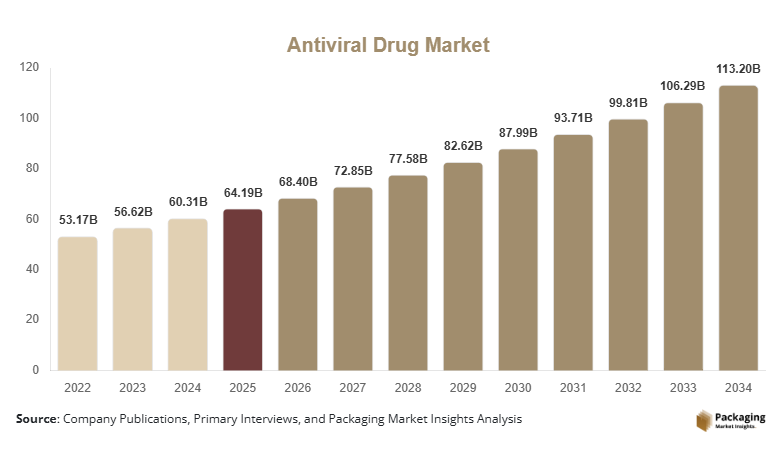
Antiviral drug market size is projected at USD 68.40 billion in 2026 and is expected to hit USD 112.80 billion by 2034 with a CAGR of 6.5%. Increasing prevalence of viral infections, expanding access to antiviral therapies, and continued investment in pharmaceutical research are supporting market expansion. The report evaluates demand patterns, therapeutic segmentation, manufacturing capacity, distribution networks, and the competitive landscape across key regions.
Antiviral drugs are pharmaceutical agents developed to inhibit viral replication and treat infections caused by viruses, including HIV, hepatitis viruses, influenza, herpes viruses, and respiratory pathogens. Global antiviral drug production exceeded 18.6 billion dosage units in 2025, with HIV therapies accounting for approximately 46% of total demand, hepatitis treatments contributing 28%, and influenza antivirals representing 15%. Prescription penetration exceeded 72% among diagnosed HIV patients, while hospital procurement accounted for nearly 61% of antiviral drug distribution, reinforcing the antiviral drug market.
Explore more data points, trends and opportunities Download Free Sample Report
Antiviral Drug Trends
Increasing Development of Broad-Spectrum Antiviral Therapies
Pharmaceutical companies continue expanding research into broad-spectrum antiviral agents capable of targeting multiple viral pathogens. More than 420 antiviral compounds were under clinical evaluation during 2026, while R&D investment increased by 11% over the previous three years. Adoption of combination antiviral therapies exceeded 67% for chronic viral infections, improving treatment outcomes and supporting the antiviral drug market.
Growing utilization of precision medicine, artificial intelligence in drug discovery, and long-acting antiviral formulations is reshaping product development. Long-acting injectable therapies increased by 19%, while digital adherence monitoring improved patient compliance by nearly 16%. Global production surpassed 19.4 billion dosage units during 2026, strengthening the antiviral drug market.
Antiviral Drug Market Drivers
Rising Burden of Chronic and Emerging Viral Diseases
Increasing incidence of HIV, hepatitis, influenza, and emerging viral outbreaks continues to accelerate antiviral drug utilization worldwide. More than 39 million individuals are living with HIV globally, while chronic hepatitis affects over 300 million people. Annual antiviral prescriptions exceeded 5.8 billion, and healthcare expenditure on antiviral therapies increased by approximately 8.4%, supporting continued industry expansion.
Antiviral Drug Market Restraints
High Drug Development Costs and Patent Expirations
Developing new antiviral drugs requires substantial investments, with clinical development costs frequently exceeding USD 1.5 billion per molecule. Clinical trial durations often extend beyond 8 years, while generic competition has reduced revenues for several mature antiviral therapies by 18%–25%. Pricing pressure continues to affect profitability across established pharmaceutical manufacturers.
Antiviral Drug Market Opportunities
Expansion of Novel Antiviral Platforms and Emerging Markets
Growing healthcare investments in emerging economies and expanding access to antiviral medicines present substantial opportunities. Government vaccination and infectious disease management programs increased healthcare procurement by 14%, while antiviral treatment coverage expanded by approximately 12% across developing countries. Investment in RNA-targeted therapies and host-directed antivirals continues to create significant commercial opportunities.
Challenges in Antiviral Drug Market
Drug Resistance and Regulatory Complexity
The emergence of antiviral-resistant viral strains continues to challenge treatment effectiveness. Drug resistance has been reported in nearly 9% of treated patient populations for selected viral infections, while regulatory approval timelines often exceed 24 months. Continuous monitoring, pharmacovigilance, and post-marketing studies increase operational costs for manufacturers while requiring sustained investment in innovation.
Report Scope
| Report Metric | Details |
|---|---|
| Market Size in 2025 | USD 64.19 Billion |
| Market Size in 2026 | USD 68.40 Billion |
| Market Size in 2034 | USD 112.80 Billion |
| CAGR | 6.5% (2026-2034) |
| Base Year for Estimation | 2025 |
| Historical Data | 2022-2024 |
| Forecast Period | 2026-2034 |
| Report Coverage | Revenue Forecast, Competitive Landscape, Supply Chain Disruption, Growth Factors, Environment & Regulatory Landscape and Trends |
| Geographies Covered | North America, Europe, APAC, Middle East and Africa, LATAM |
| Countries Covered | U.S., Canada, U.K., Germany, France, Spain, Italy, Russia, Nordic, Benelux, Rest of Europe, China, South Korea, Japan, India, Australia, Singapore, Taiwan, South East Asia, Rest of Asia-Pacific, UAE, Turkey, Saudi Arabia, South Africa, Egypt, Nigeria, Rest of MEA, Brazil, Mexico, Argentina, Chile, Colombia, Rest of LATAM |
Explore more data points, trends and opportunities Download Free Sample Report
Antiviral Drug Market Segmentation
The market is segmented according to drug class and therapeutic application. Reverse transcriptase inhibitors account for nearly 43% of global revenue, while HIV treatment remains the largest therapeutic application with approximately 46% of overall demand due to lifelong treatment requirements.
By Type
DNA Polymerase Inhibitors
DNA polymerase inhibitors account for approximately 29% of global antiviral drug consumption, with annual production exceeding 5.2 billion dosage units. These therapies are widely prescribed for herpesvirus infections and provide high viral suppression with established safety profiles.
Reverse Transcriptase Inhibitors
Reverse transcriptase inhibitors represent nearly 43% of market demand, exceeding 8 billion dosage units annually. These therapies remain the cornerstone of HIV treatment protocols and demonstrate high treatment adherence through fixed-dose combination formulations.
Protease Inhibitors
Protease inhibitors contribute approximately 28% of global production, exceeding 5.4 billion dosage units annually. Their role in combination antiviral therapy improves long-term viral suppression while reducing resistance development.
By Application
HIV treatment dominates with approximately 46% of market demand and annual utilization exceeding 8.5 billion dosage units. Combination antiretroviral therapy achieves viral suppression rates exceeding 90% among treated patients while supporting lifelong disease management.
Hepatitis applications account for nearly 28% of industry demand, with production exceeding 5.2 billion dosage units annually. Direct-acting antivirals provide cure rates above 95% for many hepatitis C patients and continue expanding globally.
Influenza therapeutics contribute approximately 15% of antiviral demand, exceeding 2.8 billion dosage units annually. Seasonal outbreaks and pandemic preparedness programs continue supporting government procurement and hospital stockpiling.
Antiviral Drug Market Segmentations
Drug Class
- DNA Polymerase Inhibitors
- Reverse Transcriptase Inhibitors
- Protease Inhibitors
Application
- HIV
- Hepatitis
- Influenza
Antiviral Drug Regional Outlook
North America
North America accounts for approximately 39% of global revenue, supported by advanced healthcare systems and strong pharmaceutical innovation. The United States contributes nearly 84% of regional sales, while annual antiviral consumption exceeds 6.4 billion dosage units.
Europe
Europe represents approximately 27% of the market, with Germany, France, the United Kingdom, Italy, and Spain accounting for over 74% of regional demand. Government reimbursement programs and universal healthcare continue supporting antiviral therapy access.
Asia-Pacific
The Asia-Pacific holds nearly 26% of global demand and consumes more than 4.8 billion dosage units annually. China, Japan, India, and South Korea account for approximately 79% of regional antiviral utilization due to large patient populations and expanding healthcare infrastructure.
Latin America
Latin America contributes approximately 5% of global demand. Brazil and Mexico account for more than 66% of regional antiviral procurement, supported by public healthcare initiatives and infectious disease management programs.
Middle East & Africa
The Middle East & Africa represent approximately 3% of global demand. Increasing government healthcare investments, HIV treatment initiatives, and expanded hepatitis screening programs continue supporting gradual market expansion.
Top Players In Antiviral Drug Market
- Gilead Sciences, Inc.
- GlaxoSmithKline plc
- Merck & Co., Inc.,
- F. Hoffmann-La Roche Ltd.
- Johnson & Johnson,
- Bristol Myers Squibb,
- AbbVie Inc.,
- Pfizer Inc.,
- AstraZeneca plc,
- Cipla Limited,
- Dr. Reddy's Laboratories Ltd.,
- Sun Pharmaceutical Industries Ltd.
- Gilead Sciences, Inc. Estimated market share: 21%–23% Global leader in antiviral therapies with a strong portfolio across HIV and hepatitis treatment. Extensive investment in innovative antiviral research, long-acting formulations, and combination therapies. Strong commercial presence across North America, Europe, and Asia-Pacific with broad healthcare partnerships. Continues expanding clinical development programs focused on emerging viral diseases and resistance management. GlaxoSmithKline plc Estimated market share: 12%–14% Leading pharmaceutical company with established antiviral and infectious disease portfolios. Significant expertise in HIV treatment through advanced combination therapies and strategic collaborations. Strong manufacturing capabilities and a global distribution network supporting both developed and emerging markets. Ongoing investment in next-generation antiviral compounds and precision medicine technologies.